
Subject Centric Lighting
LIGHTING ESSENTIALS WORKSHOP: SUBJECT CENTRIC LIGHTING
I hope you enjoy this workshop.
It is the culmination of decades of being a working, professional photographer and having to meet the challenges of making images for other people. Other people with high expectations and demands for the work. Other people who didn’t necessarily care how hard it was to make the shot they wanted, they wanted that shot. Now.
Being a photographer in a small market meant I didn’t necessarily have a strict specialty, although people and still life did make up the bulk of my work. I would occasionally shoot architecture and food, as well as the now and then corporate shoot.
I wasn’t really a ‘generalist’, but some weeks it seemed as though my assignments were as unrelated as they possibly could be.
One week I had a food shot going on in one corner of the studio, with a catalog shoot going on in the other part. All of this while I was shooting a lingerie shoot for an ad agency in the rest of the studio. Heady times, long hours, really damned fun.
This workshop will take us through many of the ways to light photographic subjects. And lighting is, as they say, lighting. Yeah, I am so old I remember when “off camera flash” was simply called lighting.
We are going back to that time. Lighting is lighting and the goal is always the same: to make an image that represents what we see in our mind’s eye. Knowing what we want is step one, making it happen with the tools at hand is step two.
The assignments will be given one per week. They will remain in place for future photographers. You do not have to start at the beginning, but the first five lessons are absolutely important to review before moving to the assignments you want to do.
SUBJECT CENTRIC LIGHTING
I call my system “Subject Centric Lighting” because the subject plays a bigger part in the lighting than the lighting gear does. How a subject renders the lighting we apply to it, and how the camera receives that light is what makes our images interesting.
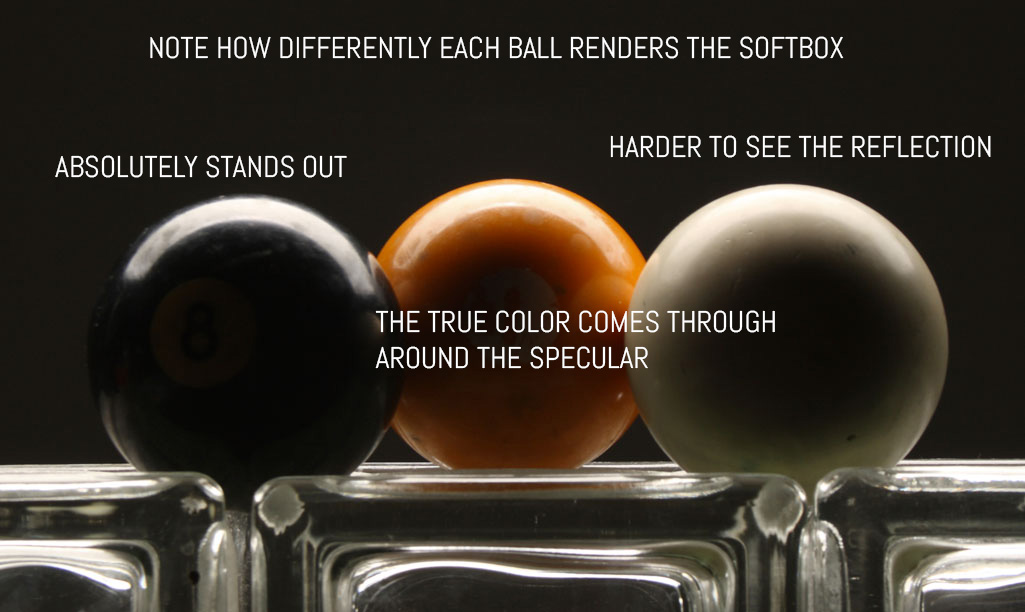
Subject Centric Lighting recognizes that light does the same thing every time. It is the subject that changes the way the light reflects back to our camera, not the light tool we choose to light the subject with. Lighting a dark bowling ball with a soft box presents a far different rendition of the light than using the same light for a white bowling ball. Everything is changed – from specular presentation to shadow fall.
But more of that as we go along.
First, let’s get into the basic principals of light and lighting.
LIGHT DOES THE SAME THING EVERY TIME
It must. Otherwise, we could never control it.
Imagine a saxophone with its many variations of keys. A sax player has to know that if a certain set of keys are pushed, a specific sound will come out. If it was random, then no music could be produced. There would be no point in learning the saxophone since there was no knowledge to be applied that would render it usable.
The same with lighting. We have to know that if we have a flash at 1/4 power, 15′ from the subject, that a specific exposure will be generated. We can control how much exposure that is by changing the ISO of course, but always at any specific setting that flash will produce the same measurable amount of light. Every time.
It is the same thing with modifiers. A softbox will look like a softbox when it is being reflected from a shiny surface. An umbrella will wrap the light if used to do so based on science and physics, not some magical desire to use an umbrella.
So if light does the same thing, how can we use that knowledge to make light do what we want it to do? And if it does the same thing every time, why do images look different from each other when using the same or similar lighting?
Subjects.
Subjects are dimensional, with textures and surfaces, and shadows and speculars and more. A shiny subject renders the light back to the camera differently than a diffuse subject does. A dark subject renders the perceptible highlights differently than a light subject. Subject change, but the physics of light do not.
WHAT YOU WILL NEED:
This workshop is designed to teach you the basic principles of lighting for photography. We will have weekly assignments and you can start anywhere, anytime. There is no charge for this workshop, although we will be asking for your email so we can keep you up-to-date with all that is going on in the workshop.
We have a Facebook Group for this workshop, and you will be able to meet others in the workshop, ask questions and find out when the open webinars will be.
You will need a camera, of course. And while much of the natural light information can be used with even a cell phone camera, much of the photographic education will require a camera with aperture / shutter speed controls.
Lighting gear:
A 5-in-one reflector kit would be a great purchase since it will be something you will be available to use over and over for all sorts of image lighting effects. I call them the best bang for the buck in lighting gear.
White cards. From the Dollar Store or Target, white foam style boards will be a vital part of your gear.
Photographic light stands. A couple of cheap ones would be fine if you do not have any at the moment.
A couple of ‘A’ Clamps from the local hardware store will hold the boards and reflectors to the stands. Get the cheap ones.
A tripod will make your work a lot easier, and there are some good ones that are not expensive.
If you are going to use artificial light, there are too many options for me to tell you much other than we will be doing a lot with them. So whether you are a speedlight shooter, have a couple of studio lights, or even continuous light set ups, all the information is the same. Light is light, and the gear is there to provide that light.
We will learn to control light and make it do provide the look we want.
On the black cue ball, the light is distinctly shaped and no other light is seen. On the orange ball, we see the softbox specular, and a bit of the true tone of the orange around it. That bright orange makes the highlight specular a bit harder to see distinctly – at least as distinctly as the black ball. On the white ball, the specular all but disappears into the white true tone of the ball.
Same light is seen differently by the camera because of the makeup of the subject. We will be discussing this in length in future posts.
Light.
It is a substance that we cannot smell, touch or hear.
Can we see light? No… we can only see what it reflects from. The subject.
I will refer to that as the “presentation of the light” in this workshop. That refers to the way the subject is taking the light onto its surface, then reflecting it back to the camera lens.
No… we can only see what it reflects from. The subject defines the light… we cannot see the light in transit from source to subject, only what the subject reveals after the light has come into contact with it.
To me, that is one of the magical qualities of light, almost mysterious and yet compliant with our wishes. I think of light as a liquid when planning my lighting… it helps
I think of light as a liquid when planning my lighting… it helps me ‘see’ something that isn’t there but yet has similar properties. Direct light is like water from a hose, while diffused light is mist. Ambient is similar to fog in my mind, while umbrellas are more like garden sprinklers.
You can think of light in many different ways to help you plan your shots, but whatever you do to help, keep in mind that light does the same thing every time. Everytime. If you have a light that gives you an exposure at f-ll
If you have a light tool that gives you an exposure at f-ll on 1/2 power at ISO 100 at 6 feet… it will repeat that for you (barring some sort of malfunction) every single time you set it at that distance, power, and ISO.
The predictability of light tools makes controlling it a matter of understanding what it does and how to use the tools at our disposal to modify, control, and adjust it to suit our plan.
Even the sun is predictable. F-16 at 1/100 with ISO 100 film. (Sunny 16 Rule: F-16 at 1/ISO). This makes understanding light far easier than if it was unpredictable.
Getting the idea of what to shoot is harder than shooting it in most case… once you know how to light correctly.
Important Note:
Everything reflects. Everything.
Dark, rough fabric does not reflect as much as a shiny, painted surface. But it does indeed reflect.
It is important to know that as we begin.
We will first turn our study to the four principles of light. While I am not a fan of rules, I will say that understanding these four principles will definitely enhance your ability to handle any lighting situation you may have.
SIZE OF THE LIGHTSOURCE RELATIVE TO THE SUBJECT
DISTANCE OF THE LIGHTSOURCE
COLOR OF THE LIGHTSOURCE
ANGLE OF THE LIGHTSOURCE
Now here is the hard part: there is no hierarchy to these principles. What that means is there is no ‘first, second’, etc. Each one of these four principles are as important as the others. We do not approach it from size first, then color – or any of that. All of it is very important and all are important at the same time.
This single idea – that all four of these principles are equal in importance is perhaps the hardest one to think about – but it starts to flow when you get it down. You can do this.
Now to be sure there are times when we start with one or another of these principles because that is the biggest challenge at the moment. And those priorities will change from shot to shot. It is to be expected since we never know what is going to be in front of us at any specific moment.
LIGHT DOES THE SAME THING EVERY TIME.
And we can control that light by the way we understand the principles of light, and understand how those principles affect a given subject depending on their properties.
Let’s look at the four principles of light.
THE FOUR MAIN PRINCIPLES OF LIGHT
PROJECT 52 ANNUAL FOR 2013
Is available at Blurb if you love the feel of good paper and a quality book. We are also giving it out as a free PDF for all. Please feel free to share it with anyone you think would be interested. All images are copyright the photographer, and there is contact...
Hey Amazon… REALLY? Are You Kidding Me?
WHAT THE FUCK?. "On March 18, 2014 Amazon Technologies, Inc. (an operating subsidiary of Amazon.com, Inc.) obtained a United States Patent (8,676,045) for a “Studio Arrangement” and a “method of capturing images and/or video.” ibook-store-widgetMany photographers will...
My Favorite Film Cameras and Film Choices
We do so many cool things in P52 and this idea is one a lot of the photographers are picking up on. We are going to have a fun little 'assignment' to shoot 24 frames of film in May. Just 24... but we want all of them to be 'good shots'. What started as a one shot per...
“Air” by Meggan Joy Trobaugh
At the Project 52 2014 group, the assignment was "Air". There were many wonderful submissions. This one by Meggan Joy Trobaugh was exceptional I thought. She carefully planned out the work and made the elements for the final work with a previsualized image already in...
A Fall Workshop in the Canyons Announced
The workshop is a blast. We all pile into a large, comfortable van and head off to Northern Arizona. Our first night is in Flagstaff, then off to the reservation lands of the Navajo, Vermillion Cliffs, Marble Canyon, Kaibab Plateau and more. We spend an afternoon and...
“Black Angels” – An Assignment for a CD Cover
This week the Project 52 PROS for 2014 are working on an CD album cover for a faux assignment. The music is George Crumb's "Black Angels" for Electric String Quartet. It is very challenging music. The students for this morning's Friday class really knocked it out of...
A Life, A Lifetime, and a Tie
John Thomas Banta had over 200 ties. Most were bold, loud, occasionally whimsical and always hard-to-miss. In short, they were very much like him. He dressed for occasions, often wearing his wildly interesting ties. And he lit up the room with his presence. He was a...
Is Giving One’s Images Away for Free a Brilliant Marketing Move?
... or a very very bad idea? Trey Ratcliff (Lost in Customs) has always given his images away on the Non-Commercial Creative Commons License. What is new today is his link to grab ALL of his favorite 500 images for free and download them in full high res form. See...
“What Should Photographers Charge in 2014?” – A Discussion with Rosh Sillars
My bud Rosh Sillars' recent article on "What Should Photographers Charge in 2014?" really hit home with me and a lot of my Project 52 PRO's. Pricing and figuring out what to charge is always a very difficult part of starting a photo business, and Rosh takes a very...
Shooting a Beer with Rui Bandeira
We have so many talented people in the Project 52 PRO group. Meet Rui Bandeira. He shared this shot with my last night and I knew I had to share it with you all. Here is Rui: "Hi, I had 3 goals for this shot: 1) it had to be fresh and make the viewer desire to drink...
Photoshop Repair: Bri in the High Desert
I like to play around in Photoshop a lot, and when I do I am going to start sharing what I do with my Project 52 Pros. And anyone else who wants to know what I do. I am not putting myself out there as a Photoshop Guru by any stretch of the imagination. I am simply...
WHY I AM CHUCKING ALL MY GEAR AND RETURNING TO SAND PAINTING AS MY VISUAL MEDIUM.
I have always loved sand. When I was a kid I would play in it, except when mum let the cat play in it first, and then it smelled sort of like my little brother, but... I digress. Cameras are obsolete. We hear every day about this new gizmo and that new gizmo, and how...
Project 52 Summer Group Opens For Registration
More Information on this page.
Book Ideas: “What If…”
What if. What if you created a magazine instead of a book? Told a story or two in the magazine, showed a subject in depth, then printed 10 copies for influential art directors in your town and offered all who came to the site a PDF? (Blurb does magazines for as little...
ISLA: A New Book by Ernesto Bazan, Photographer
"No, I don’t [do assignments]. I stopped doing that, more or less, when I decided to become a teacher in 2002. Because of my workshops, I had to leave Cuba in 2006, which is ironic. I fund all my work thanks to the generosity of my students. This will be the third...
What Is The Biggest Problem with Your Photography?
The biggest problem may also be the one that most people focus on. No pun intended. "So let’s get the elephant out of the bag most of you keep it in and into the room where we can discuss it: most people are complaining about their cameras because otherwise they’d...
08: Controlling The “Presentation of Light”
Subject Centric Lighting: The Five Areas of Light Presentation Cover image by Project 52 student, Gabriel Alvarez. When the lighting choices we have made are used, the light is 'presented' back to the camera in expected, and controlled ways. There are five parts of...

Arc of Beauty: Side to Back Lighting
Have You Considered the "Arc of Beauty" in your lighting? (Image by Tracy Sutherland) We are going to take a high-level view of lighting today and discuss what I call the "Arc of Beauty". And while no lighting scheme is going to be directly discussed, what we are to...

Merry Christmas / Happy Holidays to All
My CreativeLIVE Table Top Class to be rebroadcast!
What does this mean to you? It means you can watch it free, no charge, toll exempt, dinero not necessary! Consider it a Holiday Gift from the great folks at CreativeLIVE and your host here at LE. From the CL class page: Basic Product Photography. Don Giannatti returns...
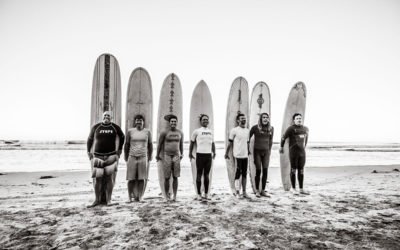
Mike Moore: Surf Shoot
Mike Moore is a Project 52 alumni, and has been building his business in Encinitas, CA for a few years. His specializes in food and lifestyle, especially beach lifestyle. This is a personal project Mike shot at a surf event in Encinitas, CA. 1.) Tell us a little about...
The Games We Play; Find the Shot Before Moving On
One of the things I like to do is to play visual games. I have several to share with you, but this one is one that anyone can do. Anywhere, any time. First; I believe that if we are to call ourselves photographers, we must photograph. Make pictures. Make images....