
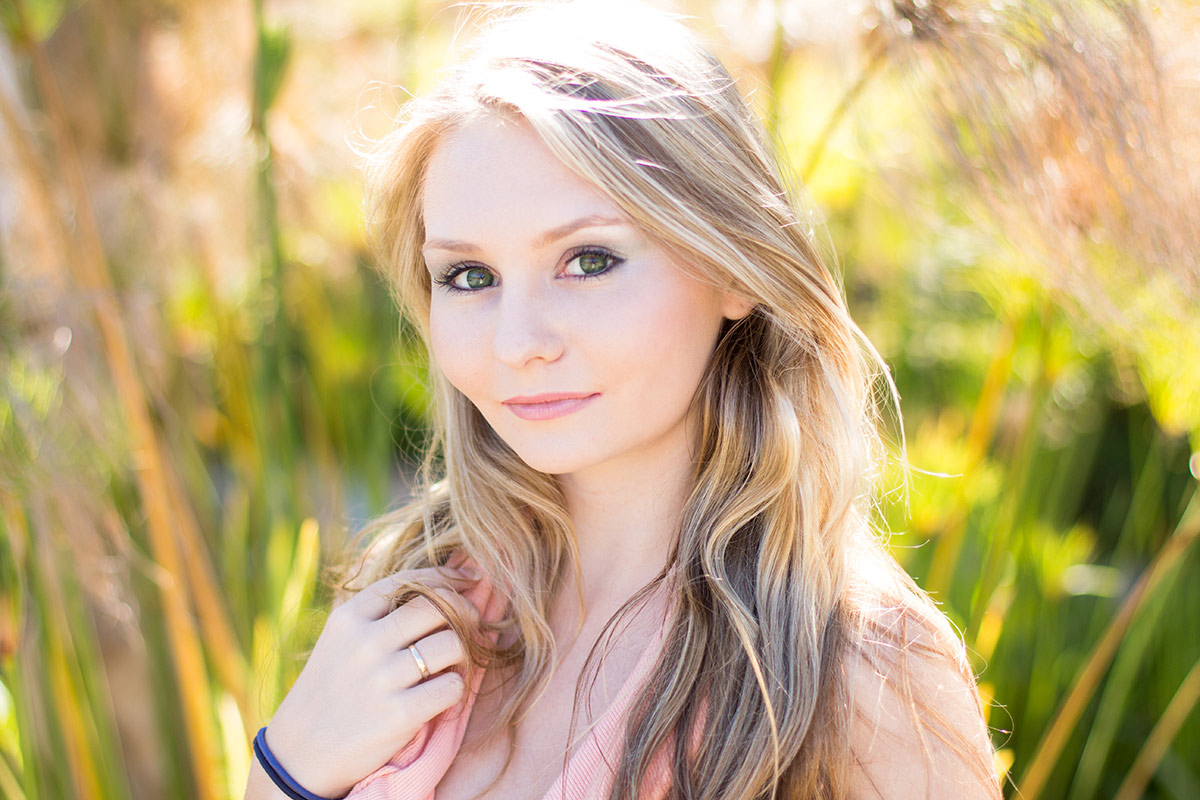
Matte Surfaces
These are surfaces that are not as rough as texture, but not smooth either. Skin, cloth, natural leather, finished woods and many food items are examples. Most of what we deal with in our daily lives would fall under the Matte surface example.
Matte surfaces have a softer way of showing us the reflection of the light source. Where texture showed us mini sources next to mini shadows, the matte surfaces have less of a drastic presentation. The surface doesn’t have that much difference between the size of the components of the texture. A cloth book cover has texture, but it is much more tightly confined than say old barn wood.
And the reflection of the source is shown as a larger area rather than many tiny reflections. This gives the texture a smooth and not altogether recognizable shape. There is an angle where the incidence will match the reflection, and be seen by the camera, but it will be a muted reflection, not a harsh one.
EXAMPLE of Matte Surface reflection of the light source. You can clearly see the reflection of the source, but the transition to the non-reflective areas is gradual and not defined.
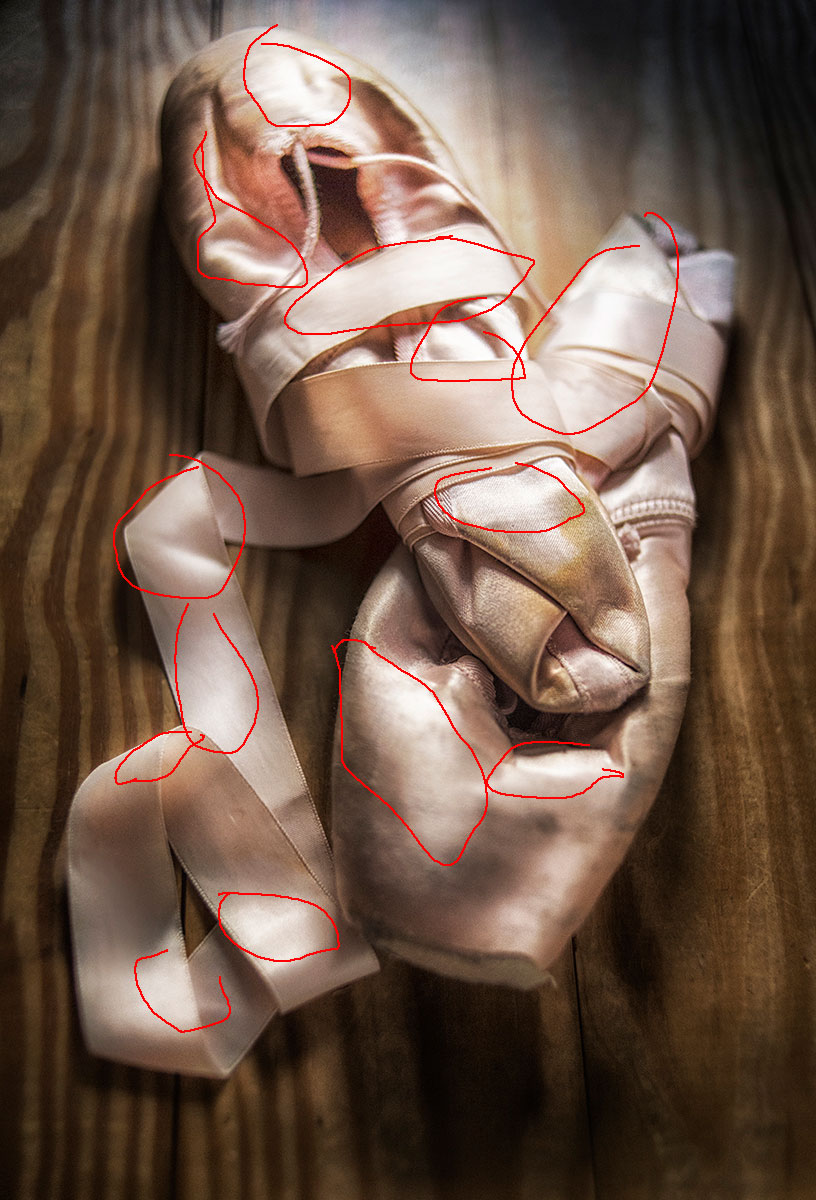
The ballet shoes are most defintely NOT a highly textured object, nor are they glossy.
Skin is one area of great interest. Portrait, beauty and fashion photographers have to be able to control the way skin looks for their imagery. And skin can present some widely diverse efficiency. Dry skin has a very matte look, wet skin becomes more efficient due to the water, and then the reflection is nearly absolute, and skin color can become an issue with the wrong kind of light presentation.
A good makeup artist helps to smooth out skin blemishes, we know. But the MUA also helps to matte the skin evenly so that the reflections of the light sources do not create very bright reflections on the face.
A model begins to sweat…err, sorry, perspire with the heat, and the skin becomes a bit more efficient due to the moisture. Liquid is much more efficient than skin, so the perspiration on the face becomes shinier. The remedy is a little bit of powder, which of course renders the skin more matte and less efficient.
Faces are full of contours and angles that can reflect the light source back to us. Tips of noses, eyebrows, cheeks, chins and foreheads are all areas of concern when we are shooting with light that has a small source. The small source can become a direct reflection on even matted skin, so keeping it within our tolerances is very important.
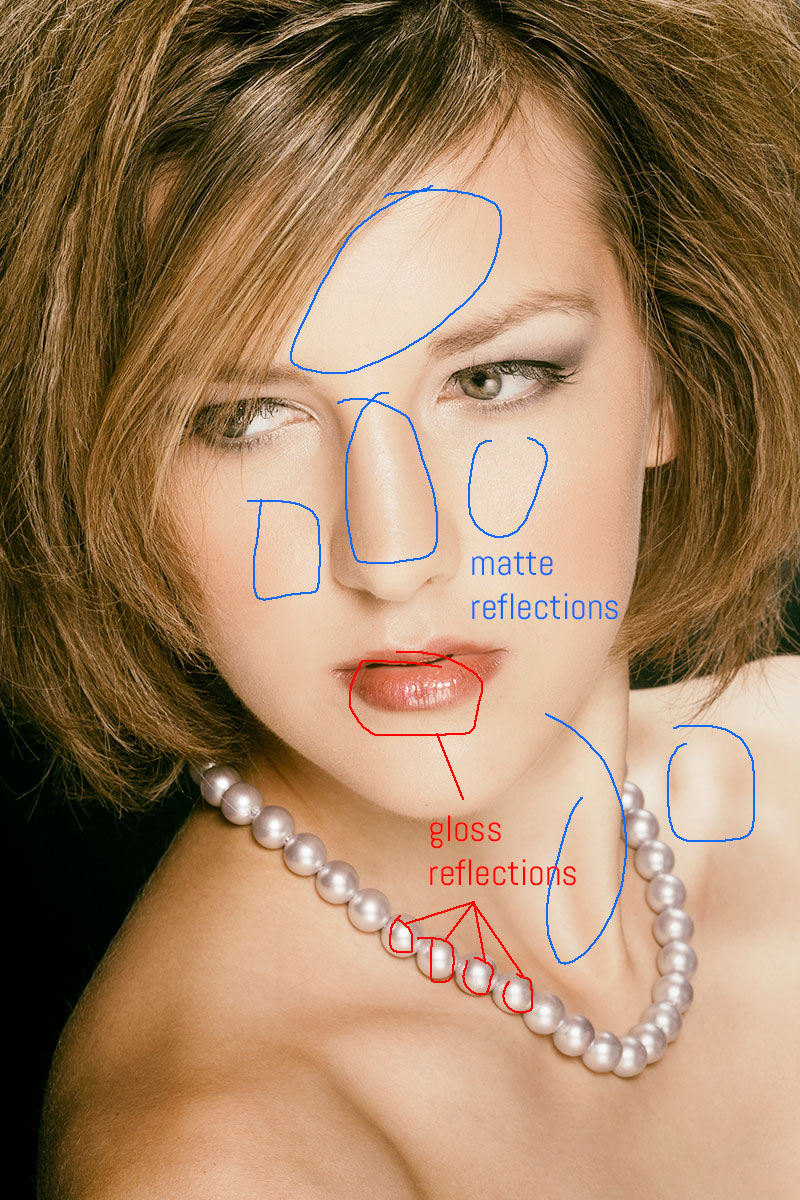
Again, you can see the very soft transition from the highlight to the non-highlight matte surface, where as the gloss lipstick provides a sharp, immediate transition to the non-reflective area.
Photoshop Note:
Trying to fix a small highlight on the tip of the nose, or one that is across the whole front of the forehead is painstaking and difficult. It can be done, of course, but working with the subject to make sure he/she is not rendering the light back to you in such a way as to need the Photoshop is much more preferable.
There may be times when we may want to enhance the matte texture, to make it more discernible, and bring out the texture instead of mitigating it.
Angle of incidence again comes to the fore. Angled to present even the smallest texture, the photographer can decide between broad light, like a softbox, or sharper light, like a direct, unmodified head, or a snoot.
Example of enhanced texture: Portrait of Tomas.
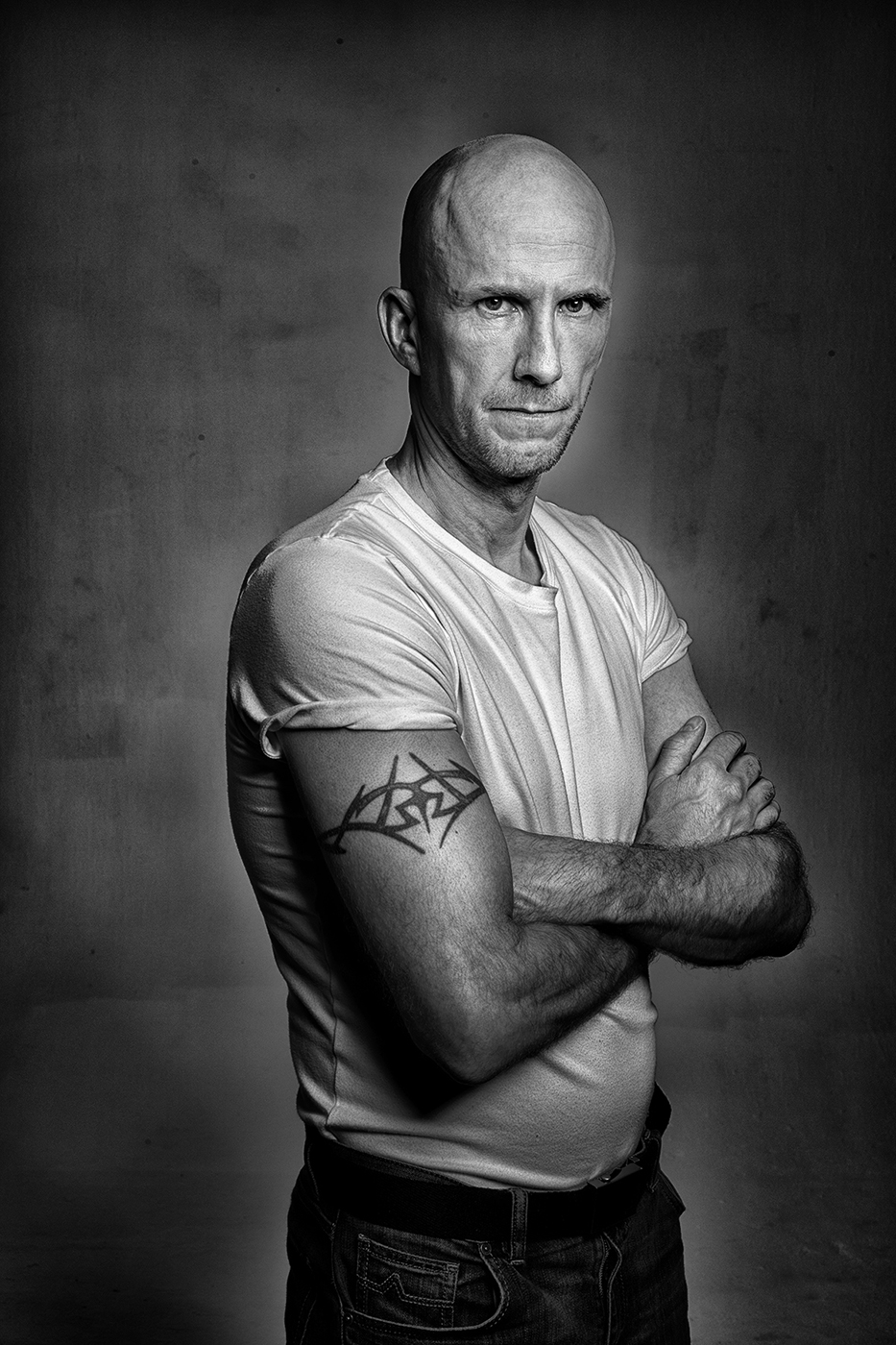
Even with the matte surface of the skin, by using a small lightsource (beauty dish at a distance) we can create more texture in this portrait by putting the light at more of a wide distance from the camera. This adds some texture from the sidelit properties of the subject. Enhancement in Photoshop is then easy, and keeps the matte surface for a cleaner presentation of skin.
Matte surfaces are where we can experiment and work with light to play down or enhance, or simply show it as it really is.
And most matte surfaces can be altered to create something more efficient or less. As we have seen, powder for skin can take away the ‘shine’ that we know is really the reflection of the light. Water or liquid can add sheen to the subject when we want the reflection. And we can use materials to create shine, like wax on a wood floor to enhance the matte to be more shiny by showing the reflection of the light as it renders back to us.
Remember that we all KNOW what shiny looks like, what matte feels like and how rough something is. It is part of what we learn from the beginnings of our lives. We touched, we saw, we felt… and we learned. Photographers aren’t creating anything new, we just learn to present it to others the way we want them to see it.
To recap:
Textured surfaces present small highlights and shadows because of the rough surface and how it reflects light. From a stone to a mountain, the texture can be enhanced by playing up the highlight and darkening the shadow.
Matte surfaces will show the highlight softly, allowing it to transition to the non-reflective part of the surface in a more gradual effect. This may be the most prevalent surface we have around us.
ASSIGNMENT:
- Look around at the matte surfaces. they will most likely be more numerous than very texturized things, or very shiny things. Take some time to quietly study what light does when it is refracted from them.
- Note how different light (direct / indirect) reflects from the surface. Make images showing the difference.
- Examine the ways that matte surfaces can become textured (heavy side/top light), or shiny (wetting the surface down changes its ability to render the highlight and now it becomes more efficient).
Three Hot Shooters to Watch: Kate Orne, Nick Onken and Jake Chessum
Sometimes the fun of looking at images takes over and you just want to feast your eyes on pictures that amaze, involve, stimulate and motivate. The three photographers here are some of my favorites and I return again and again to their wonderful imagery. In particular...
25 New Images from the Lighting Essentials Pool
Well, the pool keeps gettin'g deeper, ya know. I was perusing it last night and realized how many incredible pics had been added recently. This pool is really rich with excellent photography. I want to build the forum up a bit, and if anyone has questions and such,...
Tech Sheet: Two Speedlights and the Sun for a Dramatic Portrait
Our first Tech Sheet of 2009 is kinda fun. I have been working on getting a client to approve a project I want to do and they did over the holidays. It will be a series of images of athletes and artists in environments that may not be their regular habitat. This image...
Welcome to the Best Year Ever! 2009 Will Rock!
Well, the last year of a strange and rocky decade draws to a close tonight. I know this past year has been an emotional roller-coaster for me as well as a very successful one with the workshops and the business. I hope you will join me in saying 'hasta la vista, baby"...
Real Simple Headshots on Location
Occasionally you may have a situation where you have to do a lot of images in a very short amount of time. These kinds of gigs can be a little disconcerting if you over think them and get caught in a web of setting up and production as time slips ever so quickly by. I...
The First Assignment: Pitfalls and Opportunities
Every photographer has a first assignment. There simply has to be one. The culmination of lots of hard work, a great portfolio and perhaps a little luck and there it is... a job. The first assignments can be very stressful or they can be a thrilling moment in the...
Tech Sheet – 12/19/08: Two Bare Speedlights for Drama
Today's tech sheet looks at using two speedlights for a dramatic headshot. We aren't doing anything really special, although I did modify a Gary Fong diffuser to give me a round light instead of the oblong/square light that a normal speedlight gives off. I wanted to...
One Setup, Two Different Shots (from the Archives)
Well this one is kind of fun. I found this in the archive box and remembered that it was a kinda fun little slide show. This "soundslide" offers a look into how I took a single lighting setup and shot it two ways. I use a big softbox often when I am working with...
25 Excellent Images From the LE Pool
Well, as the year grows to a close, I am happy to see so many wonderful images in the Lighting Essentials Flickr Pool. I went through the last 10 pages or so last night and found these excellent examples of using light to make a shot more interesting. They are all...
ON LOCATION: with Jerry OConnor, Jim Vigileos and Christina
Photographers in Phoenix like dramatic skies. We get so many days in a row of bright, blue that when it gets dark and moody up there some of us grab cameras. My friends Jim Vigileos and Jerry OConnor did that recently and along the way they grabbed Christina to add to...
Modeling the Light: A Model’s Role in Lighting
' Britney Spears "Kill the Lights! Don't be scared, make a move, see me now" A model has a role in lighting? What? Unheard of? Crazy? Not so much. A model has to do more than smile prettily and pose, she has to be aware of her environment, from the objects in place to...
One Light for a Highly Reflective Item
A simple product shot can sometimes present a lot of challenges for the photographer not used to thinking about reflected specular lighting. In this shot, the product is practically lit with specular reflection. There is very little direct light on the Hard Drive...
An Editorial Portrait Assignment on a Short Schedule
There are occasions when you need to work very, very fast and still deliver a shot that makes both client and subject happy. These types of shoots can be frustrating and challenging, but it keeps the adrenaline going and when it results in an image that everyone...
December 2008 Lighting Essentials Desktops
Here they are... a day late, but here nonetheless... Lighting Essentials Free Desktops. This time I will explain a little about the lighting so you can get some brain exercise as well as some fun desktops for your monitor. NOTE: Our schedule for the first half of next...
Let’s Do Some Lighting Today… (from the Archives)
Today's update is one from the archives, but it is still a great post you will enjoy. Even includes a 16 minute video... bad audio, but you will get the ideas from the shoot. We are doing better audio for our next releases, but this is what it is. I would like to take...
Shooting on the Beach with Two Speedlights and the Sun
This is a simple shoot that can have some very nice nuance as you work two speedlights into a shot with the sun as back/side light. Using two sources a bit apart can cause multiple shadows, so you have to be very careful to make sure they are not a problem. For this...
Cleveland Rocks: Dispatch From Beside Lake Erie
Thanks Cleveland. You guys made our last workshop of 2008 a great success. And that wasn't an easy job. Rain, thick clouds, wind, sleet, snow and temperatures that our desert bods were simply not used to didn't deter anyone from digging in and having a blast. We had a...
Tech Sheet 2, November 2008: Two Light Portrait
This weeks Tech Sheet features one of my favorite portrait techniques. In this shot I am using it as a bright, poppy front light with a very pronounced back "spray" light. It is an easy setup with lots of room for customization and personalization. It can be done with...
Clamshell Lighting for a Glamourous Headshot
Well we are back from the Cleveland workshop and it was amazing. Bright sun and clear skies were a super benefit... for someone somewhere... we had rain, wind, snow, rain, wind and cold. At least for Bri and I coming from the desert... We left Cleveland at about 28...
Using a Single Softbox with a Shiny Card for Headshots
Sometimes you just want a simple image, a headshot or a 3/4 image that has a very direct light to show the skin color, open the eyes and bring some vivid highlights to the person. I like the big softbox and how it can simply wash the person with a clean, bright light...
First “Tech Sheet” and Assignment.
We are so excited about the new series we are starting... the "Tech Sheet" series. We will do one every two weeks and they will be uploaded on the first Friday and the third Friday of each month. Those months with an extra Friday will find an extra Tech Sheet. The...
Sun, Fun and Dancin’: November’s Free Wallpapers
A day or three late, but here nonetheless. All feature the lovely Briana who has a new calendar out on dancing called, appropriately enough, "Dancin' " You can see her site here. Before heading over to get to them, take a look at some of the recent posts if you missed...
Some Recent Workshop Images
Photo by Gary. As the workshops wind down for the year, there is a sense of excitement growing for the next season of Lighting Essentials workshops. Some changes are in order, and some tweaking of the workshop's standard fare is also coming along. We are looking to...
Something to Think About: Should Photography be Easy?
As I write this I am about 34,000 feet over Colorado heading to Atlanta to teach a seminar. I have a question that keeps popping to the fore in my thoughts. (NOTE: I posted this article to a forum on Flickr immediately after it was written. I want to share it with the...