
EVERYTHING REFLECTS.
Let me say that again. Everything reflects.
Some things reflect more than others. Some surfaces are more reflective than others.
But since everything reflects, we are sometimes presenting what that subject reflects rather than ‘bouncing’ light into a dark area.
In portraiture, I think of providing the shadow side of the face something to reflect back to me rather than ‘filling’ as in creating light on a dark surface. The reason is that the cheek and chin and hair on the shadow side can be made to reflect the object I have placed there if it will indeed be within the angle of reflection to my camera.
I believe I get more control that way. The brighter the ‘reflectors’ the brighter the reflections back to me. Moving the reflector away from the subject increases the distance, and the reflection becomes less bright.
One of the chief reasons that things reflect the way they do is the surface of the subject. Smooth surfaces may reflect absolutely, with lots of contrast, while adding texture will cut down on the reflection of the light and actually cause it to be presented with less contrast.
It is this nature of the subject that I focus on first when deciding what kind of light to use.
I will say this before we go on… there is NO one way or right way or best way do make images. There is your way and my way and her way and his way and on and on. I will present to you what I do and you are free to take it and modify/adjust/deconstruct/start over or discard what I do. It’s OK. In fact it is what I want you to do. Take this information and make it yours. Utilize subject centric lighting in your own way and make better photographs.
Surfaces have a couple of distinct parameters for us to explore: rough, smooth matte, shiny and combinations of all three sometimes. And each one of them reflects light back to us in different and particular ways.
Shiny, glossy surfaces, matt surfaces, and textured surfaces.
We will first look at textured surfaces.
Texture is what I see first when I start to look at a subject. I just do. Of course color and shape and all play into it, but the light has its way with texture, and I notice how it is presented back to the camera. In nature it can help me decide the angle of my camera to subject and in the studio it helps me decide on what kind of lights/modifiers I will be using.
I can choose to either enhance or mitigate texture by using the angle of the light as it is presented to the subject and back to me. A very rough wood wall with light scraping down across it shows a lot of texture, and I can use that angle of light to reveal that texture to my viewers. If I decide to lessen the contrast I can wait for a cloud to come between the sun and the subject, or go around the subject to see if there is texture wood in the shade. It will still be a texture, but it will have less contrast between the bright part of the texture detail and the shadow side.
The cloud lowers the contrast just as being in the shade does. In simple form, the light source becomes larger than the detail of the texture, but we will discuss this further in the next chapter.
If the light is on either horizon, I can change the look of the texture by changing where I put the light in relation to the subject – in relation to the camera.
Light from the side shows more texture. Light from the camera means less texture. The reason is that there is more contrast between the highlights and the shadows cast on the sidelight than there is with the light coming from the same direction as the camera. The light behind the camera actually doesn’t show shadow to the camera (angle of incidence = angle of reflection) while the sidelight throws shadows and creates contrast.
Texture shows the viewer how rough an area is, or what kind of surface they would find if they were there. It delineates the shape of details and it gives us information beyond what we would see on the surface. Old things have lots of texture from the weather or the sun. Areas that are full of texture have lots of visual energy. The eye knows that the light is playing on something that shows itself with character and charm. Cookies have to have texture, as does old barn wood. We want to see the texture in an old book as we want to see it in a pasta dish or leather jacket.
In the picture below, I am using a hard light to emphasize the texture of the pods. A small light source placed at a side angle to the pods and camera gives me highlight and shadow with very little transition between.
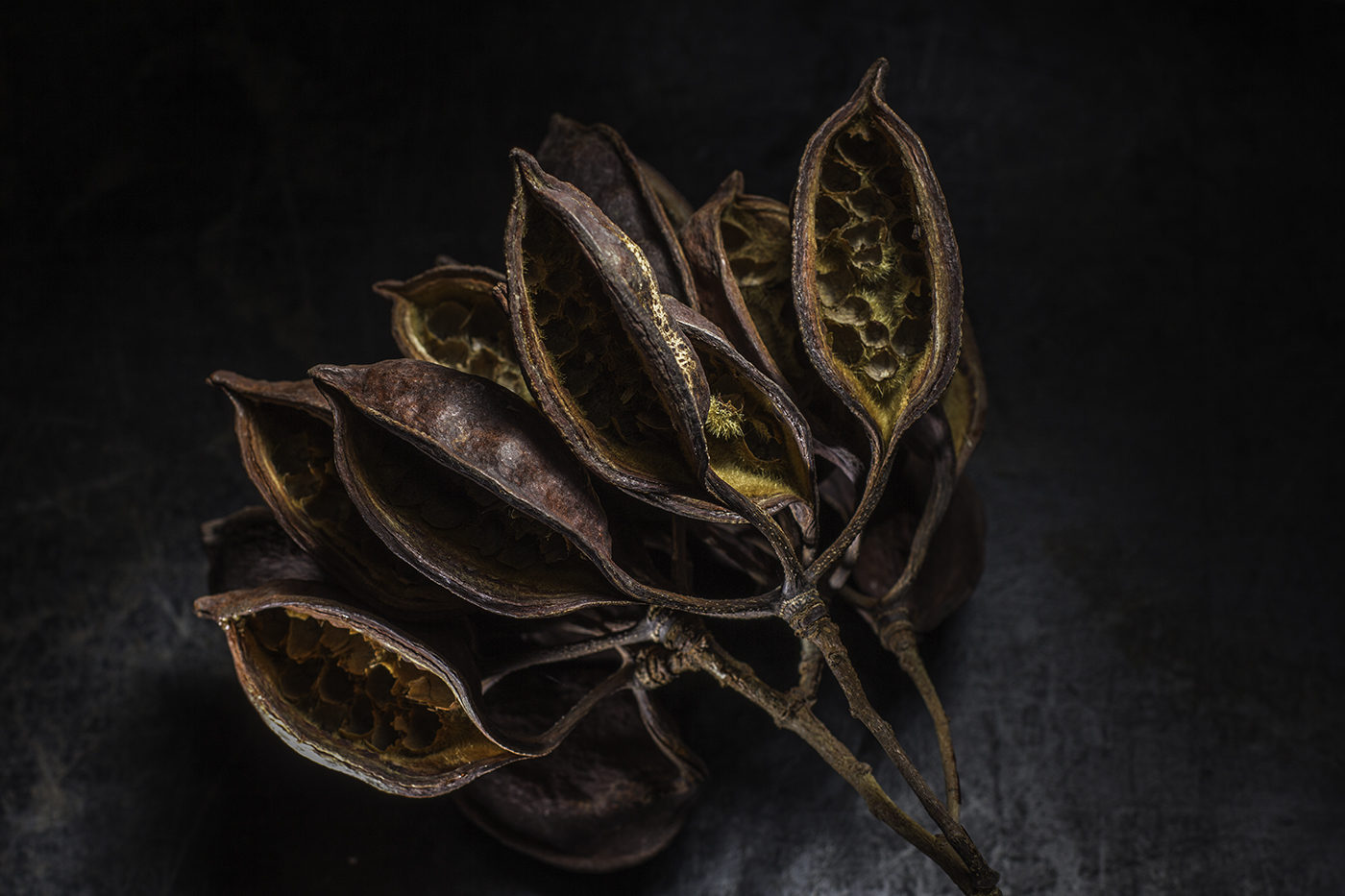
You can see the side light in the stems and the rim of light that is created by the quick fall off from reflection of the light source to the shadow.
Texture gives us context, and it is nearly unconsciously understood. We have seen what light does to texture our whole lives, so when we go to photograph it, we are naturally drawn to those times of day and places where the texture is well rendered.
But there are places where texture may not be as welcome. A subject’s face or skin may not be considered a good thing when rendered with a lot of texture. Unless, of course, they are quite interesting with the texture rendered. Age is something we can show with texture – and along with that inspiration, wisdom and the universal knowledge of what aging does to us all.
The old brick wall that Jamie is running on shows lots of texture due to the sidelight (top light) giving us edges and shadows.
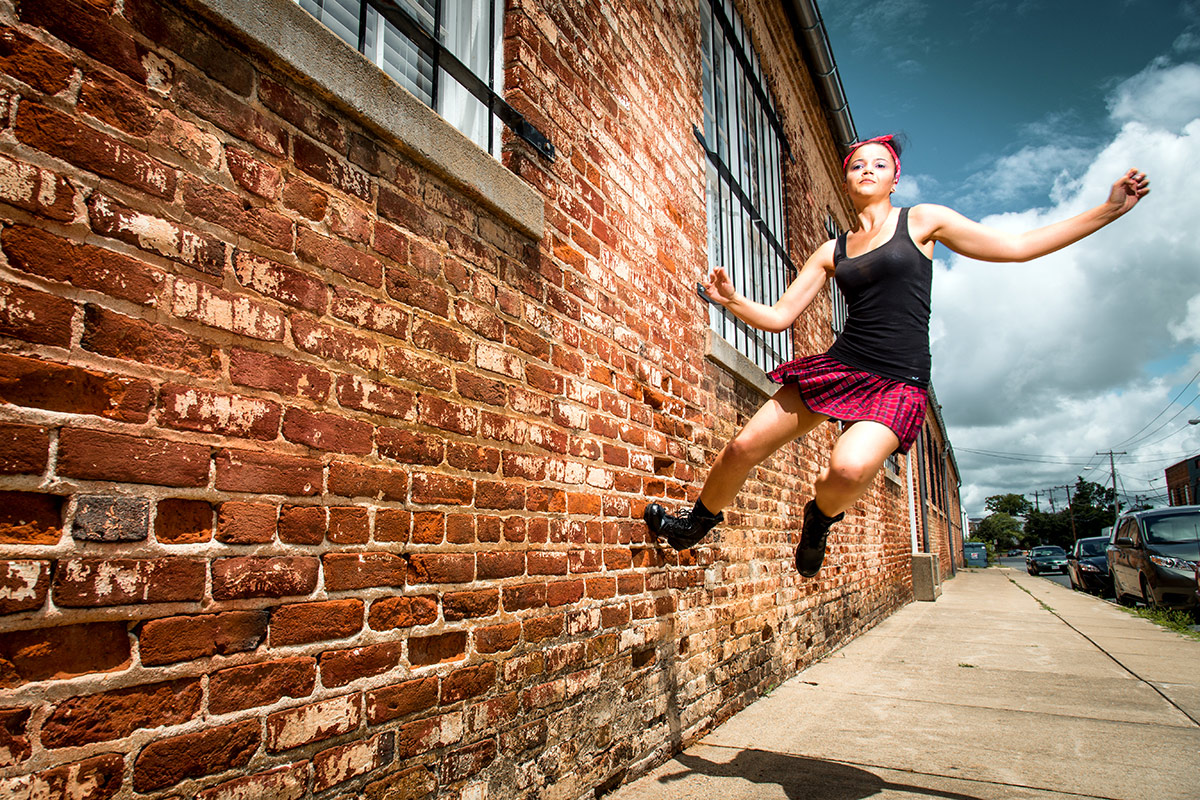
A close inspection shows us the highlights on top of the bricks and then the many indentations exacerbated by highlight and shadow with a fast fall off. This is created by using a small light source – the sun – and a large subject – the wall.
We want our things to be rendered as we expect them to be in real life. Water is wet, rough-hewn wood should look like it is a splinter waiting to happen, glassware should be very smooth, and skin should be smooth and attractive.
Sure there are examples of things being rendered in an un-natural state – and that’s fine. I am talking in a generality here, and one with a lot of history to back it up. While there may be an example of two of rough, scary skin on teenage girls, the vast majority will reject that image instantly.
This shot of cracked earth exhibits many of the properties of a subject / light relationship. Notice how much texture is shown due to the small light source side lighting the cracked earth. The sun is a small light source, and you see no soft, wrapping light, In addition, there is a bright spot in the middle of the image created by the specular – although it is a bit diffused, the dried mud is still reflective enough to show us a reflection of the sun at the same angle from camera. If I moved left or right, I would change where that bright spot was because it was locked into the same angle as my camera from the other side.
I chose to place my exposure one stop less than the recommended exposure to increase the feeling of a vignette.
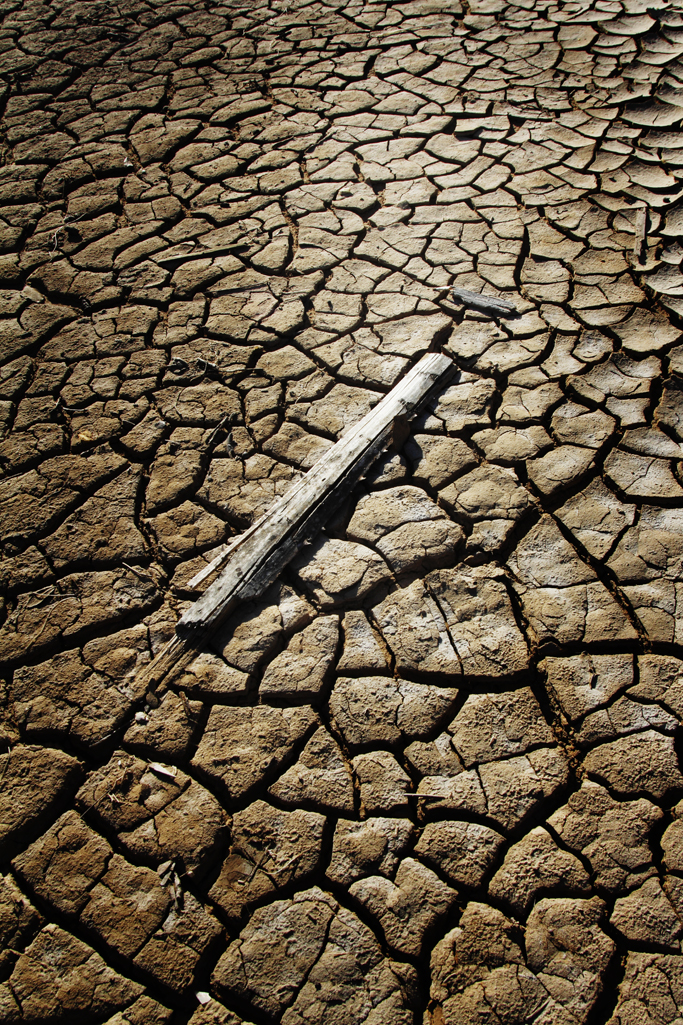
Small lightsource, at a side (back) angle and a slightly reflective surface gives us more to work with than just a dried mud slab.
Texture is also shown by the angle of incidence rule. If we choose to include the light as a part of the composition, for instance, we may choose to include its direct reflection back into the lens. A highlight on a shiny surface will show us how shiny it is by the relationship of the light and the surface around it. A less smooth surface may make a softer reflection of the light source, and that will also tell us about the surface texture.
In this detail of an alto saxophone, the light is coming from the top back and it leaves small speculars on the areas that are efficient (shiny) and emphasizes the texture of the old keys and metal discoloration.
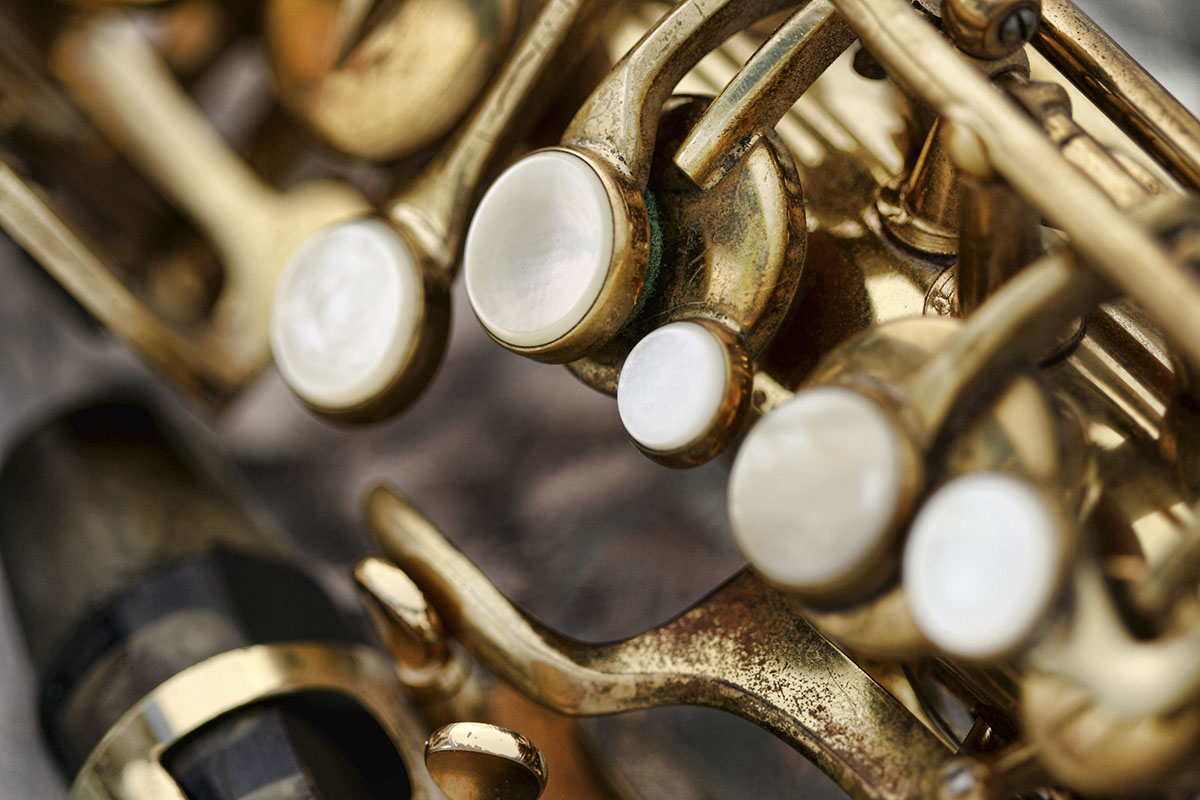
There are many places where we can use the reflection of the light source to create a cool looking gradation or highlight to create some interest as a point of composition as well.
The main point of this composition is the light on the wooden tools. By making sure the matte textured tools have a soft, directional light without any fill, the texture of the wood shows clearly in the image.

Ways to create texture:
Sidelight.
Top light.
Hard light (small source).
Backlight can also be used in many situations.
ASSIGNMENT
- Shoot a textured item (product / thing) to show the texture and find ways to mitigate or lessen the texture. Hint – front light nearly always kills texture, and sidelight nearly always makes it stronger.
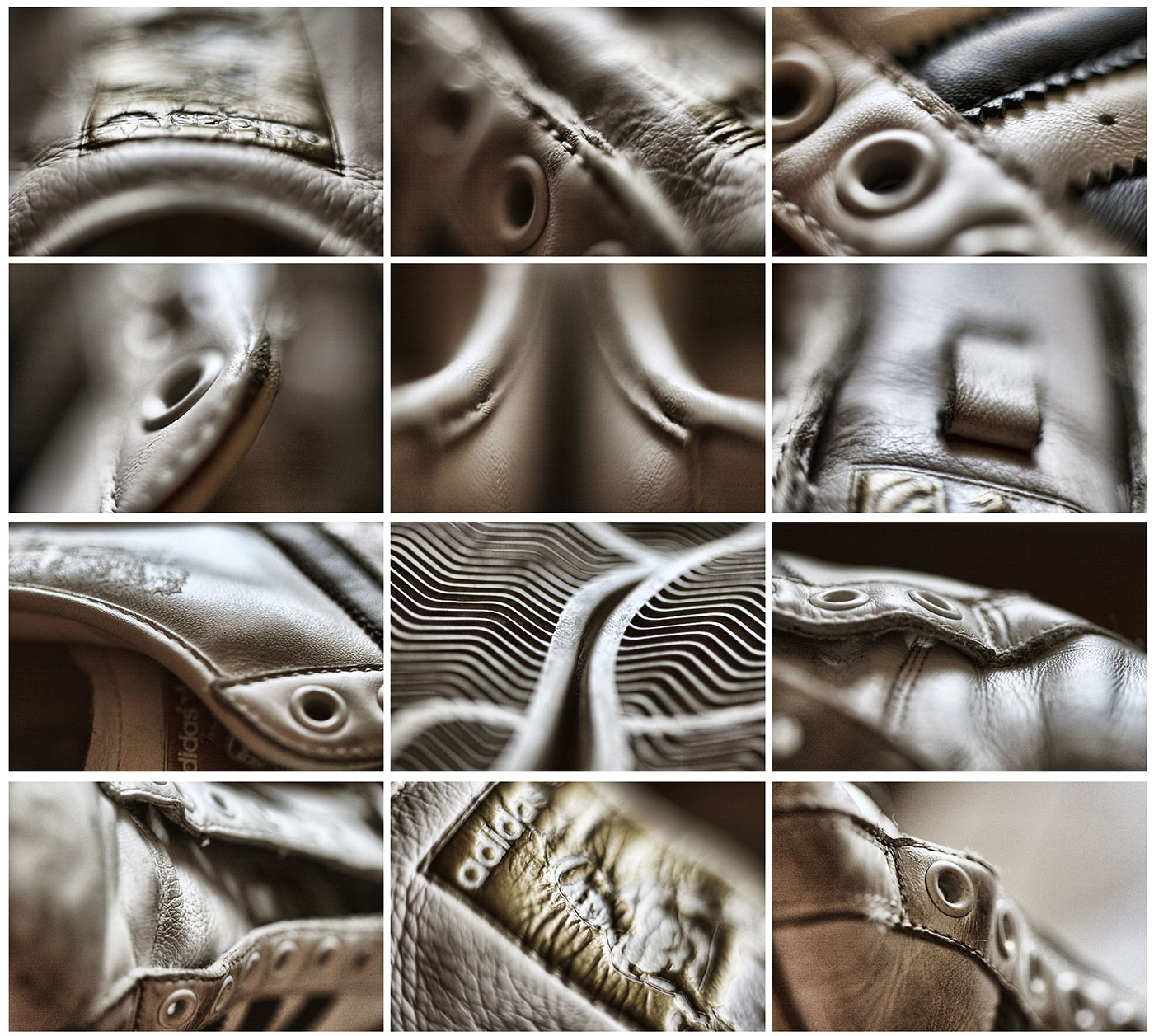
- Take a single textured item – like a shoe – and using your flashes or studio lighting, create as many different texture shots as you can using only one light – no fill.
- Look for texture in nature and shoot images that emphasize and also lessen the texture just by walking around the subject to see different angles of light to subject to camera.
Lighting Basics, Class Two
The Lighting Angle: Part One Now that we are starting to understand the metering a bit better, we are going to look at how the angle of the light can create different presentations - AND different exposure situations. The camera is a fixed position. It is where the...
“Tungsten”
Photographer Anders Ericksson, Sweden. A combination of several photographs, Anders Eriksson creates a 'magical' moment of light. The bulb was shot alone in order to get the edge lighting exactly right. A strip light was used to light either side and then the two...
Lady in Blue
Photographer Girish Bashavar, Ohio In this photograph by Girish Balshavar of Dayton, Ohio, the model is lit with one large source to camera left, and slightly below the subjects elbow. The light source, a softbox, is only a little out of frame and providing...
Through the Rainy Glass
Photographer Anna Gunn and Filipe Martins, Portugal. A thin sheet of glass was sprayed with water to provide a bit of an out of focus foreground and create a mood for this stylish portrait by Anna and Filipe. To create the feel of a rainy day, they used a large...
“Firemen”
Photographer Julie Clegg, Seattle. A main light softbox from slightly to camera left provides the overall illumination. Julie added a fill card to camera right, and it is just out of frame. Directly behind the center fireman there is a gridded spot to add very...
Bob Knill’s “Moody Style”
Photographer Bob Knill, Maryland. Bob Knill of Frederick, Maryland wanted a very dark, moody portrait. Using a main light consisting of a 5-in-one scrim (the inside of a 5-in-one reflector system) with a speedlight he created a very earthy, dark but sublime...
One Light Glamour
Photographer Alicia Bonaterre (Trinidad) For this shot, Alicia used a single strobe in a dish reflector from slightly to the left of her camera. The hard light provides a wonderful highlight on the models legs and sculpts her form well. Using a single hard light is...
Lighting Basics, Class One: Light and Exposure
WELCOME TO THE CLASS... ENJOY LEARNING. This is Lighting Basics... a way to get a fundamental instruction in the art and science of photography. It is geared toward beginners, and those who are mid level but have not had formal training of any kind. Please do all the...
Lighting Basics: The Introduction
It's February 1, 2014. This begins the "Year of Teaching" for me. I may or may not be doing any workshops, but I love to teach so here goes. What this year long series will be: A comprehensive look at what I call "Subject Centric Lighting" - the understanding that the...

And We Are Back
That medical issue took more out of me than I was willing to admit. But I am back - and so is Lighting Essentials... a new post every day. Lighting, gear, photography and fun... What's gonna be new? Watch and see. We will have a new photograph, complete with lighting...

Going Back to Go Forward: REBOOTING Lighting Essentials
As many of you know, I had a pretty rocky third quarter with some serious health issues. They took the wind out of my sails, so to speak, and I had limited energy to work on the things that I loved. Lighting Essentials is one of my favorite things, but I had to keep...
Protected: Social Media Photo Sharing Sites: Your Experiences.
Password Protected
To view this protected post, enter the password below:

The “Help Me Pay My Docs Off” Sale… LOL
The "Help Me Pay My Docs Off" Sale As many of you know, I was hospitalized for a week in August for a severe blood clot, and a PE which resulted in a heck of a lot of clots in my lungs. I am on the mend, and things are getting back to normal... but I also have...
“Everyone is a Photographer Now…”
Photography: A recent quote by photographer Mary Ellen Mark has had some angst-driven controversy: "“People are bidding on something that has no value. I thought it was a joke, so I just took a cell phone picture of a real photograph. It is easy to take a good picture...
Impatient Patience
Impatient Patience...Keeping The Momentum While Learning the Ropes You know how you think about things around the edges, trying to formulate the thoughts into some kind of pattern that makes sense and can be challenged and won from various angles? You do? Cool, then...
An Excerpt From New E-Book
Chapter Eight Becoming Exceptional As we move toward the beginning of our business plan, I want to take this time to discuss becoming exceptional. Being exceptional means you are a cut above. Maybe two. Being exceptional means you do things differently, and better....
Camera Phones and the Future
Photography: "Everyone is now fully aware that professional Dslr are going to be replaced by mobile phone cameras. It is just a question of time. Already, this year, there has been more phone cameras sold than point and shoots. One main reason: Phone cameras can now...
What’s Wrong With Photography? Nothing… Its Photo Writers We Should Question
A review of an article written for F-Stoppers by Lee Morris. The Nikon DF Represents Everything Wrong With Photography Or does it? I have a bad distaste for the bullshit club. The elitists who sit on the sidelines telling others what 'should be' without getting in the...
Just How Easy Is It To Be a Photographer?
(Originally Published in "In The Frame" my weekly Sunday Dispatch. If you are not subscribed, there is a place to do it just to the right of this article.) I recently received an eamail that made my day. It promised me a six figure income in photography and with...
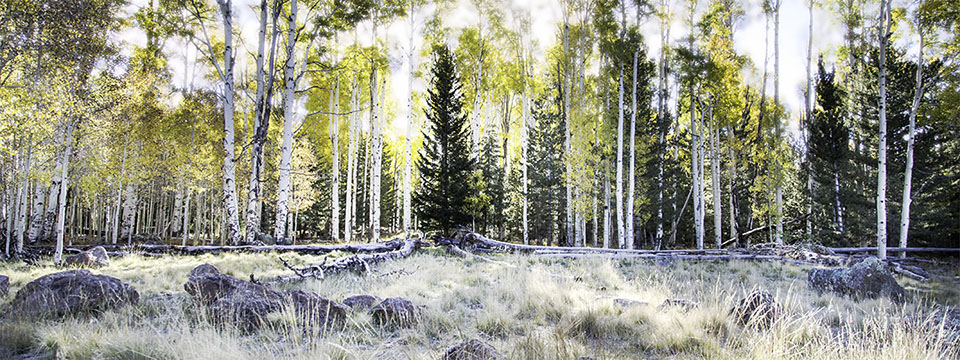
First Roadtrip: Flagstaff and Jerome
I have not had the chance to do much roadtripping lately. The docs wanted me to stay pretty close to home for a while, but heading up to Flagstaff is only a couple of hours - well within the four hour limit. I wanted to catch some fall foliage, something I have never...
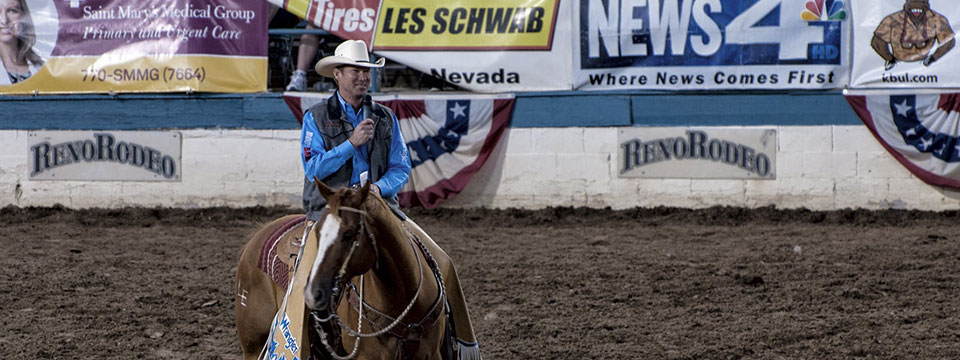
Kyle Jones Shoots the Reno Rodeo
Project 52 Member Kyle Jones shot the rodeo in Reno recently. Kyle is a photographer of many interests and talents. He is working on building a book and getting out in the Reno market by the first of the year. This fun shoot is one of the stories he is working on for...
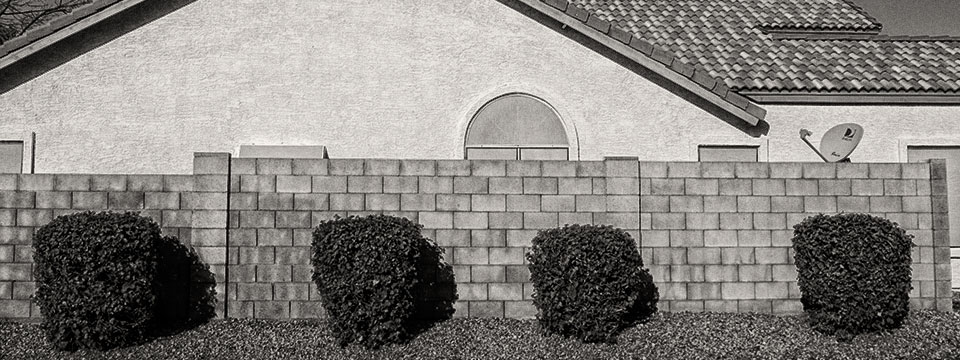
My Neighborhood
I have been recovering and walking... lots of walking. The immediate neighborhood is of course the most logical place, so I traverse the streets around my home a couple of times per day. When my friend Antony Northcutt asked to see some images from people's...
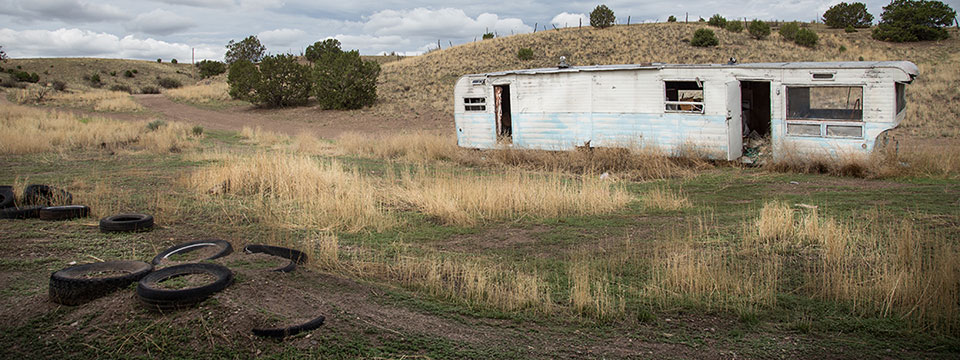
Life: Rebooting and Re-Evaluating
I dodged the bullet and my health is steadily improving. I am beginning to get clear headed again, the recent fogginess resulting from lungs that were not sufficient to make oxygen for the brain. The docs say the heart came through it with flying colors, even...
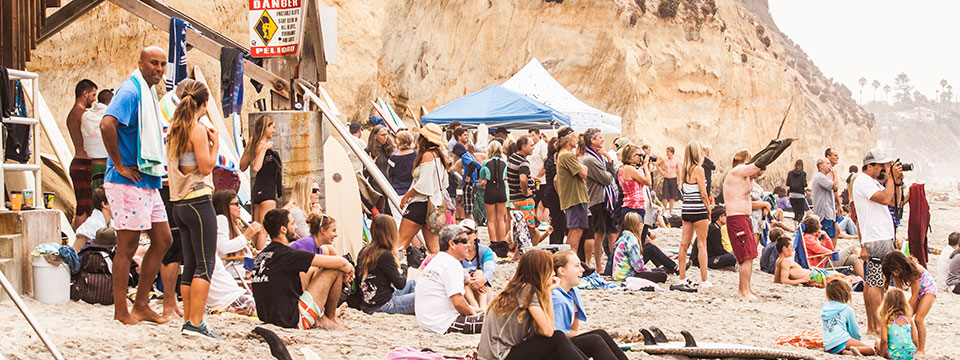
Mike Moore: Surf Meet
Project 52 member, Mike Moore's Project. I live in Encinitas California. It is a small but growing city 25 miles north of San Diego. Known for its legendary surf spots, Pipes, Swami’s and Stonesteps to name a few, Encinitas is often described as laid-back and funky....