
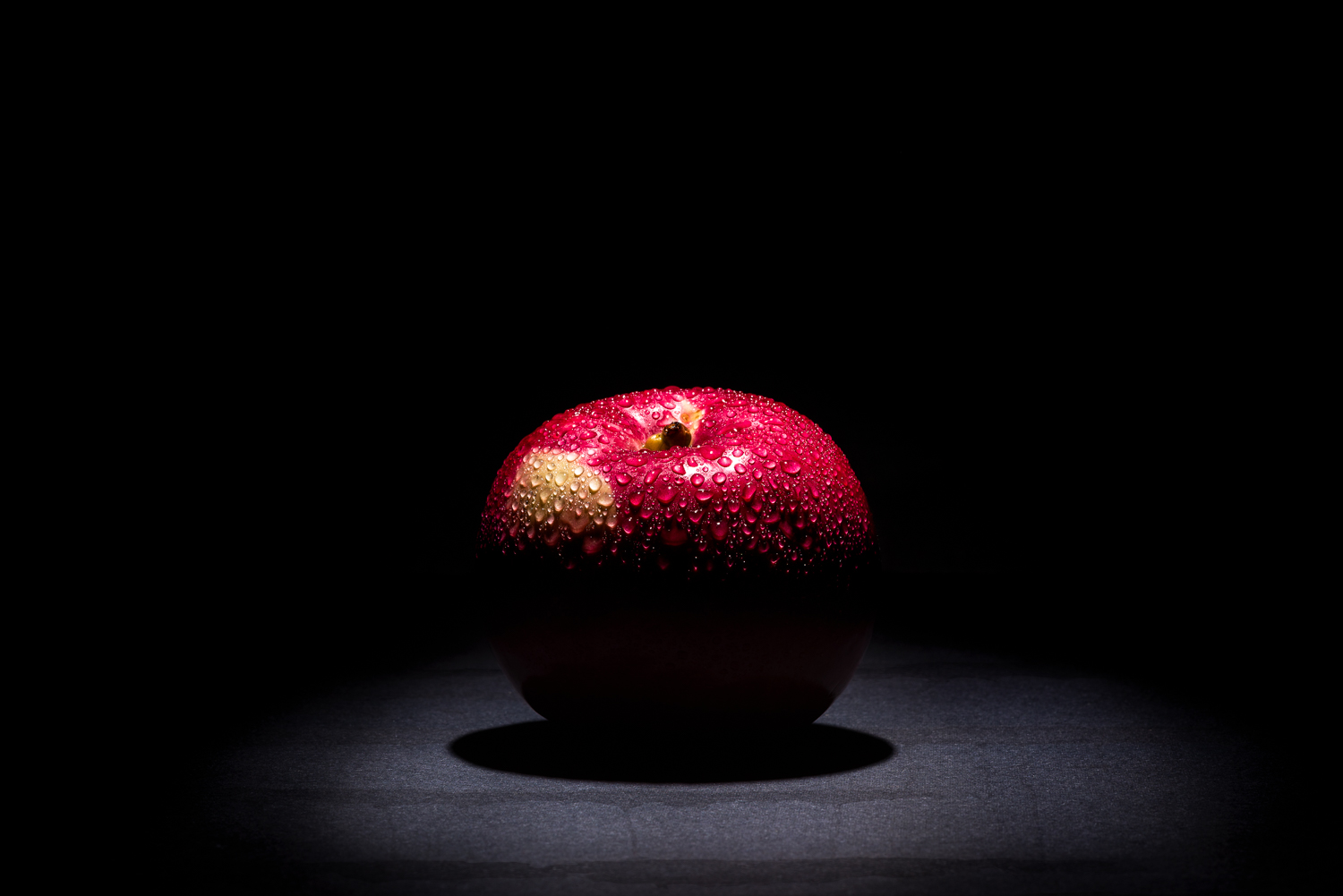
Subject Centric Lighting: The Five Areas of Light Presentation
Cover image by Project 52 student, Gabriel Alvarez.
When the lighting choices we have made are used, the light is ‘presented’ back to the camera in expected, and controlled ways. There are five parts of the light presentation, and we use them in every image we make.
True Subject Value:
What the subject looks like when not in specular or shadow, this is the area that shows us the color of the subject as well.
Specular:
The exact or absolute reflection of the light source.
Specular Transition:
The point where the specular reflection transitions to the true subject value
Shadow Transition:
The transition between True Subject Value and Shadow
Shadow:
The places on the image that are not lit, the opposite side of the light source.
These areas of light are found in nearly every subject. By understanding what they do, and how they are controlled, we can understand much more about the light that is used to present these areas in the ways we want to show them.
In other words, knowing what causes a shadow transition, how to present true value, and how to control a specular highlight means we have control over our lighting and we can create the looks we want. Whenever we want.
Photographers and artists use these representations of light to show texture, shape, dimension, color, clarity and mood. Illustrators use highlight and shadow in their work to create their own light. And they use the same tools to light their drawings, although quite imaginary, as photographers do.
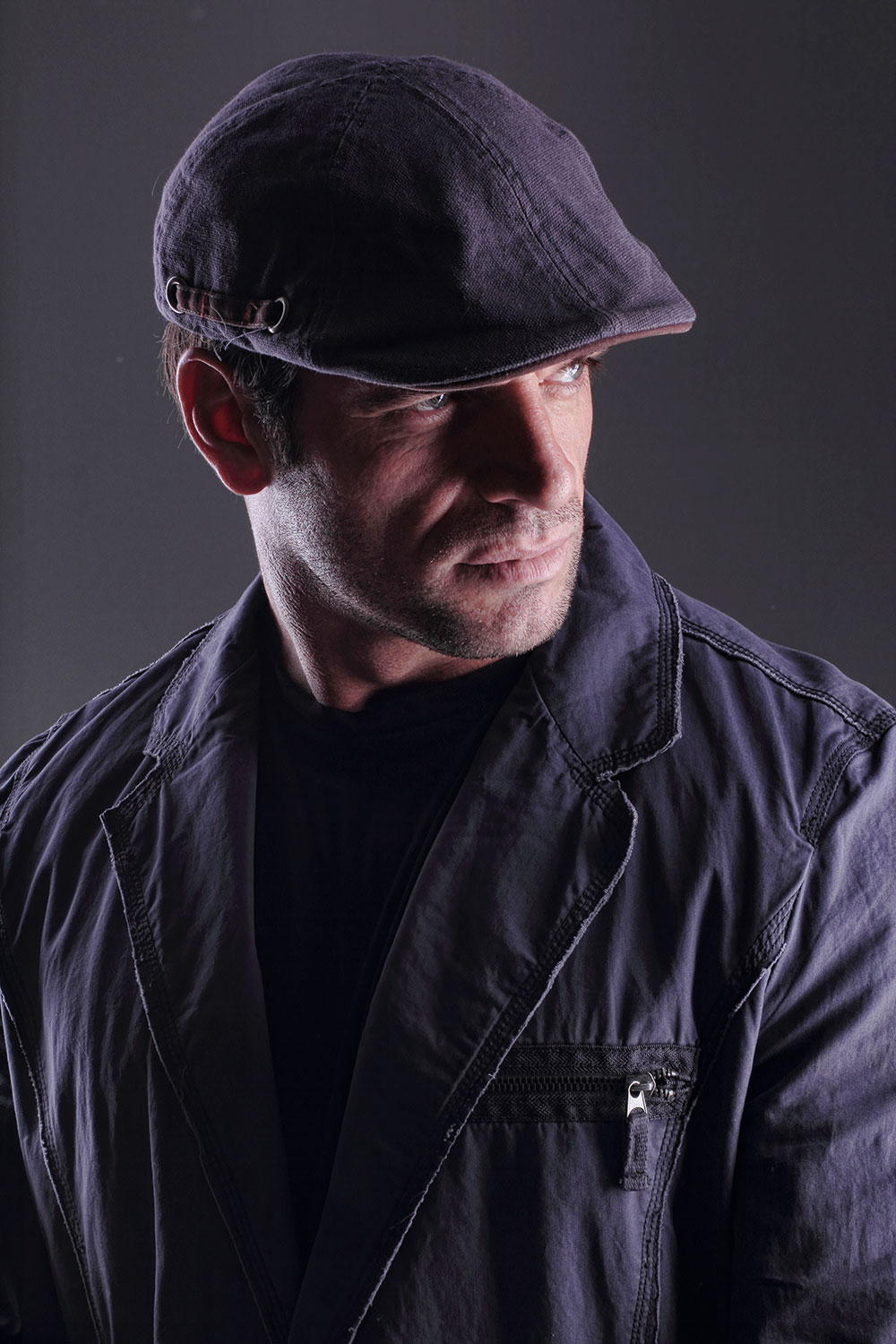
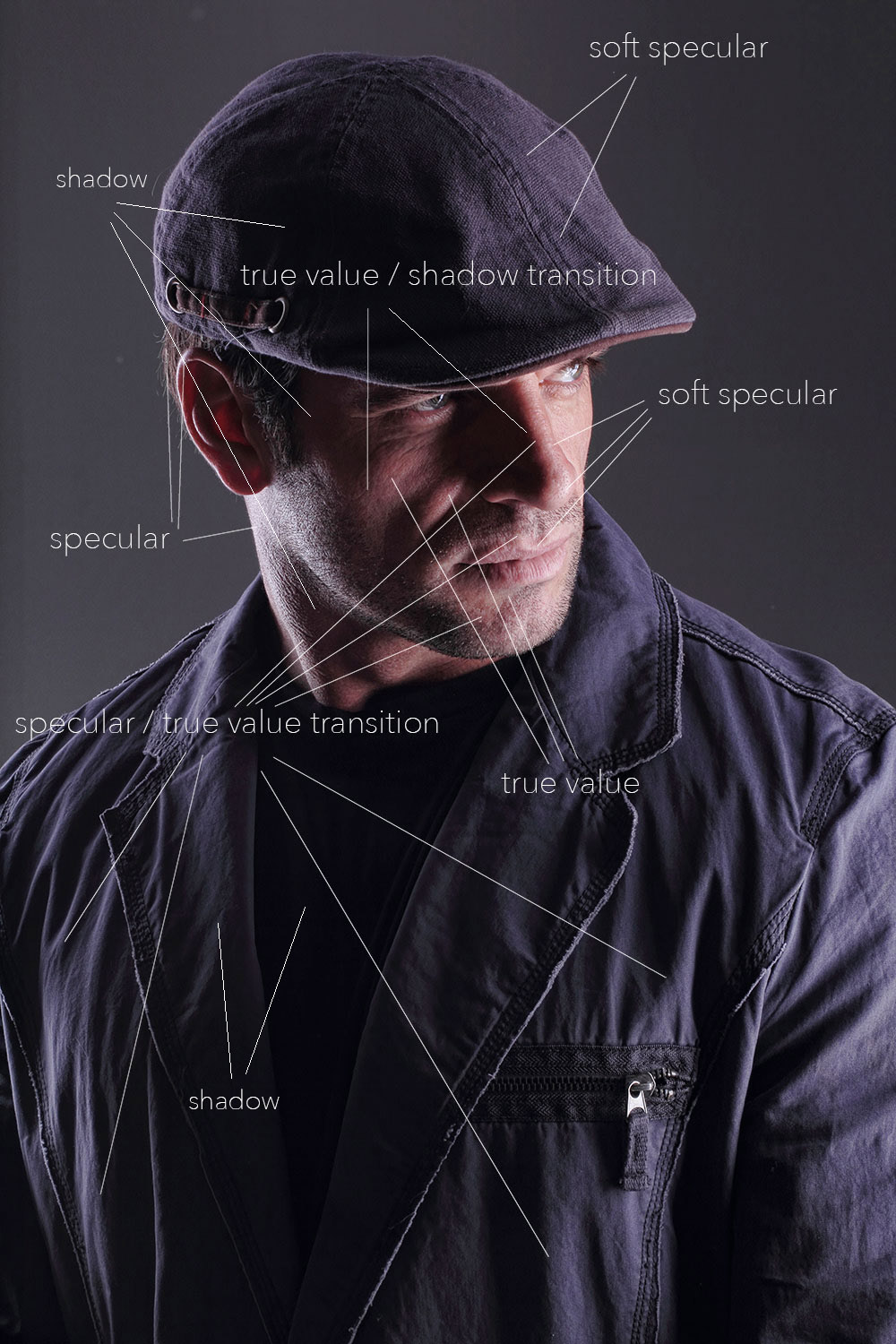
We can see all the presentations of light in this image of Inaudia.
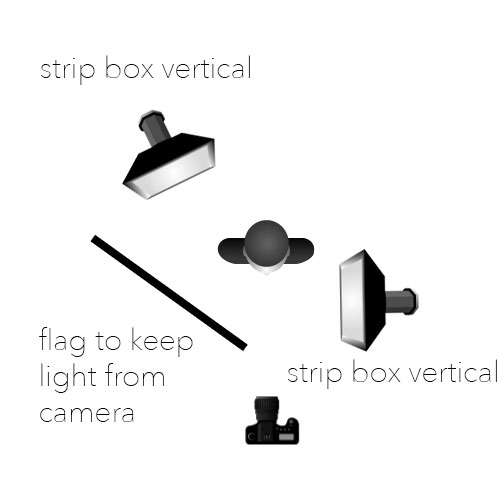
Lit with two strip lights (one on each side), the one on camera left is behind Inaudia and aimed forward just bit. The one on the right is slightly in front of him, and angled at an oblique angle.
This renders two different kinds of specular presentations, the absolute one on his neck and left side, and the softer one on the right side.
All of the transitions are there, and these transitions are what we see when we are determining soft light from hard light. A fast transition is a hard light, where a softer transition – as in the picture below – is a softer light. We would call this image a hard light image because of the fast fall off in the transitions between highlight and true value, and true value and shadow.
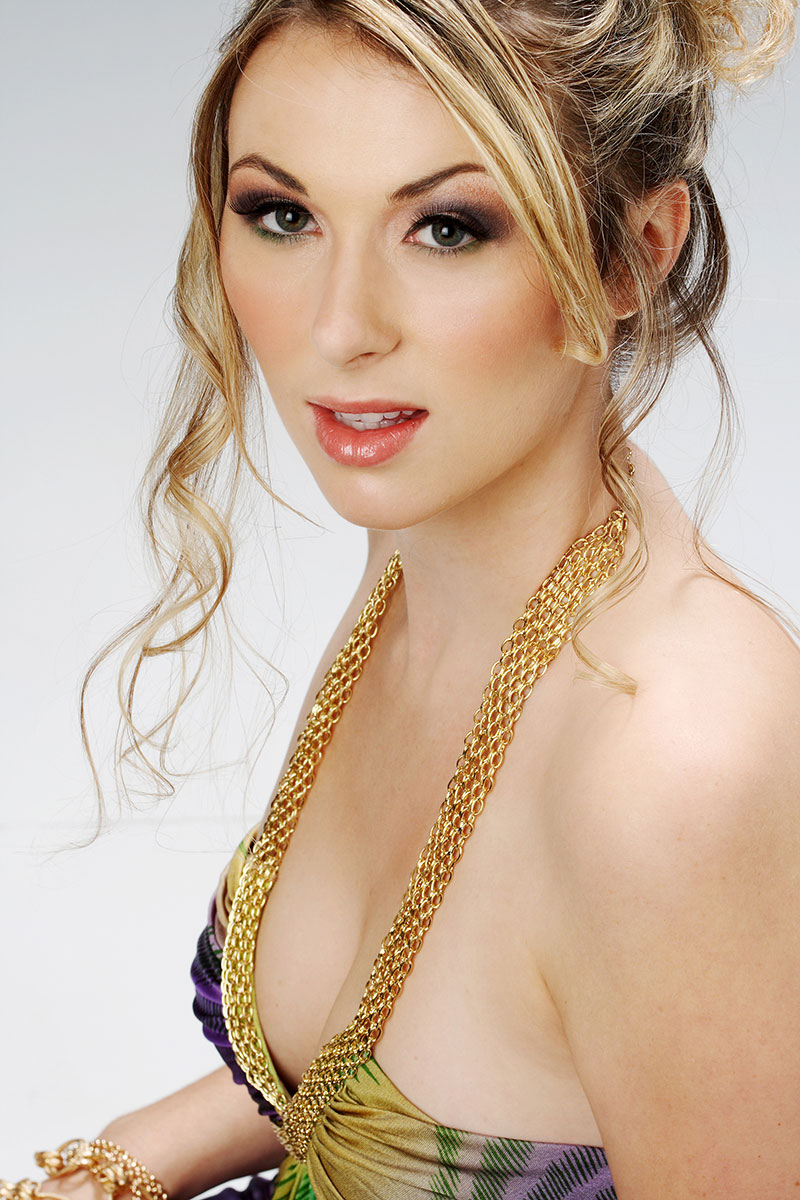
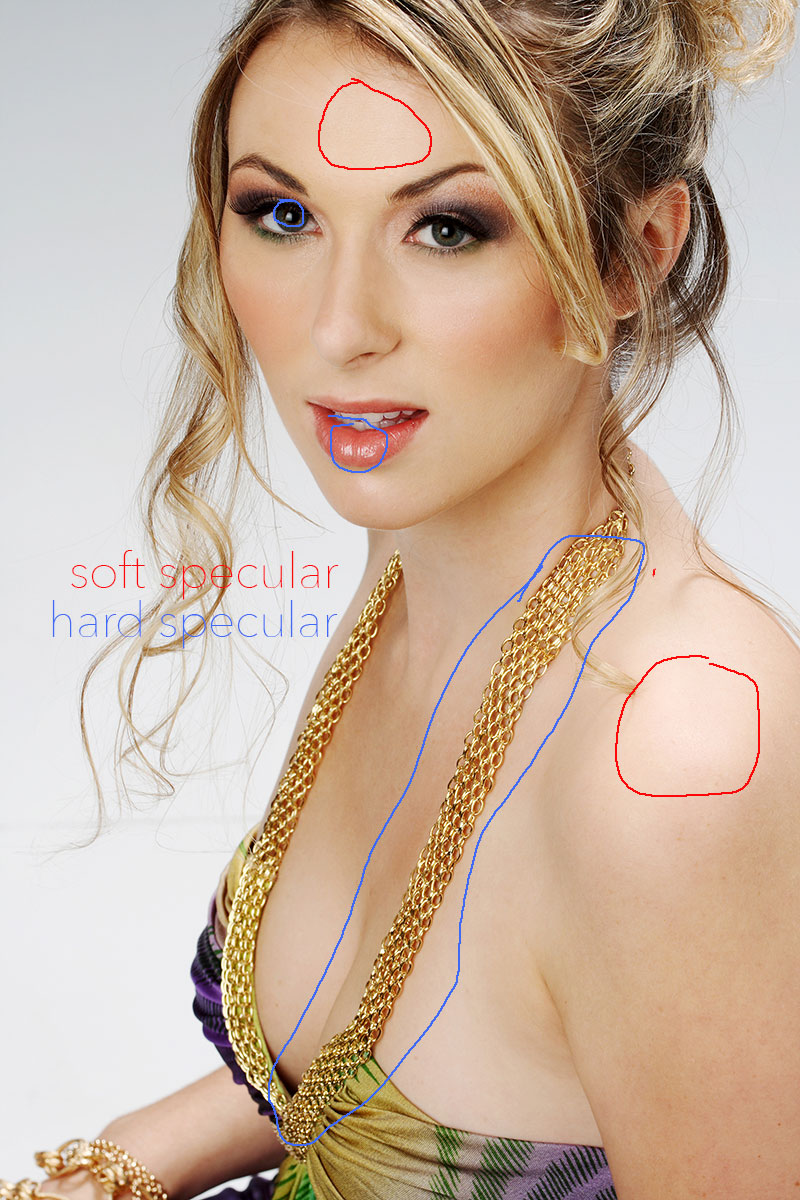
This image shows a lot of true value skin tone. One of the reasons is that the model is not shiny (wet) or perspiring to cause a shinier surface. Powder is used to intensify the diffuse skin (true value) so the speculars (in red) are presented softly. The blue speculars, however, are presented with very sharp transitions. Note that the specular on the shiny lips is absolute, with no soft transition. The gold jewelry on the dress shows as highlight/black because the reflection of the light source from the shiny metal is absolute.
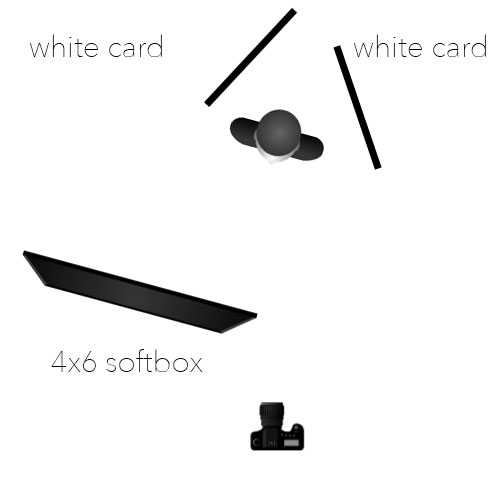
Lighting: Very large softbox directly in front of the model, and back 5 feet. White cards are positioned on either side of her, but pulled back to a point where they will not reflect in her eyes.

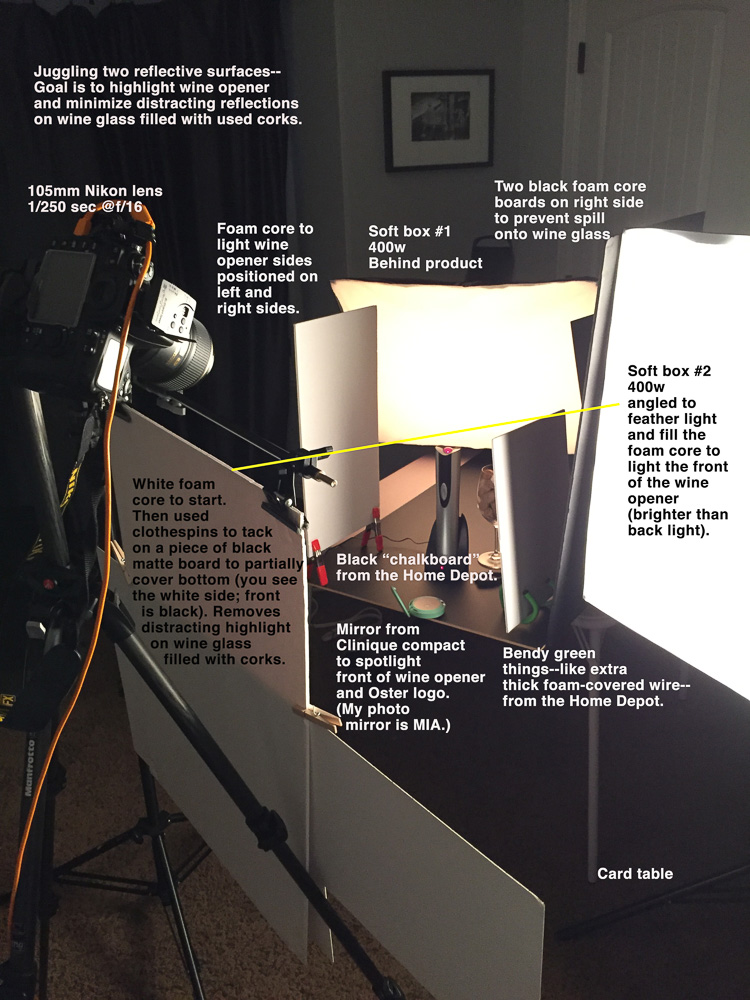
Photographer Anne Stephenson shows how to control the specular, true value, shadow and transitions in this seemingly simple table top product shot. As you can see, nothing done well is simple. Every kind of surface is in this shot.
Let’s start to put all of this together now.
Using the Sun for A Hairlight: Some Variations
The sun is a wonderful light source as we all know. It provides hard, direct light, diffused light, bounce light... heck, it's an allover lighting machine. There are many ways to use the sun for main light and fill, but today we are going to look at a few ways to use...
Make Your Own Reality to Add Drama
There are times when the light you have doesn't match the light you want. The drama of moody skies are rendered useless if they are overexposed and the muddy, dark skin tones of heavily overcast days can make the most competent Photoshop Guru moan in agony. What to...
Shooting Food On Location – With a Twist
My client called and needed a job turned around right away. Her client needed their entire menu shot for some collateral and web materials and the previous shooter had not been able to do what they needed. The images had to be attractive enough for menu use, arty...
Performance Over Posing: Part One
It’s Second Nature: Now, for me, performance is second nature. It’s at the roots of my craft and my nature. Now, it’s not always a good performance. Sometimes it’s downright cheesy, but… it’s often different than what others expect. (A few photogs out...
Using Lighting and Posing to Create the Effect You Want
Light can be the most important part of a photograph, but the model and her pose aren't far behind. You all recognize my friend Briana. We went on a shoot a few weeks ago to show some different posing ideas for her upcoming DVD and some lighting things for mine....
Lighting Essentials July Desktop Calendars
Here are two new desktop calendars for you. A sporting model out to set the land speed record, and Briana in the tropics on a mysteriously dark evening. Either one you choose, your July calendars are more fun with Lighting Essentials. More content to follow quickly,...
Muse or Inspiration: The Model’s Role (Pt2)
Muse in the Studio - A Brief “How to†Guide:(part two of two parts) Okay, enough philosophy, let’s make this simple. Here are a few things I “feel†when I’m modeling. Yes, “feel.†I don’t go and think about these steps when I’m modeling… I just...
Muse and Inspiration: The Model’s Role
A Two Part Article By Briana Shaker Part I What is a muse? The romantic poets knew. The ancient Greeks did as well. Now it's time for models and photographers alike to learn. Quite simply, the muse is she (or he) for whom the artist creates or in whom the artist finds...
The Rigorous World of Macro Beauty Shots
Coming in this close can be a nightmare for the unsuspecting. Makeup must be perfect, hair perfect, every nuance of light has to fall to give the feeling of fresh and natural. And the skills in the toolset must be honed very tightly. It goes without saying that...
Hey, We Got Freebies Too!
Yes... we got free stuff. Who can't use a great desktop calendar? And when it features a lovely model like Briana, you can't go wrong. We have two June, 2008 calendars available in many desktop sizes. I will also give a lighting tutorial for each of the images after...
Natural Light Headshots: Keeping it Simple
In Mexico we had wonderful white Casitas to stay in courtesy of the Las Palmas Resort. They provided some remarkable shooting areas as well as natural light bouncing off all the white walls and railings. I personally love natural light for all kinds of portraiture,...
Dramatic Backlight on a Sunny Day
At the Mexico workshop we decided to do some morning shots on the Beach. Precilla and Jazmin wanted to do this hat shot and I thought it would be fun to use the dramatic sky as a compositional element. I had left my meter back at the casa and didn't want to walk back...
Even If the Sun Don’t Shine…
We were out the door fairly early, and the sky was slightly overcast. Briana had wanted to do this shot for the entire Florida trip and here it was the last day. I really wanted to get it for her. The sun didn't have any plans on cooperating though. I wanted the...
Using Light to Create Drama On Location
Briana and I were stuck in a small, hot and very mundane room while the thunderstorm unleashed lightning and torrential rain all over Anna Maria, Florida. She playfully challenged me to do a shot in the space that was, well, simply awful. I looked at the set she...
Manipulating Natural Light with Simple Tools
There are times when the natural light is simply so gorgeous you have to shoot it. And there are times when the natural light is very nice, but something can be done to make it a bit more, well, perfect. We are going to look at 4 examples of using modifiers to create...
Blending Strobe and Daylight for a Natural Look
This shot of Briana was taken at the New York City workshop and uses a method of flash and ambient controlled to look somewhat natural. Blending the two for portraiture can be very attractive and give the image a more natural look. We used the ambient light from...
Sometimes The Location is Not As Good As Promised.
We were walking up to the Hudson River and the light was glaring, too hazy to make out much and with little natural fill. The surroundings offered little in the way of background or texture and overall it was a disaster of a place to shoot at that moment in time....
Direct Sunlight Portraiture for Dramatic Effect
There is something beautiful about sunlight. It has a feeling that is so warm and natural and it can make people seem to almost glow. I love it so when I saw it happening in a studio in Detroit, I knew I wanted to take advantage of it. Briana had been posing for some...
Subtractive Lighting: Creating Drama with Contrast
There are times when you want to create more contrast in an image... mitigate the reflections or make sure that the shadows are as deep as possible. These situations can occur with natural lighting, but in the studio you may have to add a bit more to the shot to...
Scenes From a Workshop: Detroit, April 6, 2008
The Detroit workshop was a smashing success. The students all had a great time, we had wonderful models who worked really hard to make the images special, even braving cold wind to do it. Lynne's studio is a really smart little place in downtown Pontiac, and she...
One Flash and One Fill Card on Location
Getting really nice, soft light on location can be a challenge. Too often photographers use their naked flashes for fill and end up with something more harsh than they expected. Using a flash to fill in ambient light can be far more subtle and rewarding. For this shot...
Welcome to April: A March Review
March was a tough month for us as we moved the site from a traditional web site to a WordPress backend. We are starting to feel pretty good about it. It meant a loss of visitors for a few days and we lost our statistics for 4 days, but it is obvious we have reached...
Shooting Earrings Without a Net: Guest Post by Josh Targownik
On a recent popular forum post, Los Angeles photographer Joshua Targownik posed a challenge. Faced with the following job he wanted to figure the best and fastest way to get the job done. He also wanted to get some killer lighting on the product to make it really pop....
One Light Setup with Two Versions of the Light
Yesterday I shot Jordan for her mom's Irish Step Dancing Wig catalog. Today we got together for some pics just for her. This was the first time she had shot without a wig on... so it was a lot of fun. I have known Jordan since she was about 9, so it was also fun to...