
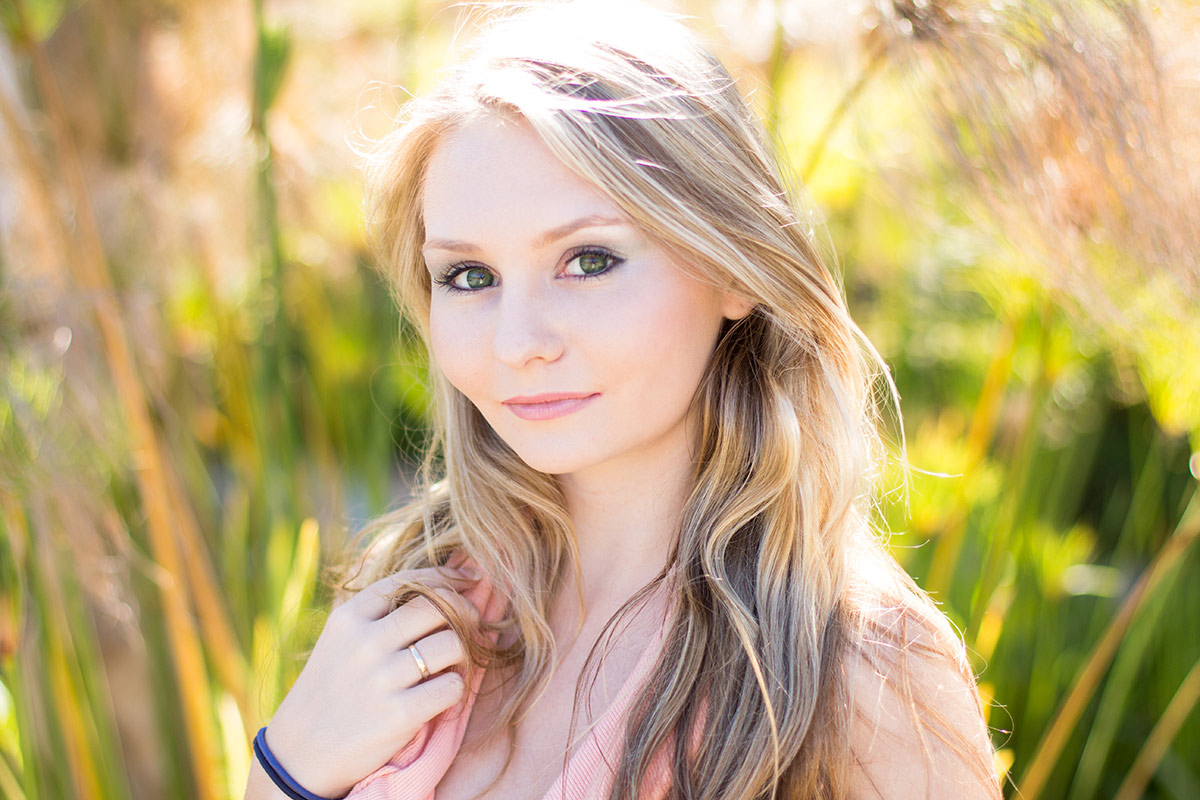
Matte Surfaces
These are surfaces that are not as rough as texture, but not smooth either. Skin, cloth, natural leather, finished woods and many food items are examples. Most of what we deal with in our daily lives would fall under the Matte surface example.
Matte surfaces have a softer way of showing us the reflection of the light source. Where texture showed us mini sources next to mini shadows, the matte surfaces have less of a drastic presentation. The surface doesn’t have that much difference between the size of the components of the texture. A cloth book cover has texture, but it is much more tightly confined than say old barn wood.
And the reflection of the source is shown as a larger area rather than many tiny reflections. This gives the texture a smooth and not altogether recognizable shape. There is an angle where the incidence will match the reflection, and be seen by the camera, but it will be a muted reflection, not a harsh one.
EXAMPLE of Matte Surface reflection of the light source. You can clearly see the reflection of the source, but the transition to the non-reflective areas is gradual and not defined.
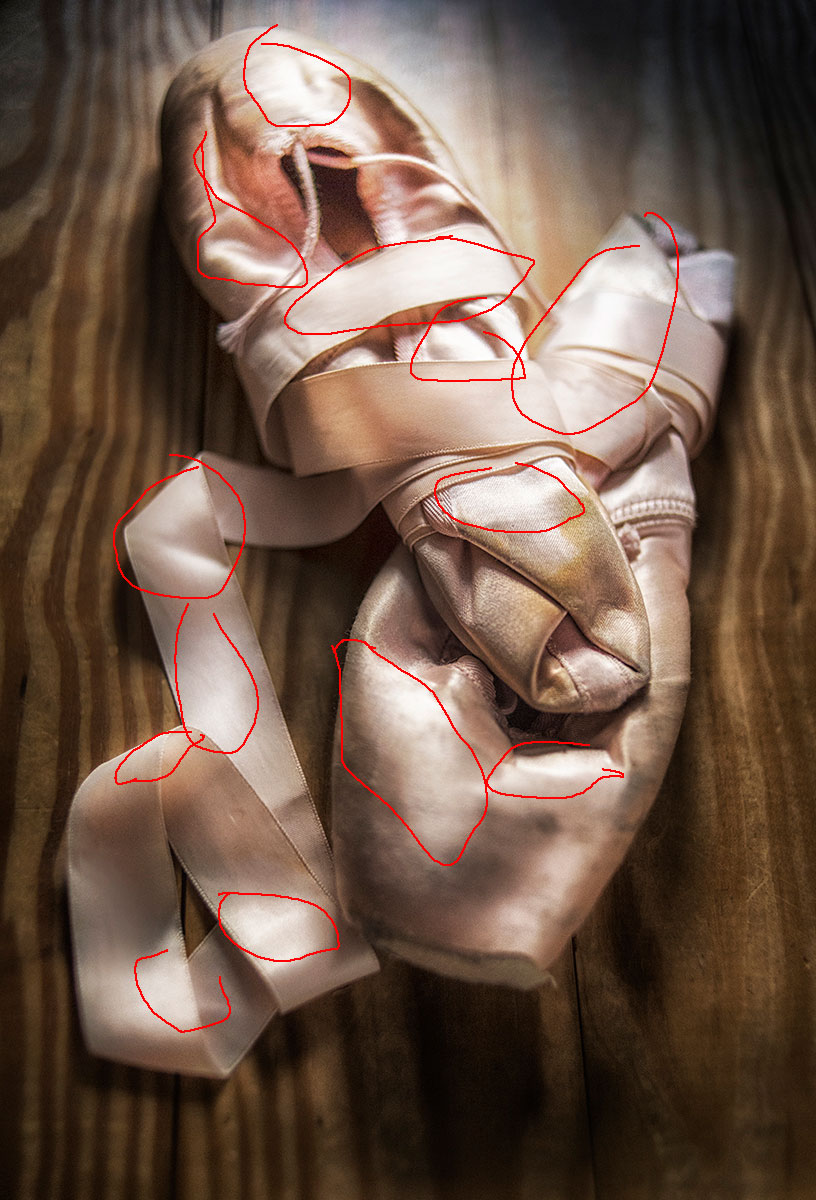
The ballet shoes are most defintely NOT a highly textured object, nor are they glossy.
Skin is one area of great interest. Portrait, beauty and fashion photographers have to be able to control the way skin looks for their imagery. And skin can present some widely diverse efficiency. Dry skin has a very matte look, wet skin becomes more efficient due to the water, and then the reflection is nearly absolute, and skin color can become an issue with the wrong kind of light presentation.
A good makeup artist helps to smooth out skin blemishes, we know. But the MUA also helps to matte the skin evenly so that the reflections of the light sources do not create very bright reflections on the face.
A model begins to sweat…err, sorry, perspire with the heat, and the skin becomes a bit more efficient due to the moisture. Liquid is much more efficient than skin, so the perspiration on the face becomes shinier. The remedy is a little bit of powder, which of course renders the skin more matte and less efficient.
Faces are full of contours and angles that can reflect the light source back to us. Tips of noses, eyebrows, cheeks, chins and foreheads are all areas of concern when we are shooting with light that has a small source. The small source can become a direct reflection on even matted skin, so keeping it within our tolerances is very important.
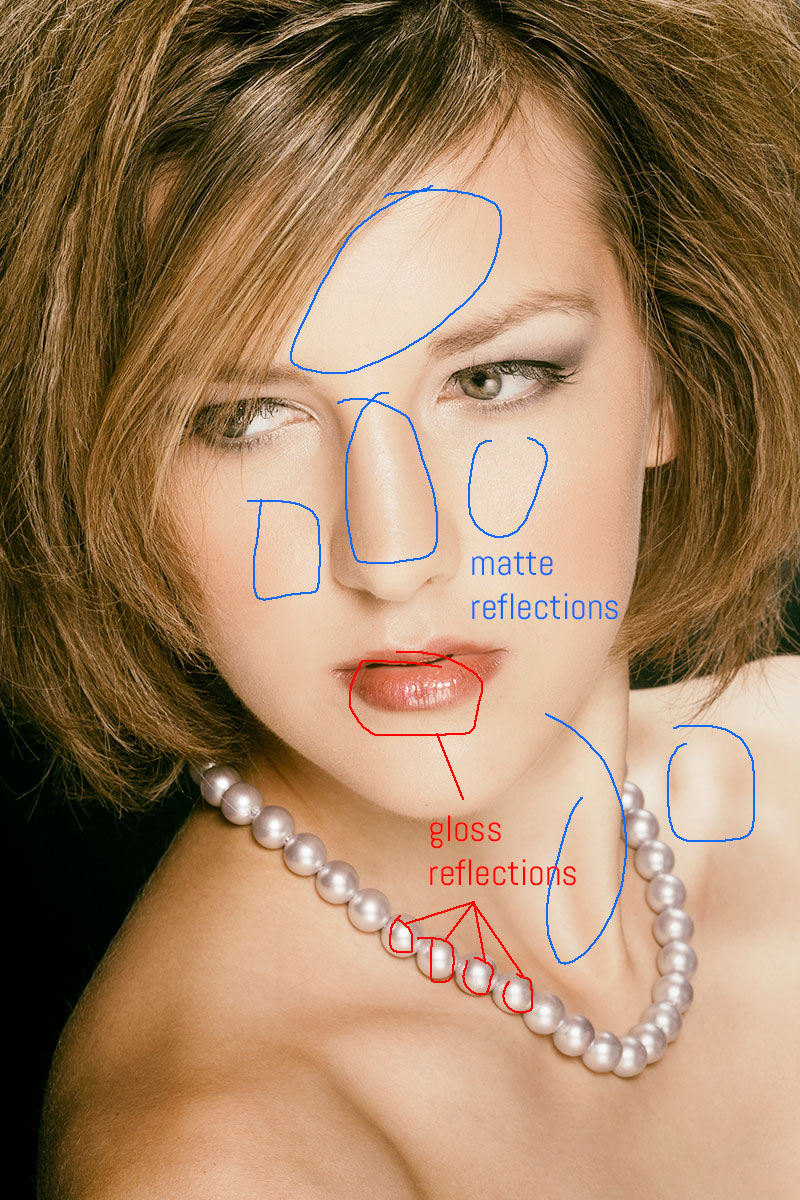
Again, you can see the very soft transition from the highlight to the non-highlight matte surface, where as the gloss lipstick provides a sharp, immediate transition to the non-reflective area.
Photoshop Note:
Trying to fix a small highlight on the tip of the nose, or one that is across the whole front of the forehead is painstaking and difficult. It can be done, of course, but working with the subject to make sure he/she is not rendering the light back to you in such a way as to need the Photoshop is much more preferable.
There may be times when we may want to enhance the matte texture, to make it more discernible, and bring out the texture instead of mitigating it.
Angle of incidence again comes to the fore. Angled to present even the smallest texture, the photographer can decide between broad light, like a softbox, or sharper light, like a direct, unmodified head, or a snoot.
Example of enhanced texture: Portrait of Tomas.
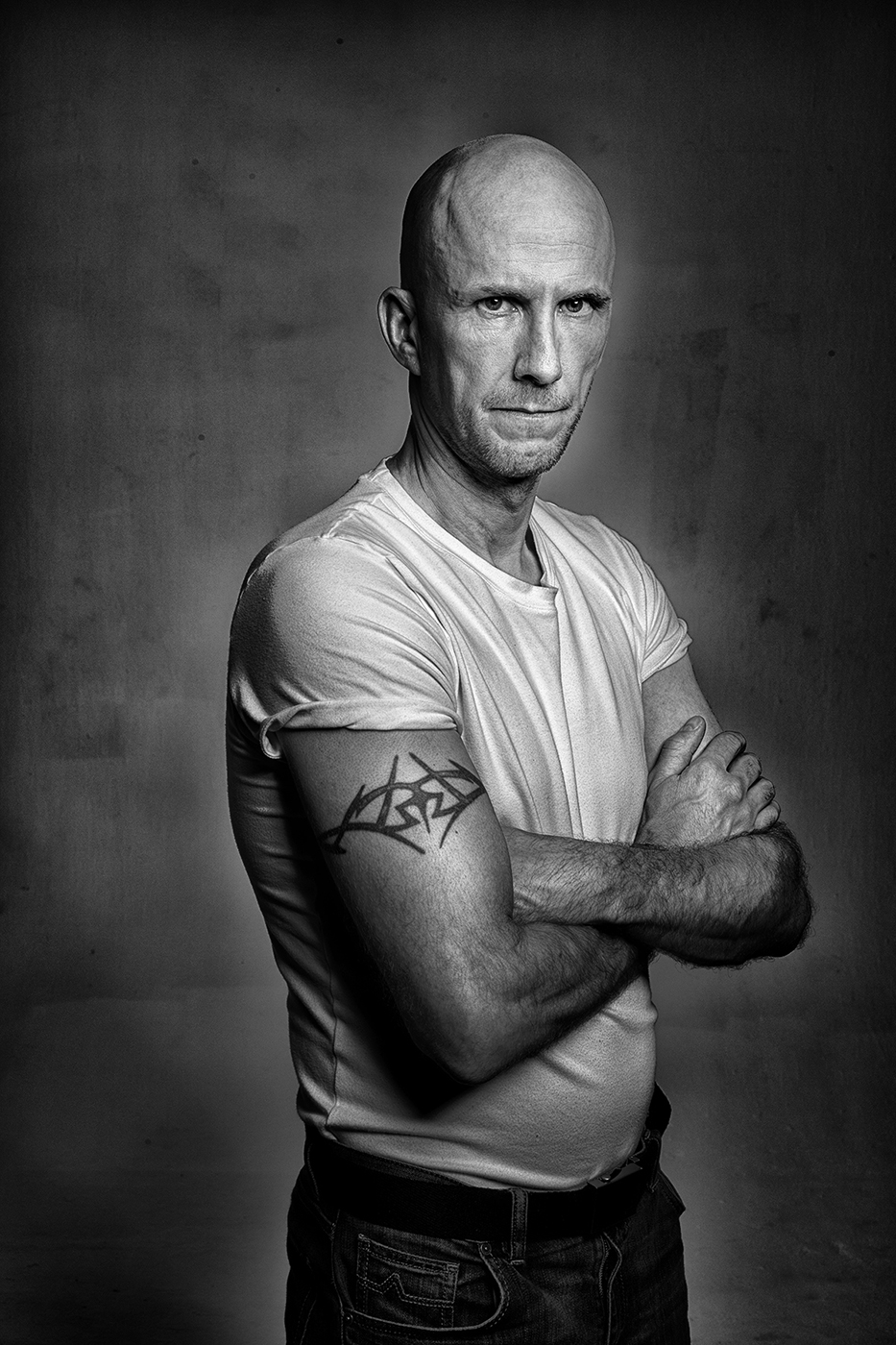
Even with the matte surface of the skin, by using a small lightsource (beauty dish at a distance) we can create more texture in this portrait by putting the light at more of a wide distance from the camera. This adds some texture from the sidelit properties of the subject. Enhancement in Photoshop is then easy, and keeps the matte surface for a cleaner presentation of skin.
Matte surfaces are where we can experiment and work with light to play down or enhance, or simply show it as it really is.
And most matte surfaces can be altered to create something more efficient or less. As we have seen, powder for skin can take away the ‘shine’ that we know is really the reflection of the light. Water or liquid can add sheen to the subject when we want the reflection. And we can use materials to create shine, like wax on a wood floor to enhance the matte to be more shiny by showing the reflection of the light as it renders back to us.
Remember that we all KNOW what shiny looks like, what matte feels like and how rough something is. It is part of what we learn from the beginnings of our lives. We touched, we saw, we felt… and we learned. Photographers aren’t creating anything new, we just learn to present it to others the way we want them to see it.
To recap:
Textured surfaces present small highlights and shadows because of the rough surface and how it reflects light. From a stone to a mountain, the texture can be enhanced by playing up the highlight and darkening the shadow.
Matte surfaces will show the highlight softly, allowing it to transition to the non-reflective part of the surface in a more gradual effect. This may be the most prevalent surface we have around us.
ASSIGNMENT:
- Look around at the matte surfaces. they will most likely be more numerous than very texturized things, or very shiny things. Take some time to quietly study what light does when it is refracted from them.
- Note how different light (direct / indirect) reflects from the surface. Make images showing the difference.
- Examine the ways that matte surfaces can become textured (heavy side/top light), or shiny (wetting the surface down changes its ability to render the highlight and now it becomes more efficient).
Legacy Article: A model in the surf – the full shoot.
NOTE: This is a legacy article. Please click the "home" button at the top of the page to return or use your back button. HOUSTON is coming up fast. If you haven't signed up for our last western state workshop this year, I would advise you that time is running out....
“Why did you light it that way?”
A friend and fellow photographer and I were sitting and having some overpriced coffee when he asked me a question about one of my shots that we were looking at. "Why did you light it that way?" It took me a bit by surprise because most of the time I am asked "how" not...
Model Behavior: Shooting in Mexico. Some Thoughts
Bri takes us on a look at some of the images she did on the Mexico workshop. We all had a blast and Mexico was outrageously fun. We had lots of photographers and she shot with all of them. Before we get to the Model Behavior article, I want to let everyone know that...
Deconstructing a Portrait on Location
A direct contrast to the previous image with two strobes and lots of drama, this shot of Christina is simple and direct and with a more natural feel to it. Shot in Miami, Arizona, I wanted this shot to be very naturally lit and with a great natural feel to it. Before...
Deconstruction: Briana on the Pier (Spotlight Effect)
Let's take a single image today and deconstruct it out to see exactly how it was created. The shot is of Briana in Mexico while we were doing the September workshop in Puerto Penasco, Mexico. Also known as Rocky Pointe, the little town had become a favorite shoot spot...
Ask Briana: October Q&A from our readers
(This page will be continuously updated throughout the month of October, with newest posts to the top. We hope you enjoy this new column by our resident model/author. -- Don) Got a question for me about modeling, working with models, or anything related to being on...
Natural Light for Natural, Subtle Beauty
We are going to take a look at how we can use simple, natural light for some beauty shots of Bri on location in Miami, Arizona. This sleepy little town has such great old walls and patinas to work with. That and the fact that it is about 12 degrees cooler than Phoenix...
Using a Flash to Add a Little Snap with Natural Light
I love natural light. It has a quality that is so unique and fits with my vision so well. Lots of terrific pics made with only the light that is there at the time. Learning to use natural light and make it work for you is one of the most important things that a...
Images from the Lighting Essentials Flickr Pool
I love to go through the Lighting Essentials Group on Flickr and just being knocked out by the high level of imagery there. Most of the members there have either purchased the DVD or attended the workshop, so I take a little pride there. I am going to post a few of...
It’s Called Range: Part Two
NOTE: The Mexico Workshop and Houston workshops are just around the corner. If you are interested in attending one of these Two Day Workshops, take a look at the Workshop page. We have room in both workshops and they are going to be amazing. Briana will be going to...
September 08 Desktops from Lighting Essentials
We continue on with our free themes for your desktops. September is a strange month for me. I am getting tired of the heat here by then, and waiting for the cool nights to signal the end of the monsoon. However, we need the rain so I want the monsoon to continue for a...
On Location: Anatomy of a Shoot (with Video)
On location with speedlights, a model and a videographer. A warm, well, mostly warm December day and we are shooting in Tempe, Arizona. I will share the setups with you and also what I was thinking and working with here. Briana is the model, check out her Model...
One model? No worries, it’s called Range! (Part One)
Range beyond the ordinary: All the world’s a stage, and all the men and women merely players. And we each play our parts. And models? Well, sorry, Shakespeare, models can play any part. Modeling and acting are synonymous. It’s what makes us special. We don’t...
One Speedlight: Some Examples
I know, I know... late for the update on speedlights. I apologize a thousand times. Been unimaginably busy, and things have drifted. Bermuda workshop was so intense there was no time left for much other than sleeping (and a little dancing to reggae on the beach......
Bermuda Workshop: August 2008… What’s Happenin’
Two weekends in a row I have had workshops... three counting next weekend in San Francisco. Wow... that's some serious travel... Seattle, Bermuda, San Francisco. Sheesh, extreme distances... Seattle was a blast, even though we had a small group. Lots of models and I...
Dispatch: Seattle. (2008 Workshop)
Seattle's workshop was a blast. I wanted to share some images that the folks did there. We will update this page as long as I see fresh images. I arrived in Seattle to a wonderful 74 degree afternoon. Yeah, coming from 107 it was really refreshing. Got all in line for...
“Make the Shot.” A Pool Player in a Rainstorm
In keeping with this months major tutorial on using speedlights to their maximum, I thought I would take apart a shot that Briana and I did in Florida during a terrific thunderstorm. We were hot and it was very humid, but we decided to make the best of the down time...
Using Your Small Strobes for Professional Results: Part One
As we begin to start to find some ways to use our speedlights - or small hotshoe style strobes - for advantage, we need to learn all about them. (Welcome Strobist Readers... thanks David.) I'm not talking about the RTM stuff. Where to put the batteries and such. This...
Our August Desktops are Something to Dance About
Well in the tradition of the last 3 months... can we call that a tradition? Anyway, in the tradition of the last three months we present our August desktops. One features a morning scene we all can identify with and the other has nine tiny Briana's dancing their way...
Speedlights: Unleash Their Creative Power: Introduction
Unleash your Creativity with Small Strobes This begins our series on small strobes and location work. August will feature 4 large-scale articles on using speedlights in the field. Published on Monday of each week, they will include video, diagrams and assignments for...
On Location with Small Strobes and a Model Who Can Fly?
Let's look at a way to create some interesting, and somewhat 'ethereal' light on location without taking 200 pounds of lighting gear with us. We are going to use two strobes to 'sculpt' the subject and a bit of careful angling to get the image we want. Backgrounds...
Recent Workshop Attendees Show Off Some Great Work
Photograph by Yolanda Pucinski One of the coolest things I think can happen is when I see some work from a workshop attendee that is really getting great. We can open eyes in a workshop, and teach some skills as well as some solid technique, but it is the student that...
Performance and Posing, Part Two
Briana is back with Part Two of the Posing and Performance Column. Be sure to read her first columns and be looking for more as she helps photographers and models work together to create exciting imagery. Also be sure to check out the Lighting Essentials Magazine for...
Our Big Trip: Part One, Houston, Chicago and Boston
Our trip to the East was a really fun experience. I want to share a few of the images we made on the trip and discuss them as far as lighting and generally what we were doing. This trip took us on planes, trains, automobiles and boats. Every mode of transportation......