
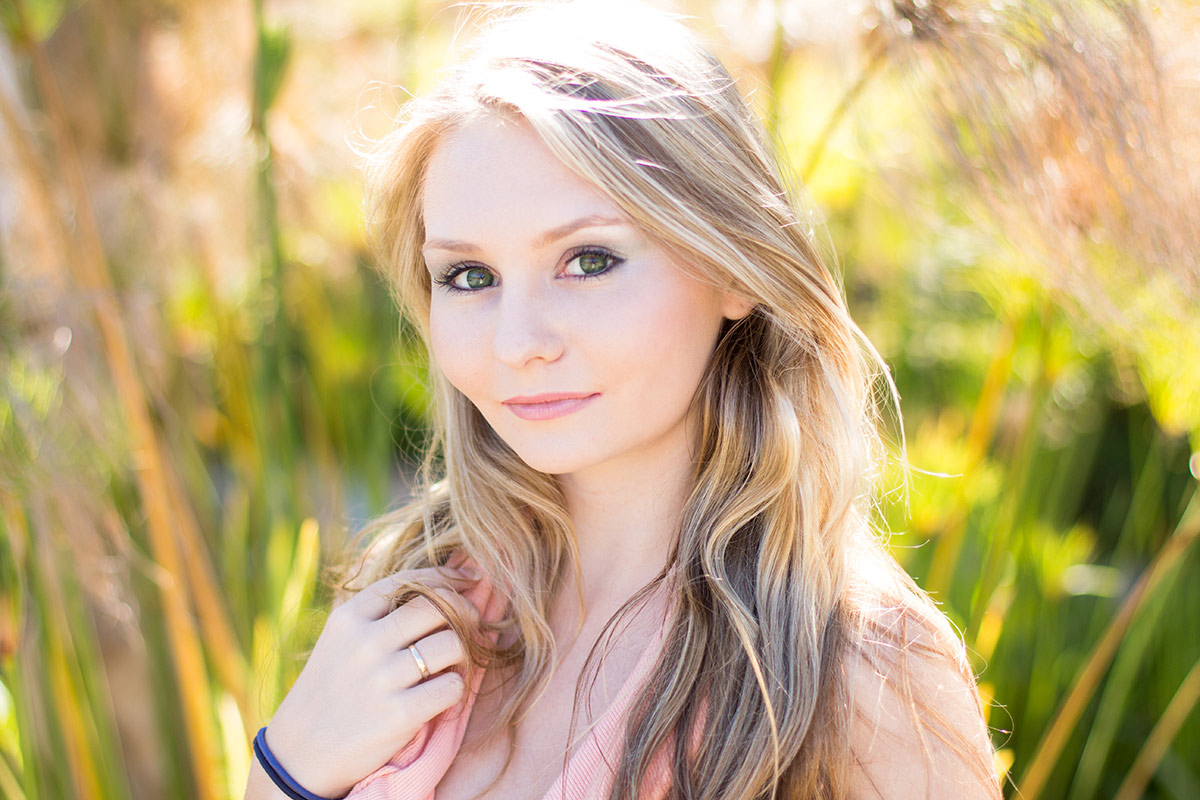
Matte Surfaces
These are surfaces that are not as rough as texture, but not smooth either. Skin, cloth, natural leather, finished woods and many food items are examples. Most of what we deal with in our daily lives would fall under the Matte surface example.
Matte surfaces have a softer way of showing us the reflection of the light source. Where texture showed us mini sources next to mini shadows, the matte surfaces have less of a drastic presentation. The surface doesn’t have that much difference between the size of the components of the texture. A cloth book cover has texture, but it is much more tightly confined than say old barn wood.
And the reflection of the source is shown as a larger area rather than many tiny reflections. This gives the texture a smooth and not altogether recognizable shape. There is an angle where the incidence will match the reflection, and be seen by the camera, but it will be a muted reflection, not a harsh one.
EXAMPLE of Matte Surface reflection of the light source. You can clearly see the reflection of the source, but the transition to the non-reflective areas is gradual and not defined.
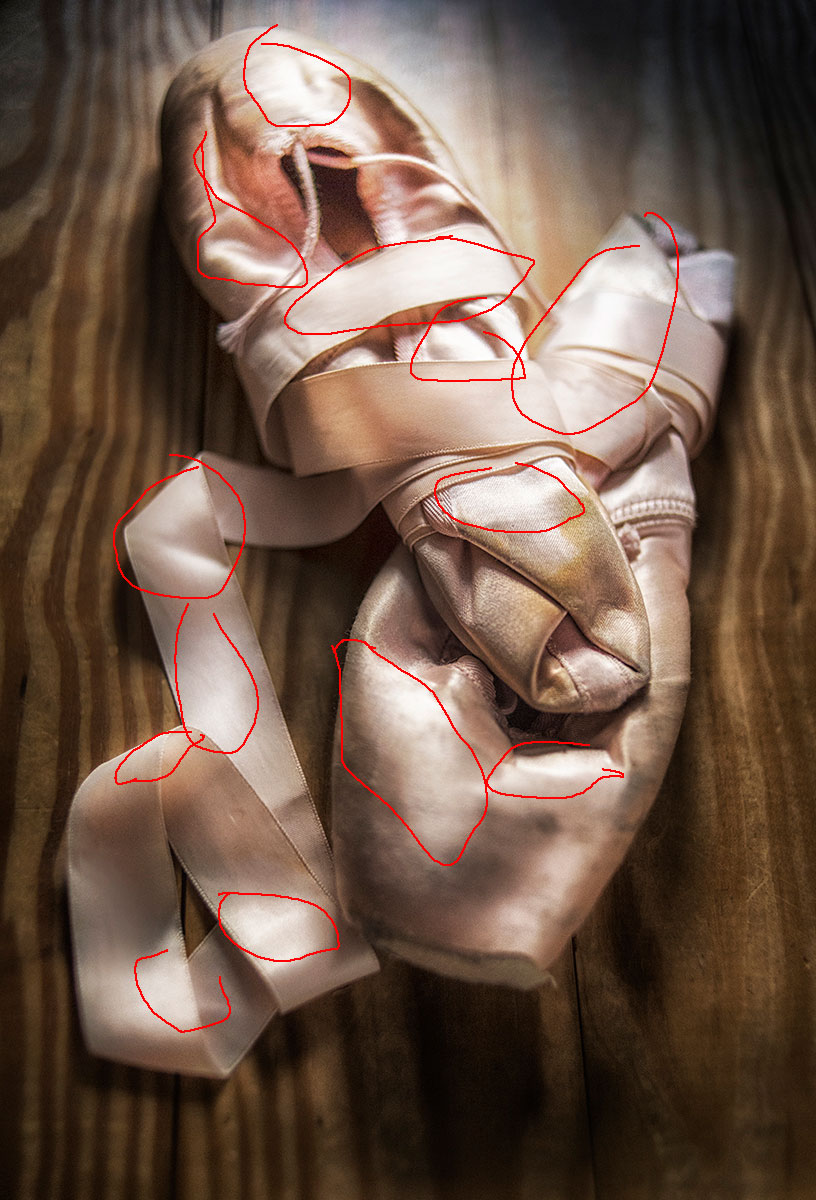
The ballet shoes are most defintely NOT a highly textured object, nor are they glossy.
Skin is one area of great interest. Portrait, beauty and fashion photographers have to be able to control the way skin looks for their imagery. And skin can present some widely diverse efficiency. Dry skin has a very matte look, wet skin becomes more efficient due to the water, and then the reflection is nearly absolute, and skin color can become an issue with the wrong kind of light presentation.
A good makeup artist helps to smooth out skin blemishes, we know. But the MUA also helps to matte the skin evenly so that the reflections of the light sources do not create very bright reflections on the face.
A model begins to sweat…err, sorry, perspire with the heat, and the skin becomes a bit more efficient due to the moisture. Liquid is much more efficient than skin, so the perspiration on the face becomes shinier. The remedy is a little bit of powder, which of course renders the skin more matte and less efficient.
Faces are full of contours and angles that can reflect the light source back to us. Tips of noses, eyebrows, cheeks, chins and foreheads are all areas of concern when we are shooting with light that has a small source. The small source can become a direct reflection on even matted skin, so keeping it within our tolerances is very important.
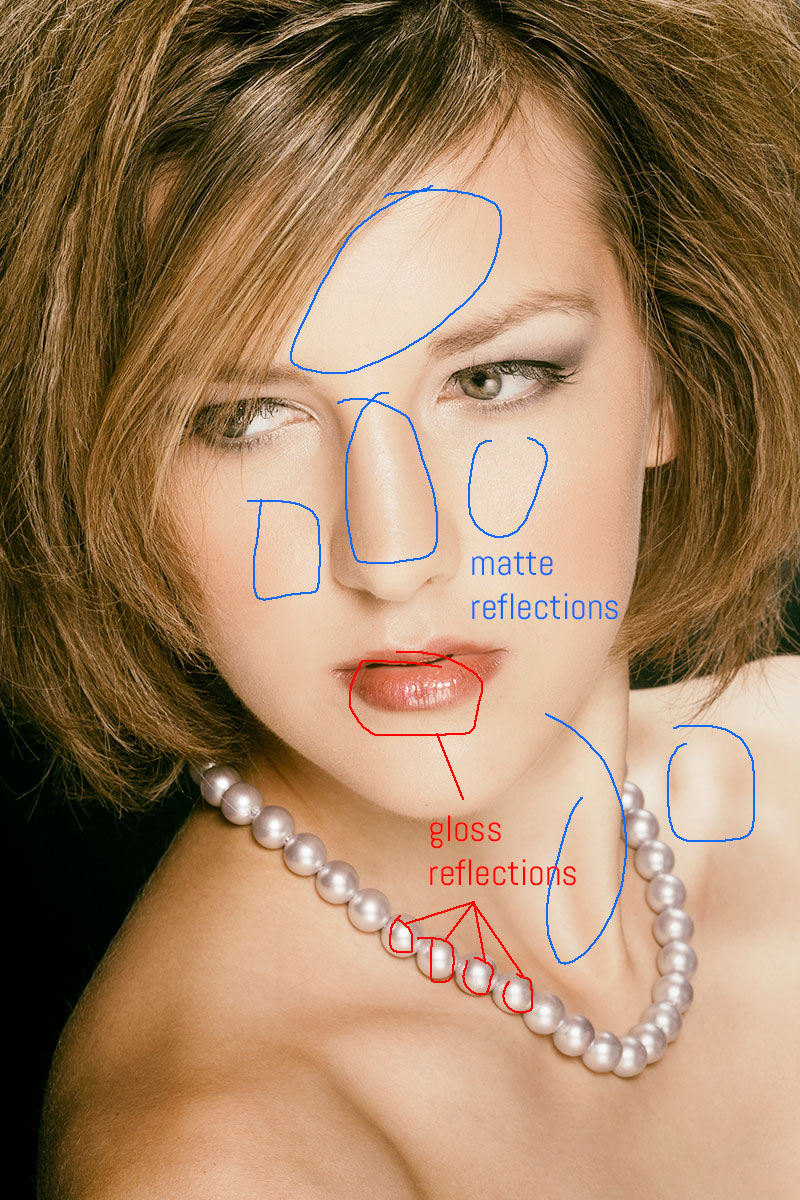
Again, you can see the very soft transition from the highlight to the non-highlight matte surface, where as the gloss lipstick provides a sharp, immediate transition to the non-reflective area.
Photoshop Note:
Trying to fix a small highlight on the tip of the nose, or one that is across the whole front of the forehead is painstaking and difficult. It can be done, of course, but working with the subject to make sure he/she is not rendering the light back to you in such a way as to need the Photoshop is much more preferable.
There may be times when we may want to enhance the matte texture, to make it more discernible, and bring out the texture instead of mitigating it.
Angle of incidence again comes to the fore. Angled to present even the smallest texture, the photographer can decide between broad light, like a softbox, or sharper light, like a direct, unmodified head, or a snoot.
Example of enhanced texture: Portrait of Tomas.
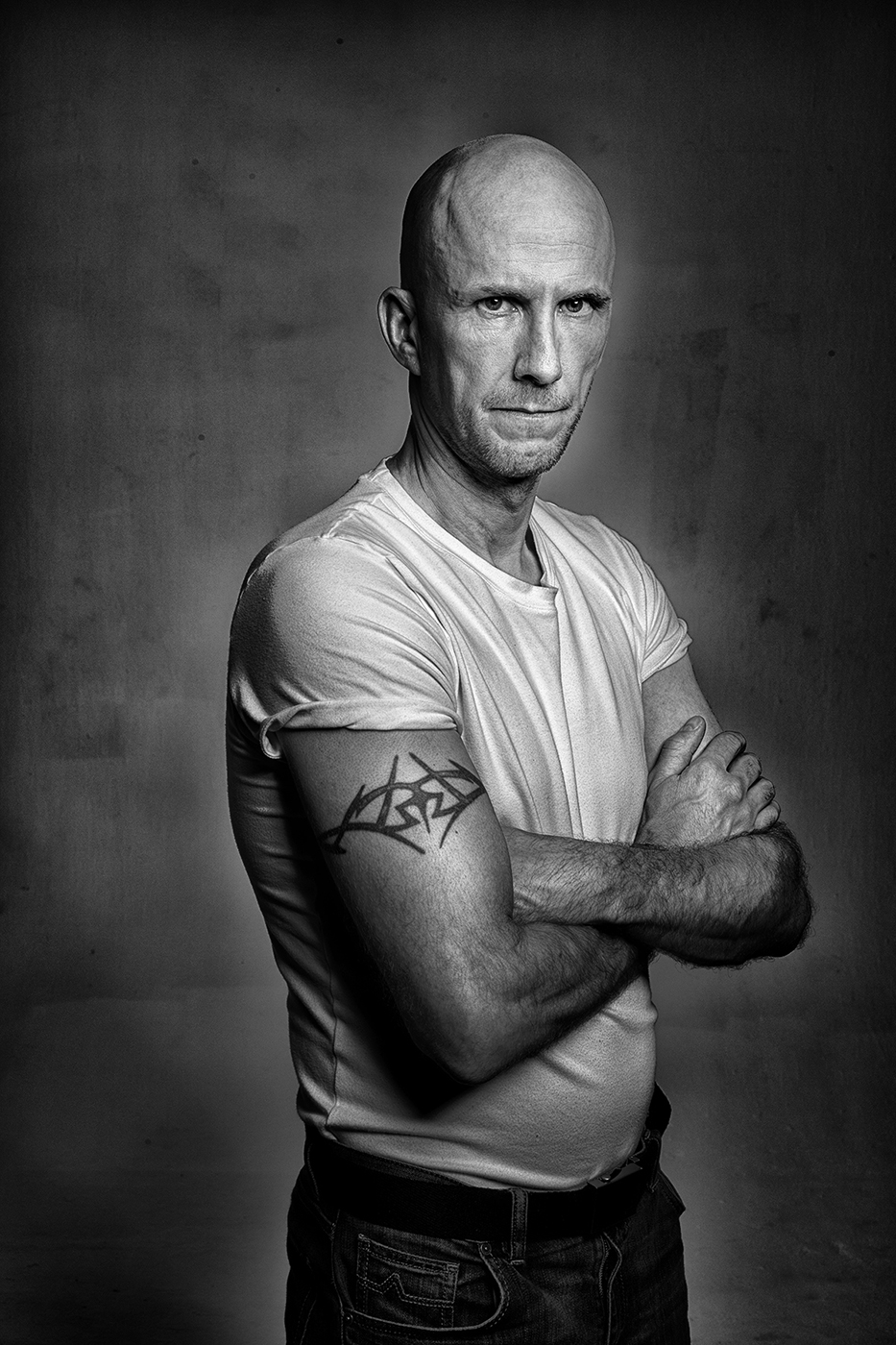
Even with the matte surface of the skin, by using a small lightsource (beauty dish at a distance) we can create more texture in this portrait by putting the light at more of a wide distance from the camera. This adds some texture from the sidelit properties of the subject. Enhancement in Photoshop is then easy, and keeps the matte surface for a cleaner presentation of skin.
Matte surfaces are where we can experiment and work with light to play down or enhance, or simply show it as it really is.
And most matte surfaces can be altered to create something more efficient or less. As we have seen, powder for skin can take away the ‘shine’ that we know is really the reflection of the light. Water or liquid can add sheen to the subject when we want the reflection. And we can use materials to create shine, like wax on a wood floor to enhance the matte to be more shiny by showing the reflection of the light as it renders back to us.
Remember that we all KNOW what shiny looks like, what matte feels like and how rough something is. It is part of what we learn from the beginnings of our lives. We touched, we saw, we felt… and we learned. Photographers aren’t creating anything new, we just learn to present it to others the way we want them to see it.
To recap:
Textured surfaces present small highlights and shadows because of the rough surface and how it reflects light. From a stone to a mountain, the texture can be enhanced by playing up the highlight and darkening the shadow.
Matte surfaces will show the highlight softly, allowing it to transition to the non-reflective part of the surface in a more gradual effect. This may be the most prevalent surface we have around us.
ASSIGNMENT:
- Look around at the matte surfaces. they will most likely be more numerous than very texturized things, or very shiny things. Take some time to quietly study what light does when it is refracted from them.
- Note how different light (direct / indirect) reflects from the surface. Make images showing the difference.
- Examine the ways that matte surfaces can become textured (heavy side/top light), or shiny (wetting the surface down changes its ability to render the highlight and now it becomes more efficient).
The Lighting Essentials Forum Rocks Another 40 Hot Images
John Groseclose shot our cover this post. Fitting, since John and I are teaching a CLS (Creative Lighting System) workshop tomorrow at my studio. It will be an event to remember. For me anyway... for a lot of reasons. If you want to know all about how incredible the...
Tom Miles, London. An Interview with an Editorial Photographer
Tom Miles joins us for an LE Interview that I know you will find fun and inspiring. August is traditionally a slow month for me, but not this one. Big event taking place all month (secret - you'll have to wait) and it is keeping every spare moment filled. Seriously....
Trust the Model – Part Two
Briana is back with part two of her article, "Trust the Model" and I am sure it will be of high interest to many of you who are starting down the road of fashion, beauty and editorial photography. Briana's take on the other side of the lens is kinda fun and brings...
Chris Bohnhoff: Interview with a Minneapolis Photographer
Welcome to Lighting Essentials interview with Minneapolis Photographer Chris Bohnhoff. I was cruising from a site I can't remember, and found Chris's photos. I really like the style and the interesting way he photographs food and people. I hope you enjoy his work and...
Model Behavior: Trust the Model
She's back - due to popular request. Briana has a new article on Model Behavior. She calls it "Trust the Model". Thanks Bri, for the article. On the Lighting Essentials front, it has been pretty hectic lately. I have several things to review and will get them reviewed...
Create an Antique Camera Look for Your Images: Photoshop Tutorial
We have been looking at business practices for a while now, and I have had some questions about the Photoshop Processing on a few of my recent images. I thought it may be a good idea to show a Photoshop Tutorial on how I create the Antique/Old Camera look. For those...
10 Web Site Strategies for Emerging Photographers
10 Website Strategies for Emerging Photographers As a photographer and web designer, I really believe that the website should be a vehicle for making business happen, and connecting with clients and possible clients, not just an online brochure or replica of a print...
Twenty+ Non-Photographic Essentials For Location Photography
We all know about checklists for our photography gear. Making sure we don't get 50 miles out in the desert and find we forgot our tripod mount, or sync cord, or stands or worse. Much worse. I have a checklist that I go through, and I also have started to keep packed...
10 Pricing Challenges and Strategies for Photographers
Let's start out with a universal truth. A digital photograph costs nothing. Nothing to make, nothing to store, nothing to transfer and nothing to see. Before you hit the computer and spit out your soda, I am obviously not talking about the gear and lenses and lights...
An Interview with Photographer’s Portfolio Consultant Selina Maitreya
Today is something special: an interview with Selina Maitreya, Portfolio Consultant and Photographer's mentor for nearly 30 years. Selina has been a photographer, a photographer's rep and a champion for style and substance in photographer's portfolios through her...
10 Things You Can Do Right Now for Your Photography Business
Today's post is on your business and your attitudes. Ten Things to Do Right Now for Your Photography Business These are slow times for a lot of photographers. I believe they are temporary, and will depart, leaving those who are still standing in a great place. But the...
Protected: Shooting for Your Portfolio: Presenting the Work
Password Protected
To view this protected post, enter the password below:
Style: It’s Not What You Shoot. It’s How You Shoot It.
Creating a Portfolio: What you shoot vs How you shoot what you shoot. Three exercises to sharpen your attention to style. One of the most difficult and challenging things we deal with as photographers is style. It is a defining point of our work. It is one of the...
Preparing Yourself for “Getting Out There” as a Professional Photographer
(This is part one of a continuing series on starting out in the world of commercial photography. I am a commercial photographer, not a wedding shooter, but most things would be similar in that genre as well. ) Even in these uncertain times, there are those intrepid...
Still Life Shot for an Magazine Ad
Well, my Volleyball client needed a new ad. That's great. We needed it to be concepted, shot, and produced in one day. A day that had me doing other things as well. Stressful? A little, but I have been at this game long enough to know that it will get done. It always...
Grant Lovett: Fashion and Music Photographer in Nashville – an Interview
Working in Nashville means music, fashion, celebrities and more. And Grant Lovett is in the middle of it. A soft-spoken shooter with a deep portfolio, Grant keeps the bills paid with shoots of musicians and fashion models. We have an interview with him that you will...
40 Portraits from the Forum
We are back with another post from the Forum. 40 portraits and a few extras. 40 wonderful portraits with some interesting lighting, concepts and presentation. I am in Omaha today for the second day of the workshop. Looks like we may have a weather challenge. But,...
Adding Texture to a Portrait for Added Drama
We haven't done a lot of Photoshop tutorials on LE, but I plan on doing more. The amount of requests I have been getting tell me that there is a lot of interest. And we will be responding. This tutorial shows you a simple way to add a texture to an image. As with...
Interview with Kirk Tuck, Austin Photographer and Writer
This post we get a glimpse into the working world of a commercial photographer. Sometimes referred to as a generalist, a commercial photographer must be able to handle a lot of different idioms when working in a smaller market. Portraits, fashion, still life, food,...
Strobe and Ambient: Finding the Mix for Portraiture
I get asked a lot about how my methodology works. What am I thinking about when setting the light? How do I know what the settings should be. For this post I have pulled some shots from last years workshop tour. I will explain the exposure planning as we go along....
Creating a Dramatic Dance Shot with a Speedlight and the Sun
I thought I would break down another shot I did that involved pre-visualization, overcoming a challenge and using small lights for a big light look. The shot was for a dance Calendar for Briana. In the calendar images she presents 12 different types and styles of...
Creating an Ad From Layout: Shooting for Print
This post looks at creating an ad from a very simple layout. The client, Dimensional Software in Palo Alto, CA, needed to have an ad produced in nearly no time. An opening in a magazine came up last minute and a fax was sent to me with a sketch of the ad that we had...
Interview with Steve Korn, Seattle Photographer
This weekend's interview is with Steve Korn, a photographer and musician living in Seattle. I think you will find his work and his words interesting. Being a creative person in music and photography can bring a different perspective to things. Steve presents his work...
Thinking about Portraits: 6 Studies in Beauty
This post is about portrait lighting and some of the things I think about when shooting a portrait... whether in the studio or on location. The shot above was done in Mexico at the Workshop in April. Christine had been walking with me and when she turned to talk to me...