
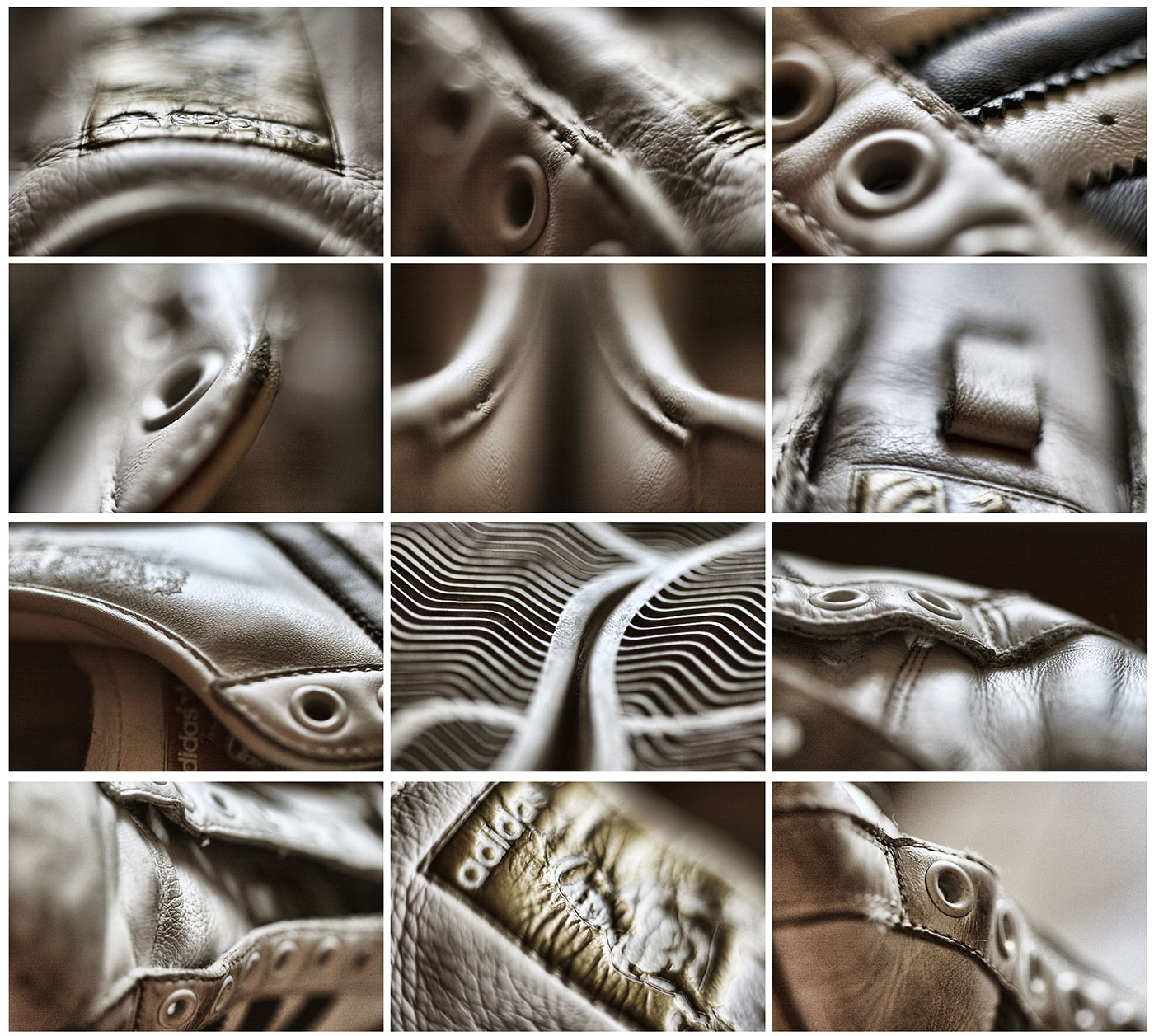
EVERYTHING REFLECTS.
Let me say that again. Everything reflects.
Some things reflect more than others. Some surfaces are more reflective than others.
But since everything reflects, we are sometimes presenting what that subject reflects rather than ‘bouncing’ light into a dark area.
In portraiture, I think of providing the shadow side of the face something to reflect back to me rather than ‘filling’ as in creating light on a dark surface. The reason is that the cheek and chin and hair on the shadow side can be made to reflect the object I have placed there if it will indeed be within the angle of reflection to my camera.
I believe I get more control that way. The brighter the ‘reflectors’ the brighter the reflections back to me. Moving the reflector away from the subject increases the distance, and the reflection becomes less bright.
One of the chief reasons that things reflect the way they do is the surface of the subject. Smooth surfaces may reflect absolutely, with lots of contrast, while adding texture will cut down on the reflection of the light and actually cause it to be presented with less contrast.
It is this nature of the subject that I focus on first when deciding what kind of light to use.
I will say this before we go on… there is NO one way or right way or best way do make images. There is your way and my way and her way and his way and on and on. I will present to you what I do and you are free to take it and modify/adjust/deconstruct/start over or discard what I do. It’s OK. In fact it is what I want you to do. Take this information and make it yours. Utilize subject centric lighting in your own way and make better photographs.
Surfaces have a couple of distinct parameters for us to explore: rough, smooth matte, shiny and combinations of all three sometimes. And each one of them reflects light back to us in different and particular ways.
Shiny, glossy surfaces, matt surfaces, and textured surfaces.
We will first look at textured surfaces.
Texture is what I see first when I start to look at a subject. I just do. Of course color and shape and all play into it, but the light has its way with texture, and I notice how it is presented back to the camera. In nature it can help me decide the angle of my camera to subject and in the studio it helps me decide on what kind of lights/modifiers I will be using.
I can choose to either enhance or mitigate texture by using the angle of the light as it is presented to the subject and back to me. A very rough wood wall with light scraping down across it shows a lot of texture, and I can use that angle of light to reveal that texture to my viewers. If I decide to lessen the contrast I can wait for a cloud to come between the sun and the subject, or go around the subject to see if there is texture wood in the shade. It will still be a texture, but it will have less contrast between the bright part of the texture detail and the shadow side.
The cloud lowers the contrast just as being in the shade does. In simple form, the light source becomes larger than the detail of the texture, but we will discuss this further in the next chapter.
If the light is on either horizon, I can change the look of the texture by changing where I put the light in relation to the subject – in relation to the camera.
Light from the side shows more texture. Light from the camera means less texture. The reason is that there is more contrast between the highlights and the shadows cast on the sidelight than there is with the light coming from the same direction as the camera. The light behind the camera actually doesn’t show shadow to the camera (angle of incidence = angle of reflection) while the sidelight throws shadows and creates contrast.
Texture shows the viewer how rough an area is, or what kind of surface they would find if they were there. It delineates the shape of details and it gives us information beyond what we would see on the surface. Old things have lots of texture from the weather or the sun. Areas that are full of texture have lots of visual energy. The eye knows that the light is playing on something that shows itself with character and charm. Cookies have to have texture, as does old barn wood. We want to see the texture in an old book as we want to see it in a pasta dish or leather jacket.
In the picture below, I am using a hard light to emphasize the texture of the pods. A small light source placed at a side angle to the pods and camera gives me highlight and shadow with very little transition between.

You can see the side light in the stems and the rim of light that is created by the quick fall off from reflection of the light source to the shadow.
Texture gives us context, and it is nearly unconsciously understood. We have seen what light does to texture our whole lives, so when we go to photograph it, we are naturally drawn to those times of day and places where the texture is well rendered.
But there are places where texture may not be as welcome. A subject’s face or skin may not be considered a good thing when rendered with a lot of texture. Unless, of course, they are quite interesting with the texture rendered. Age is something we can show with texture – and along with that inspiration, wisdom and the universal knowledge of what aging does to us all.
The old brick wall that Jamie is running on shows lots of texture due to the sidelight (top light) giving us edges and shadows.
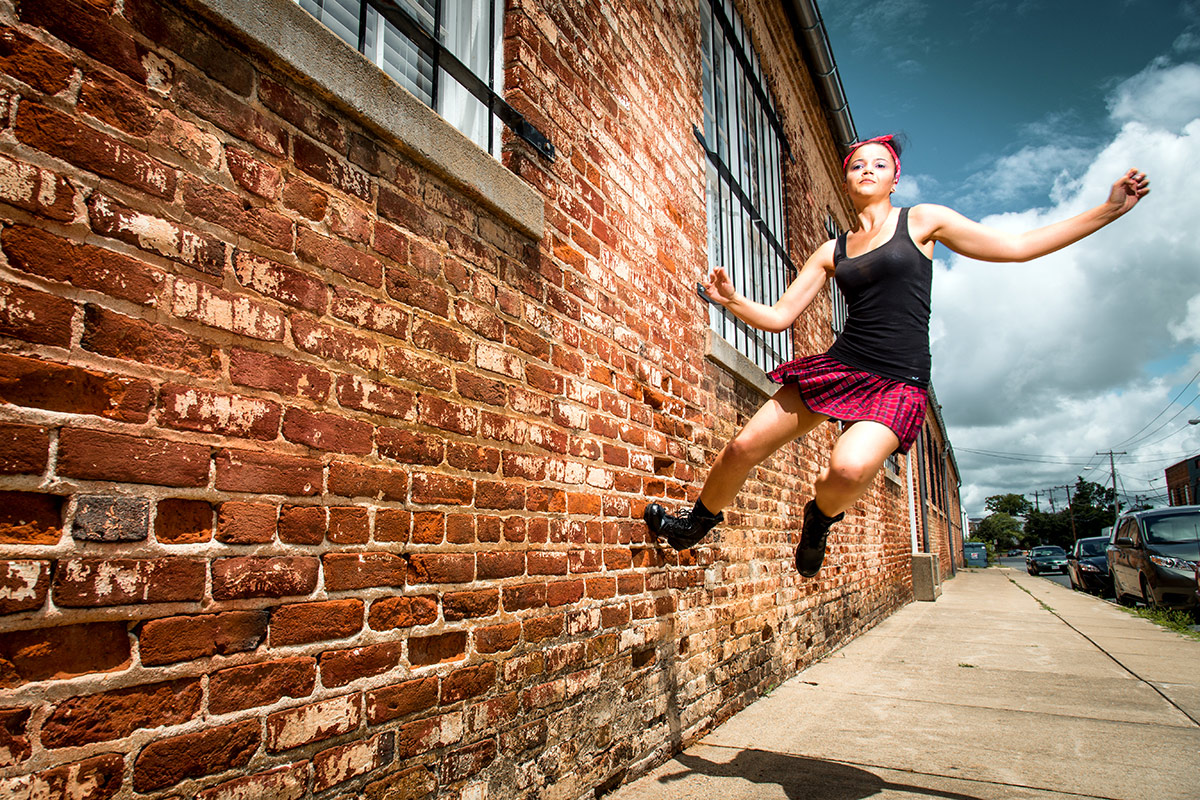
A close inspection shows us the highlights on top of the bricks and then the many indentations exacerbated by highlight and shadow with a fast fall off. This is created by using a small light source – the sun – and a large subject – the wall.
We want our things to be rendered as we expect them to be in real life. Water is wet, rough-hewn wood should look like it is a splinter waiting to happen, glassware should be very smooth, and skin should be smooth and attractive.
Sure there are examples of things being rendered in an un-natural state – and that’s fine. I am talking in a generality here, and one with a lot of history to back it up. While there may be an example of two of rough, scary skin on teenage girls, the vast majority will reject that image instantly.
This shot of cracked earth exhibits many of the properties of a subject / light relationship. Notice how much texture is shown due to the small light source side lighting the cracked earth. The sun is a small light source, and you see no soft, wrapping light, In addition, there is a bright spot in the middle of the image created by the specular – although it is a bit diffused, the dried mud is still reflective enough to show us a reflection of the sun at the same angle from camera. If I moved left or right, I would change where that bright spot was because it was locked into the same angle as my camera from the other side.
I chose to place my exposure one stop less than the recommended exposure to increase the feeling of a vignette.
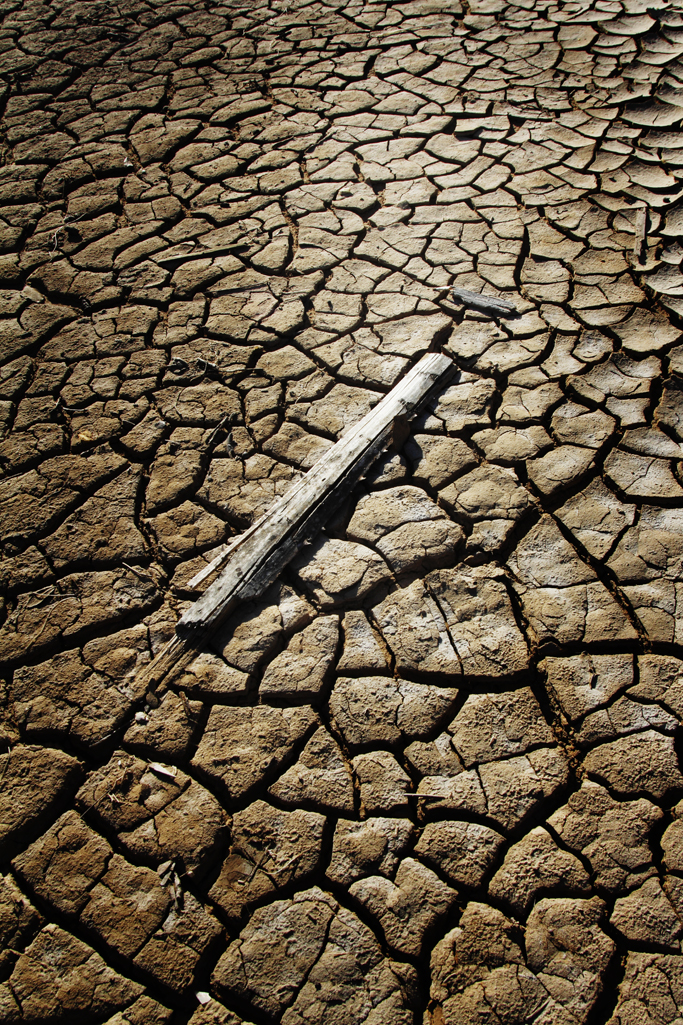
Small lightsource, at a side (back) angle and a slightly reflective surface gives us more to work with than just a dried mud slab.
Texture is also shown by the angle of incidence rule. If we choose to include the light as a part of the composition, for instance, we may choose to include its direct reflection back into the lens. A highlight on a shiny surface will show us how shiny it is by the relationship of the light and the surface around it. A less smooth surface may make a softer reflection of the light source, and that will also tell us about the surface texture.
In this detail of an alto saxophone, the light is coming from the top back and it leaves small speculars on the areas that are efficient (shiny) and emphasizes the texture of the old keys and metal discoloration.
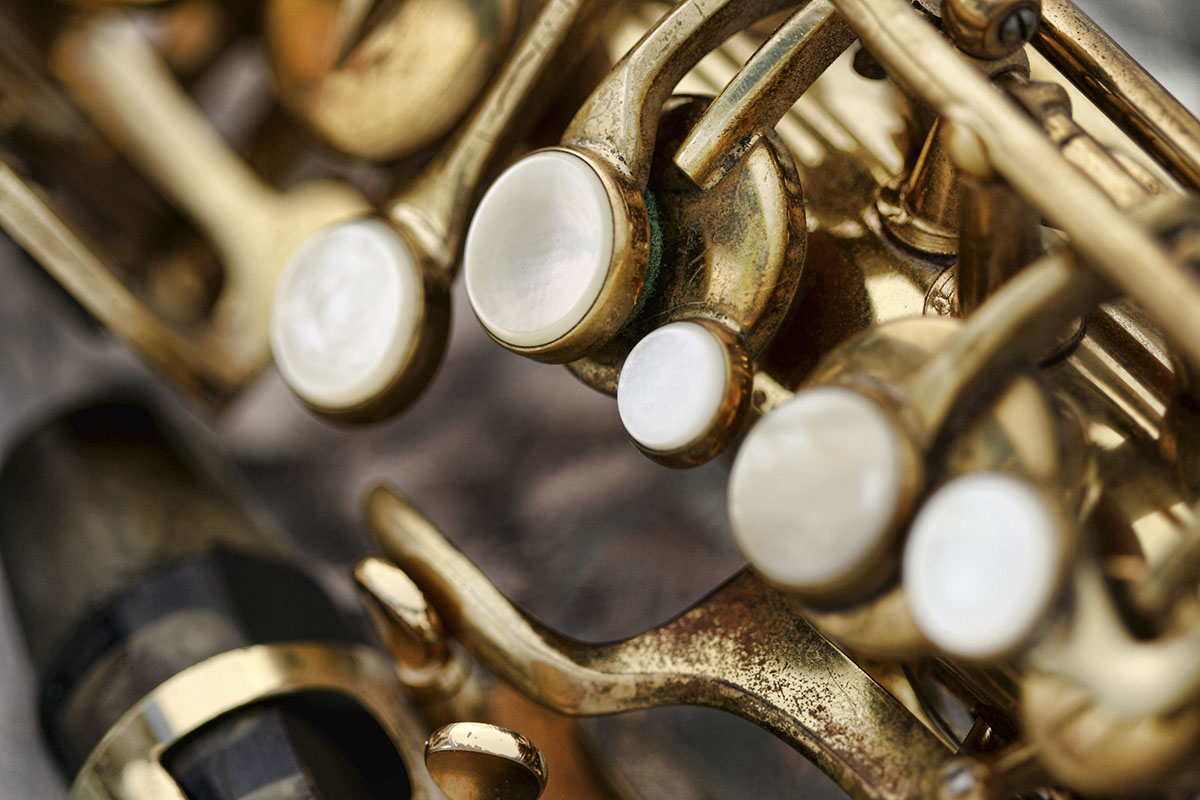
There are many places where we can use the reflection of the light source to create a cool looking gradation or highlight to create some interest as a point of composition as well.
The main point of this composition is the light on the wooden tools. By making sure the matte textured tools have a soft, directional light without any fill, the texture of the wood shows clearly in the image.

Ways to create texture:
Sidelight.
Top light.
Hard light (small source).
Backlight can also be used in many situations.
ASSIGNMENT
- Shoot a textured item (product / thing) to show the texture and find ways to mitigate or lessen the texture. Hint – front light nearly always kills texture, and sidelight nearly always makes it stronger.
- Take a single textured item – like a shoe – and using your flashes or studio lighting, create as many different texture shots as you can using only one light – no fill.
- Look for texture in nature and shoot images that emphasize and also lessen the texture just by walking around the subject to see different angles of light to subject to camera.
Inspired by Sarah Moon: 8 Week Portrait Class Student Work
This week we studied the work of Sarah Moon for inspiration. The students looked at Ms Moon's work, analyzed it, found what they liked and used it for inspiration. The goal is not to copy the masters, it is to understand them and let that understanding inspire the...
“Protectionism” is NOT The Way of Professional Photographers
The "Protectionist" Attitude Among Photographers Well, not all photographers, but a considerable few. Enough that they can make a lot of noise and bluster. I don't suffer that attitude well, never have. The whining about how there are too many photographers and how we...
Lighting Essentials Place Among Photography Blogs
Very excited to see that Lighting Essentials is the number 16 highest rated photography blog, overall. There is a whole lot of information on the page about designations for certain criteria that LE can certainly improve on. But heck... I am very happy to be up there...
Portraits Inspired by Yousef Karsh
This past week we looked at the work of Yousef Karsh. The students in the 8 Week Portrait Workshop are learning a ton and putting it to practical use. Here are their images from last weeks assignment. [gallery link="file" columns="6"...
Creating a Photo Portfolio That Represents Your Work
“What makes a photograph “Portfolio Worthy” I want to talk about what makes an image worthy of your portfolio today, and have you think about your work in possibly a different sort of way. What is your portfolio, anyway? It is the repository of the work you have made,...
6 New Books I Have Ordered
From Amazon: "W magazine is renowned for its avant-garde fashion stories, those elaborate confections of magic and mystery that have inspired and captivated readers for more than two decades. This volume gathers 10 of the most remarkable stories, each in its entirety,...
A Simple Tool for Shooting To Layout
Shooting for the web has created some interesting configured imagery. From very wide and narrow images for banners to tall and skinny images for side bars, shooting to layout is as important as ever. Here is a simple video for making a viewing tool that can help you...
Portraits Inspired by Victor Skrebneski
In the 8 week portrait class we looked at the work of famed Chicago photographer Victor Skrebneski. The students were asked to make a photograph inspired by what they saw in Skrebneski's work. Not to copy it, but to be inspired by it. Here are the remarkable expamples...
Distraction, Discontent and Distruption (Part One)
Distractions, Discontent, and Disruption The three “D’s” of the new daily discomforts. Wait, is that a fourth? We are constantly being distracted from our work, made to feel discontent at every turn and facing disruption in our business like never before....
Trends to Watch in 2015
Trends I am noticing: Social Media Thinning. Photographers are becoming more selective in where and how they spend their time in social media. This is a good thing. Not every SM platform is right for you and what you do.Facebook may be find for consumer shooters, but...
Providing Cover – Keeping Clients
Finding someone to “cover” for you on a photography assignment can be tricky business. Not just for your client, but for you AND the person who you hire to do the shoot in your place. Look, stuff happens. We all get sick or a relative passes away or there is emergency...
What I’ve Learned So Far: Thirty One; “I Love Photography… I Always Have”
{This is the final post of the "What I've Learned So Far" series and it will become a book very soon. All of you may download it for free if you are interested. I hope you enjoyed the series. I've learned more than just this, but I figured wrapping it in a month long...
What I’ve Learned So Far: Thirty; “The Overwhelming Mystique of Negativity”
"You can't do that anymore. The market is full of photographers." "Nobody is making any money in this business." "Why the hell would anyone want to go into the professional photography now, all the clients have dried up." I know. We hear that all the time. Nothing new...
What I’ve Learned So Far: Twenty Nine; “Overnight Success? I’ve Got Your Overnight Success Right Here!”
I read all about "overnight success" and usually I just smile to myself. Of course I do not believe them, but that's OK - they are always great entertainment. I remember an interview with the band "Foreigner" where the gushing interviewer mentioned their meteoric rise...
What I’ve Learned So Far: Twenty Seven; “Baggage Sucks”
What do I mean by "baggage"? I mean the crap we think about when we are making our work, the stuff that goes on between our ears that may have NOTHING at all to do with reality, but begins to weigh on us with false intentions and ruinous decisions. When I was younger...
What I’ve Learned So Far: Twenty Six; “Be Deliberate”
Be certain. Be sure. Be deliberate. Now this may sound strange coming from someone who advocates challenging everything, finding new solutions, and experimenting, but they actually go very well together. When I say be deliberate, I am talking about a process from 0 -...
What I’ve Learned So Far: Twenty Five; “Now and Then, Turn It Off”
I am writing this on Christmas Day, 2014. Not gonna do too much today. Spend time with the family, have a quiet read, and listen to some of my favorite music. There are times we must do this after long periods of stress and hyperactivity. It is our way of...
What I’ve Learned So Far: Twenty Four; “Photography is a Privilege”
Is making a photograph easy? Good question... although the question should really be; Should making a photograph be easy? We seem to expect it to be. I see the ads about how easy it is to "click" and get a picture. Kodak said it decades earlier: "Push the button and...
What I’ve Learned So Far: Twenty Three; “On Creativity”
Occasionally we run into the argument of whether or not 'creativity' can be taught, or does it have to be born within us? We read all about creativity and how important it is. We award little statuettes to really "creative" people. Creativity is blessed, cursed,...
What I’ve Learned So Far: Twenty Two; “Photography Is an Incredible Art”
Photography at its best can be a reflection of the world in ways that we have never been seen before. It is the photographer's vision that makes the image become more than it could have been. But at the heart of the photographer's vision, there is a deep foundation of...
What I’ve Learned So Far: Twenty One; “Don’t Be A Clone”
Nobody likes a clone. A clone is a copy, a non-authentic 'ringer' that has no soul, no guts, no passion, no quirks or guilts or pleasures. And it is way, way too easy to be a clone. Just copy something or someone and do that as you. But it is you. Case in point. A...
What I’ve Learned So Far: Twenty; “Gravity; A Force of Nature, Not a Way of Life”
One of the more difficult things to wrap our arms around is that not everyone out there wants us to succeed. In fact, the numbers are highly stacked against us. More people will seem to want to douse your flame of passions before it gets lit than will block the wind...
What I’ve Learned So Far: Nineteen; “It Isn’t What You Shoot, It’s HOW You Shoot What You Shoot”
In the 'business' of photography some things have changed drastically since I started out a long time ago. From "day rates" to "snip tests" some of what we did as a normal part of our creative lives have either vanished or have been recreated into some new language -...
What I’ve Learned So Far: Eighteen; “It Costs What It Costs”
Have you ever purchased a car? From a dealership? All the run around they do, the "let me take this to my manager" BS, and the "hey, what do you want to spend per month for this little honey..." makes me cringe. I am a marketer, and that stuff makes me laugh. But it...