
Subject Centric Lighting
LIGHTING ESSENTIALS WORKSHOP: SUBJECT CENTRIC LIGHTING
I hope you enjoy this workshop.
It is the culmination of decades of being a working, professional photographer and having to meet the challenges of making images for other people. Other people with high expectations and demands for the work. Other people who didn’t necessarily care how hard it was to make the shot they wanted, they wanted that shot. Now.
Being a photographer in a small market meant I didn’t necessarily have a strict specialty, although people and still life did make up the bulk of my work. I would occasionally shoot architecture and food, as well as the now and then corporate shoot.
I wasn’t really a ‘generalist’, but some weeks it seemed as though my assignments were as unrelated as they possibly could be.
One week I had a food shot going on in one corner of the studio, with a catalog shoot going on in the other part. All of this while I was shooting a lingerie shoot for an ad agency in the rest of the studio. Heady times, long hours, really damned fun.
This workshop will take us through many of the ways to light photographic subjects. And lighting is, as they say, lighting. Yeah, I am so old I remember when “off camera flash” was simply called lighting.
We are going back to that time. Lighting is lighting and the goal is always the same: to make an image that represents what we see in our mind’s eye. Knowing what we want is step one, making it happen with the tools at hand is step two.
The assignments will be given one per week. They will remain in place for future photographers. You do not have to start at the beginning, but the first five lessons are absolutely important to review before moving to the assignments you want to do.
SUBJECT CENTRIC LIGHTING
I call my system “Subject Centric Lighting” because the subject plays a bigger part in the lighting than the lighting gear does. How a subject renders the lighting we apply to it, and how the camera receives that light is what makes our images interesting.
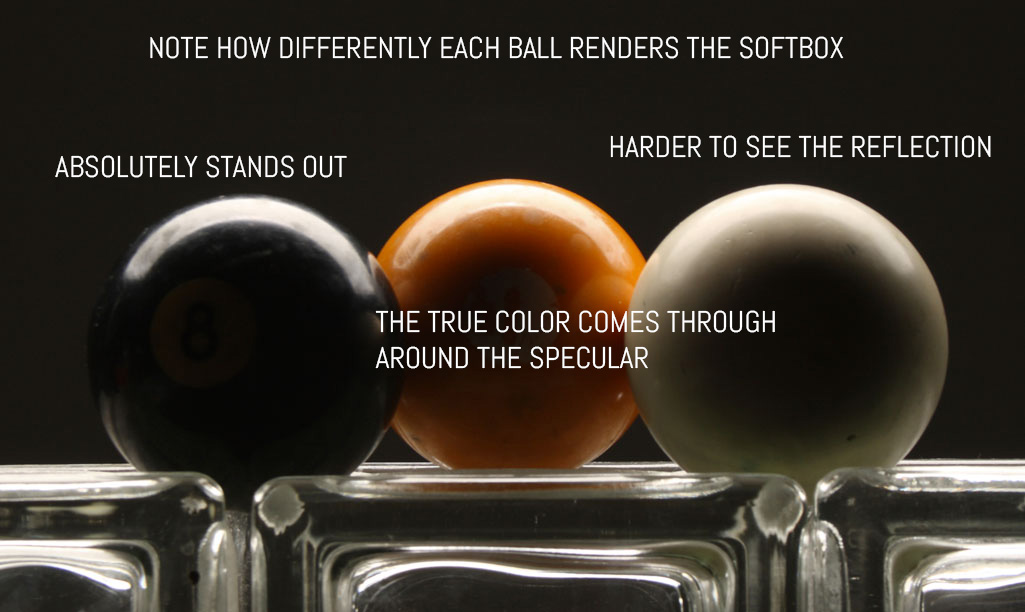
Subject Centric Lighting recognizes that light does the same thing every time. It is the subject that changes the way the light reflects back to our camera, not the light tool we choose to light the subject with. Lighting a dark bowling ball with a soft box presents a far different rendition of the light than using the same light for a white bowling ball. Everything is changed – from specular presentation to shadow fall.
But more of that as we go along.
First, let’s get into the basic principals of light and lighting.
LIGHT DOES THE SAME THING EVERY TIME
It must. Otherwise, we could never control it.
Imagine a saxophone with its many variations of keys. A sax player has to know that if a certain set of keys are pushed, a specific sound will come out. If it was random, then no music could be produced. There would be no point in learning the saxophone since there was no knowledge to be applied that would render it usable.
The same with lighting. We have to know that if we have a flash at 1/4 power, 15′ from the subject, that a specific exposure will be generated. We can control how much exposure that is by changing the ISO of course, but always at any specific setting that flash will produce the same measurable amount of light. Every time.
It is the same thing with modifiers. A softbox will look like a softbox when it is being reflected from a shiny surface. An umbrella will wrap the light if used to do so based on science and physics, not some magical desire to use an umbrella.
So if light does the same thing, how can we use that knowledge to make light do what we want it to do? And if it does the same thing every time, why do images look different from each other when using the same or similar lighting?
Subjects.
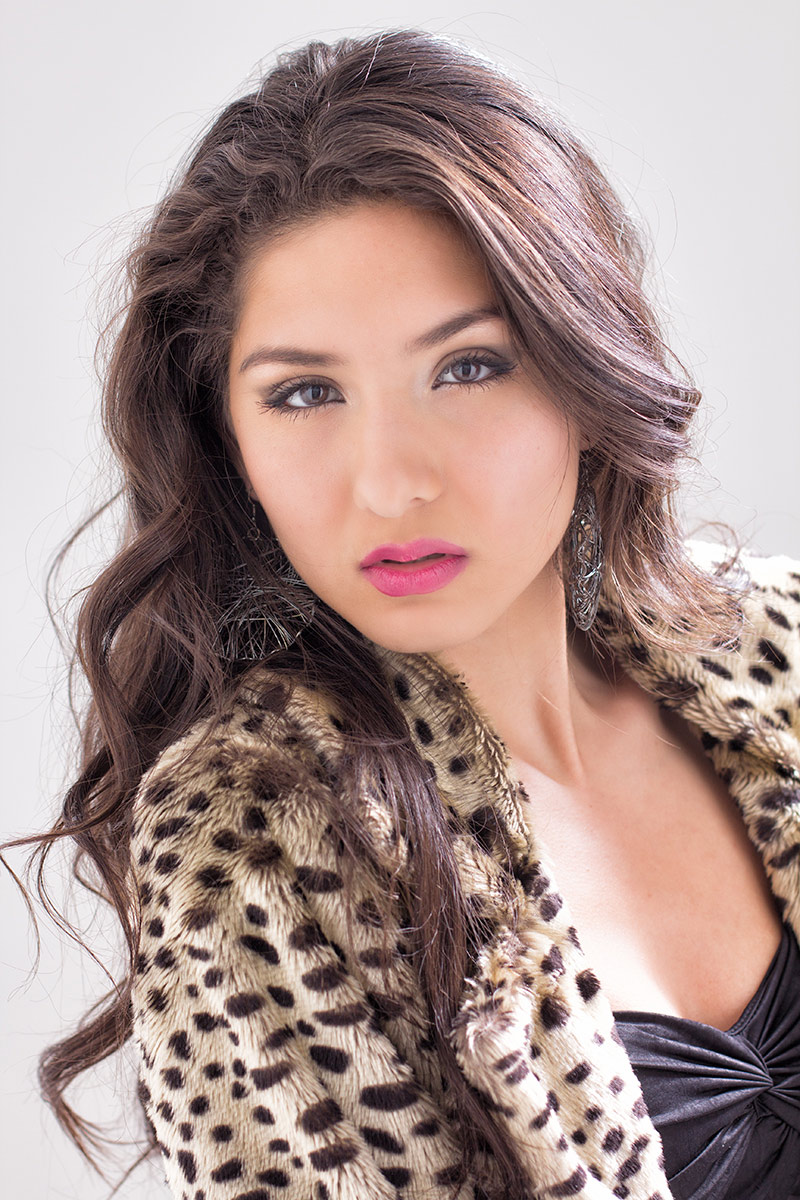
Subjects are dimensional, with textures and surfaces, and shadows and speculars and more. A shiny subject renders the light back to the camera differently than a diffuse subject does. A dark subject renders the perceptible highlights differently than a light subject. Subject change, but the physics of light do not.
WHAT YOU WILL NEED:
This workshop is designed to teach you the basic principles of lighting for photography. We will have weekly assignments and you can start anywhere, anytime. There is no charge for this workshop, although we will be asking for your email so we can keep you up-to-date with all that is going on in the workshop.
We have a Facebook Group for this workshop, and you will be able to meet others in the workshop, ask questions and find out when the open webinars will be.
You will need a camera, of course. And while much of the natural light information can be used with even a cell phone camera, much of the photographic education will require a camera with aperture / shutter speed controls.
Lighting gear:
A 5-in-one reflector kit would be a great purchase since it will be something you will be available to use over and over for all sorts of image lighting effects. I call them the best bang for the buck in lighting gear.
White cards. From the Dollar Store or Target, white foam style boards will be a vital part of your gear.
Photographic light stands. A couple of cheap ones would be fine if you do not have any at the moment.
A couple of ‘A’ Clamps from the local hardware store will hold the boards and reflectors to the stands. Get the cheap ones.
A tripod will make your work a lot easier, and there are some good ones that are not expensive.
If you are going to use artificial light, there are too many options for me to tell you much other than we will be doing a lot with them. So whether you are a speedlight shooter, have a couple of studio lights, or even continuous light set ups, all the information is the same. Light is light, and the gear is there to provide that light.
We will learn to control light and make it do provide the look we want.
On the black cue ball, the light is distinctly shaped and no other light is seen. On the orange ball, we see the softbox specular, and a bit of the true tone of the orange around it. That bright orange makes the highlight specular a bit harder to see distinctly – at least as distinctly as the black ball. On the white ball, the specular all but disappears into the white true tone of the ball.
Same light is seen differently by the camera because of the makeup of the subject. We will be discussing this in length in future posts.
Light.
It is a substance that we cannot smell, touch or hear.
Can we see light? No… we can only see what it reflects from. The subject.
I will refer to that as the “presentation of the light” in this workshop. That refers to the way the subject is taking the light onto its surface, then reflecting it back to the camera lens.
No… we can only see what it reflects from. The subject defines the light… we cannot see the light in transit from source to subject, only what the subject reveals after the light has come into contact with it.
To me, that is one of the magical qualities of light, almost mysterious and yet compliant with our wishes. I think of light as a liquid when planning my lighting… it helps
I think of light as a liquid when planning my lighting… it helps me ‘see’ something that isn’t there but yet has similar properties. Direct light is like water from a hose, while diffused light is mist. Ambient is similar to fog in my mind, while umbrellas are more like garden sprinklers.
You can think of light in many different ways to help you plan your shots, but whatever you do to help, keep in mind that light does the same thing every time. Everytime. If you have a light that gives you an exposure at f-ll
If you have a light tool that gives you an exposure at f-ll on 1/2 power at ISO 100 at 6 feet… it will repeat that for you (barring some sort of malfunction) every single time you set it at that distance, power, and ISO.
The predictability of light tools makes controlling it a matter of understanding what it does and how to use the tools at our disposal to modify, control, and adjust it to suit our plan.
Even the sun is predictable. F-16 at 1/100 with ISO 100 film. (Sunny 16 Rule: F-16 at 1/ISO). This makes understanding light far easier than if it was unpredictable.
Getting the idea of what to shoot is harder than shooting it in most case… once you know how to light correctly.
Important Note:
Everything reflects. Everything.
Dark, rough fabric does not reflect as much as a shiny, painted surface. But it does indeed reflect.
It is important to know that as we begin.
We will first turn our study to the four principles of light. While I am not a fan of rules, I will say that understanding these four principles will definitely enhance your ability to handle any lighting situation you may have.
SIZE OF THE LIGHTSOURCE RELATIVE TO THE SUBJECT
DISTANCE OF THE LIGHTSOURCE
COLOR OF THE LIGHTSOURCE
ANGLE OF THE LIGHTSOURCE
Now here is the hard part: there is no hierarchy to these principles. What that means is there is no ‘first, second’, etc. Each one of these four principles are as important as the others. We do not approach it from size first, then color – or any of that. All of it is very important and all are important at the same time.
This single idea – that all four of these principles are equal in importance is perhaps the hardest one to think about – but it starts to flow when you get it down. You can do this.
Now to be sure there are times when we start with one or another of these principles because that is the biggest challenge at the moment. And those priorities will change from shot to shot. It is to be expected since we never know what is going to be in front of us at any specific moment.
LIGHT DOES THE SAME THING EVERY TIME.
And we can control that light by the way we understand the principles of light, and understand how those principles affect a given subject depending on their properties.
Let’s look at the four principles of light.
THE FOUR MAIN PRINCIPLES OF LIGHT
Contest Submission Instructions and a big THANKS to our Sponsors
Hi everyone. It is time to wrap up the contest shooting. "Summer In My Town" has run from June 1 through the first 2 weeks of August. We now must collect the entries and get the site set up. Below are submission instructions. Please send the images to me by Tuesday,...
Guest Post: Selina Maitreya on the “Whole Enchilada”
You Need the Whole Enchilada © 2011 Selina Maitreya NOTE: This is a guest blog post by Selina Maitreya. At the end of the post is a special deal that will net you nearly $300 worth of valuable photographic information. I urge you to take advantage of this incredible...
A Photographer’s Decision: Take the Freeway or the Road Less Traveled?
Recently there has been some buzz about how to get noticed as a photographer. And more and more I see photographers doing images that look for all the world like some other guy's images that looks like a woman he really admires' images. And her work was copied from...
New Gear: Aputure Triggers and Gamilight Modifiers – Gear that WORKS
Dontcha just love gear that works the way you do. Intuitive design, ease of use, multiple applications... the things that make working with the gear simply an extension of what we are trying to do. And that is make photographs. When I am shooting I want to be involved...
Rediscovering the 50 – Working To Know My Least Favorite Lens Better
After neglecting my 50MM lens for a long long time, I decided it was time to get to know each other better. I spent a week with the lens, and we are coming to an understanding.
Your ‘About Me’ page image: Make it part of your brand
Over at Project 52 we did an assignment to do a self portrait, or at least a portrait of ones self. An "About Me" page is such an important part of the website that it must be addressed in a professional and stylistic manner. Some statistics show that it is the most...
It’s Summer: Ten Things to Do to Boost Your Photography
1. Road Trip I love road trips. Planning them, packing for them, and doing them. Unpacking... well, not so much. But road trips are one of the most fun and inspiring things you can do. I try to take small road trips whenever possible. Last week I was in Vancouver....
Do You Have a Line You Won’t Cross in Photography?
A recent heated discussion on a photographer making her political affiliations known led me to another thought... is there a line you won't cross in your work? Should there be? It is a competitive market out there. There are bills to pay, and gear to maintain, and...
Is it a changing market, or are systems simply broken?
Discussing the new expectations of commercial photography and creating new challenges and channels for the visual executive
Strip Lights, Fools and Wrapping up the Second Book
A kind of a hodge-podge post this morning. I am deep into the final shooting for the Lighting Essentials II book to be published by Amherst Media sometime in the moderately distant future. These days it seems like a year from completion to seeing it on the shelves. I...
Time to make the jump to full time shooter… the 80’s
I discuss the third decade of my love of photography.
Learning the Ropes: My Earliest Commercial Photography Experience
The 70’s and 80’s were a heady and exciting time for me as I started my commercial photography career. This is part two of the series on how I got started.
My First Brush with Photography
It was 1963. We were on a vacation in California, and my dad wanted to see the town of Carmel. We would do that as a family. Head out from Phoenix to places (usually west of us) and find things that were interesting to my dad. Mom didn't really care where we went, she...
Summer’s Here: Some stuff to read, see and do to keep “Cool”
Well, the hot days are here. Believe me. 110 in Phoenix today. We experienced three of the heat wave days in New York, and then some great respite up in Old Orchard Maine. This is a gathering of some things I think you may enjoy as we prepare for the long hot days of...
Somewhere, Right Now, at This Moment…
A photographer is preparing to make a photograph that may change someone's life, forever. An art director is considering a new photographer for a substantial editorial assignment. He is a little nervous about it, but he also knows that this is the right shooter for...
Our Second Annual Photography Contest, “Summer in My Town” Begins Today, June 1, 2011
IMPORTANT NOTE: Registration for the contest has ended. If you missed it, look for our next contest in the Spring. If you did register, an email with important information was sent out on August 11. If you did not get that email, please let me know and I will find...
What Riding a Motorcycle Taught Me About Life (and Photography)
Challenging Times; A Few Ideas to Positively Impact Your Business
Here are a few ideas that I use to impact my business quickly and also help me move from a creative block. A few years ago I wrote about the things I do when given a chance to jump out and spend a little time on a project. That list is still pretty timely, so here it...
The “Dating Game”
Five Things to Share on a Wednesday
What’s It Like on a P52 Annual Meetup/Roadtrip
I could try to explain what it is like, but we had a videographer on the trip with us last time. https://www.youtube.com/watch?v=urSQqCGRKkM