

Subject Centric Lighting: The Five Areas of Light Presentation
Cover image by Project 52 student, Gabriel Alvarez.
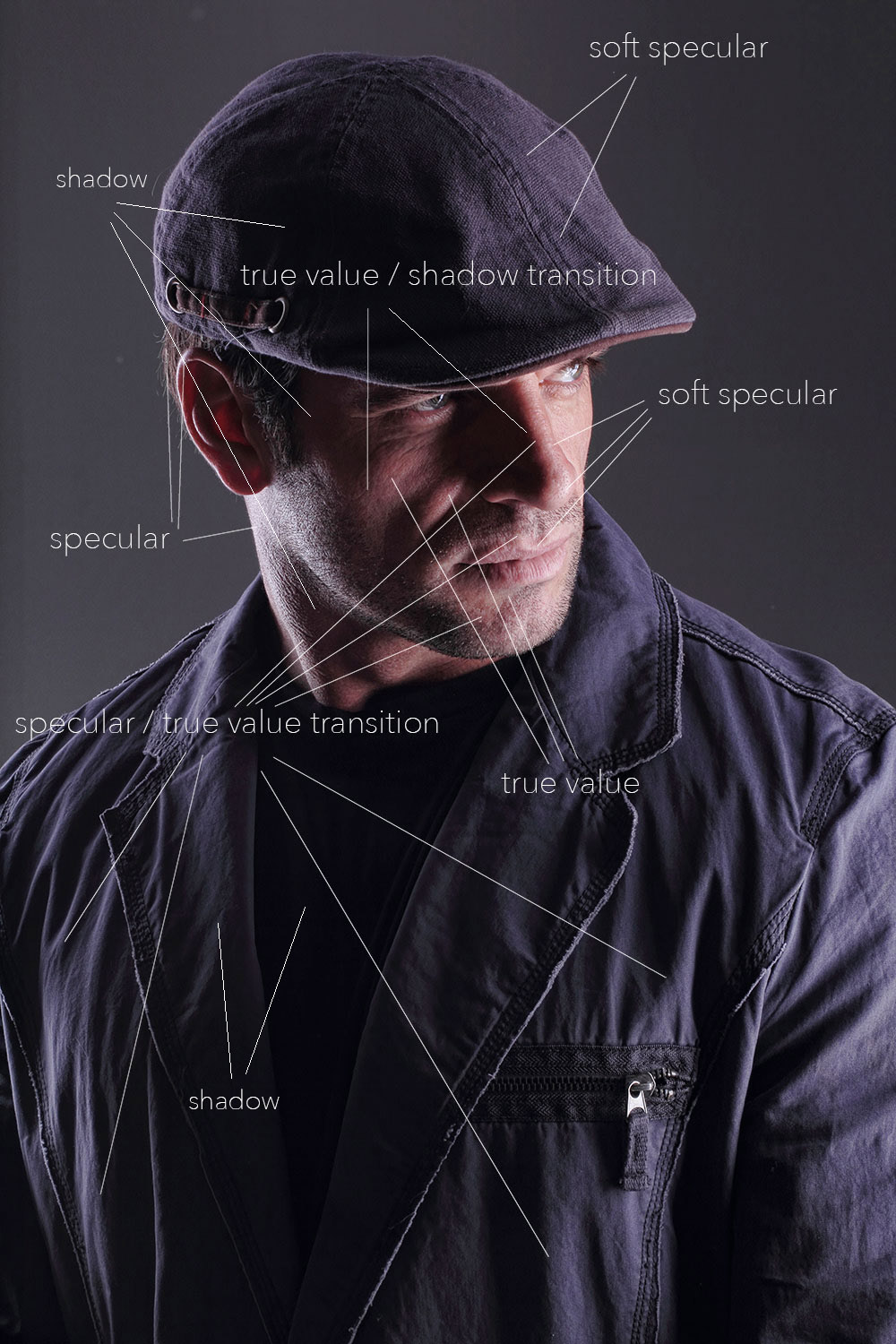
When the lighting choices we have made are used, the light is ‘presented’ back to the camera in expected, and controlled ways. There are five parts of the light presentation, and we use them in every image we make.
True Subject Value:
What the subject looks like when not in specular or shadow, this is the area that shows us the color of the subject as well.
Specular:
The exact or absolute reflection of the light source.
Specular Transition:
The point where the specular reflection transitions to the true subject value
Shadow Transition:
The transition between True Subject Value and Shadow
Shadow:
The places on the image that are not lit, the opposite side of the light source.
These areas of light are found in nearly every subject. By understanding what they do, and how they are controlled, we can understand much more about the light that is used to present these areas in the ways we want to show them.
In other words, knowing what causes a shadow transition, how to present true value, and how to control a specular highlight means we have control over our lighting and we can create the looks we want. Whenever we want.
Photographers and artists use these representations of light to show texture, shape, dimension, color, clarity and mood. Illustrators use highlight and shadow in their work to create their own light. And they use the same tools to light their drawings, although quite imaginary, as photographers do.
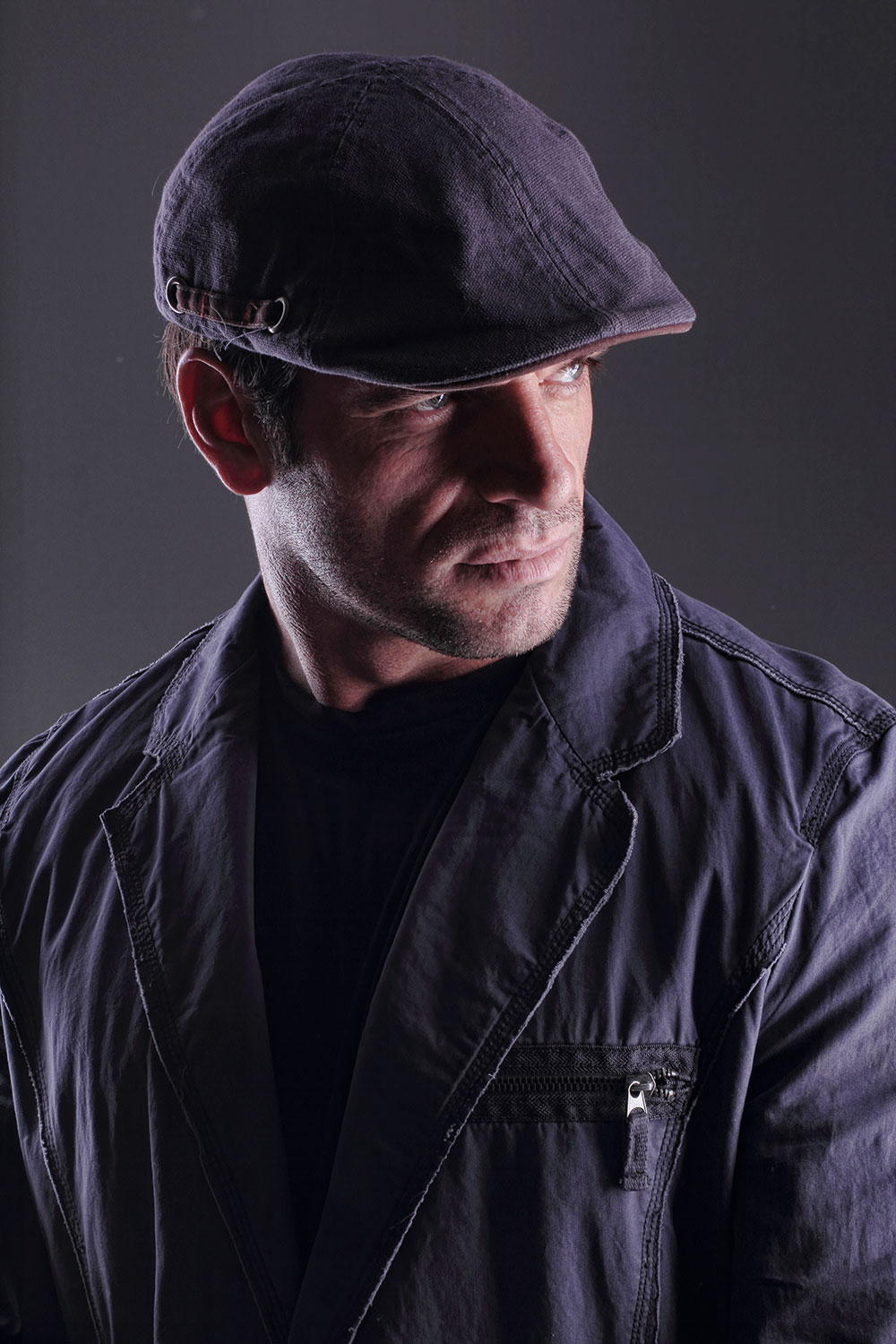
We can see all the presentations of light in this image of Inaudia.
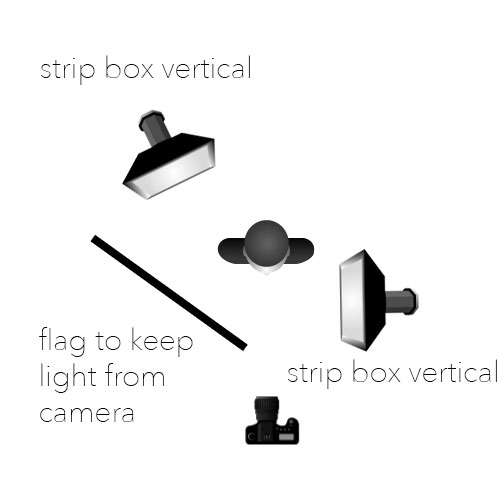
Lit with two strip lights (one on each side), the one on camera left is behind Inaudia and aimed forward just bit. The one on the right is slightly in front of him, and angled at an oblique angle.
This renders two different kinds of specular presentations, the absolute one on his neck and left side, and the softer one on the right side.
All of the transitions are there, and these transitions are what we see when we are determining soft light from hard light. A fast transition is a hard light, where a softer transition – as in the picture below – is a softer light. We would call this image a hard light image because of the fast fall off in the transitions between highlight and true value, and true value and shadow.
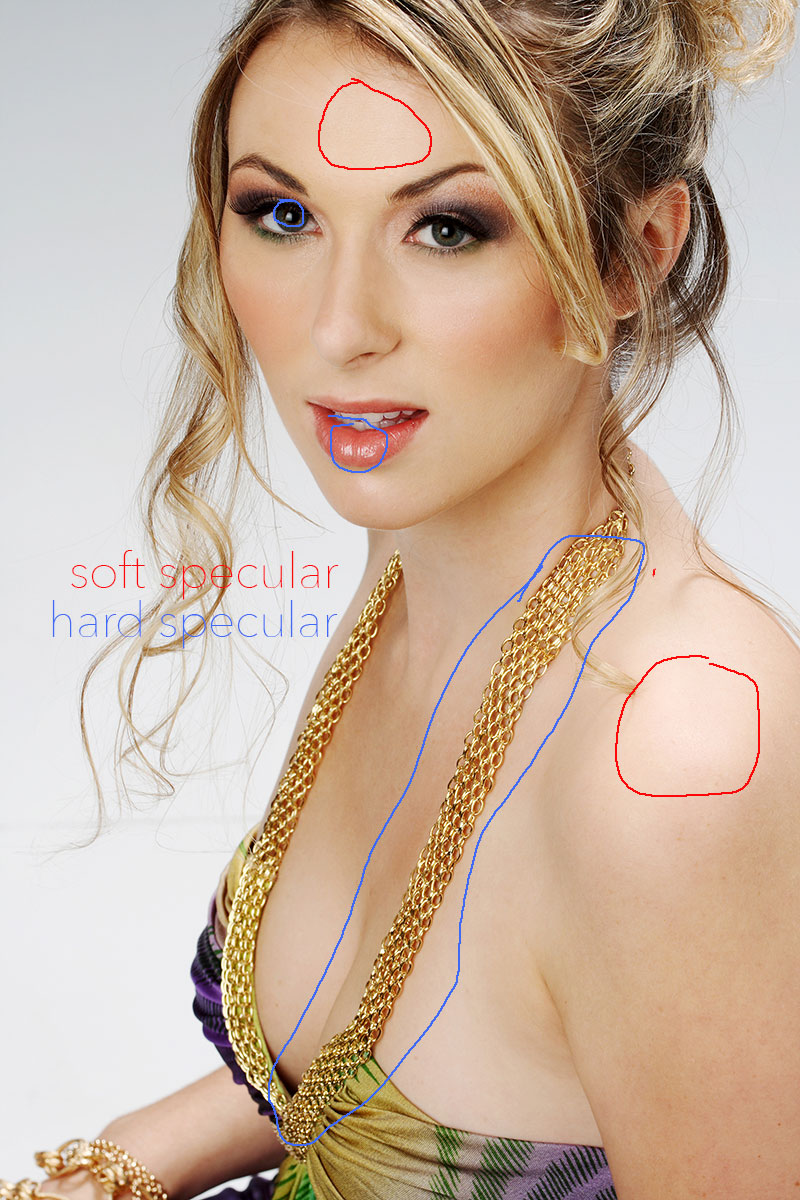
This image shows a lot of true value skin tone. One of the reasons is that the model is not shiny (wet) or perspiring to cause a shinier surface. Powder is used to intensify the diffuse skin (true value) so the speculars (in red) are presented softly. The blue speculars, however, are presented with very sharp transitions. Note that the specular on the shiny lips is absolute, with no soft transition. The gold jewelry on the dress shows as highlight/black because the reflection of the light source from the shiny metal is absolute.
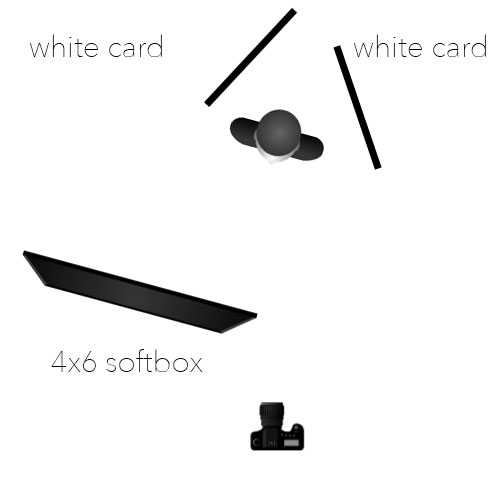
Lighting: Very large softbox directly in front of the model, and back 5 feet. White cards are positioned on either side of her, but pulled back to a point where they will not reflect in her eyes.


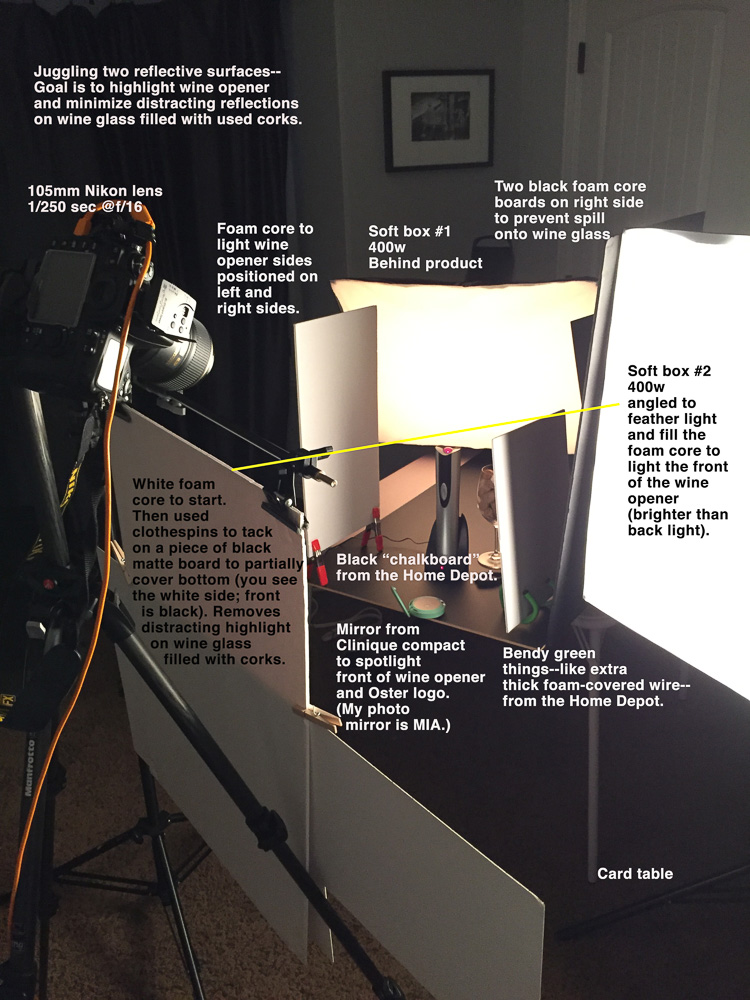
Photographer Anne Stephenson shows how to control the specular, true value, shadow and transitions in this seemingly simple table top product shot. As you can see, nothing done well is simple. Every kind of surface is in this shot.
Let’s start to put all of this together now.
A Special “Portfolio Building” Workshop, Feb 11, 12: Only 3 Students
This is a special workshop for only three students. It is on short notice, but there is a reason for that - and it will be explained at a later date. Our focus will be on mastering images across a spectrum of genres. This workshop is for the serious photographer who...
Portraits: Four Simple Approaches
I had the chance to do some portraits of some of the talent we had at the LE Weekend Meetup. They were Briana's dance company and all of them were delightful and beautiful dancers. The folks who came had a blast and I was simply stunned that so many people came so far...

“Average is Over” or Why Good Enough Sucks
Thomas L Friedman, in a post today at the New York Times, says that "average is over." And he is right. It is. You can see it in industry and media and design and art. You can see it in nearly every area of business. Apple proved it. And Mercedes. And Braun....

“Winner Gets Me” Contest Winner is Regina Pagles
We have our winner. Regina Pagles will either be coming to my studio for a 2 day one-on-one or I will be going to hers. http://reginapaglesphotography.com/#/0 http://www.flickr.com/photos/reginapagles/ Regina lives in a very small town, Springdale, Utah: Population...

The Myths About Creativity – And The Consequences
Have you ever heard... That creative people are weird? That creativity is best created in a group? That creative people are sloppy, messy and disorganized? That creative people are always coming up with cool, but ultimately silly ideas? That only "creative" people can...
10 Simple Ideas for Creating a Sustainable Photography Business
It's one thing to get a shoot now and then, and another to create and sustain a commercial photography business. Here are a couple of thoughts for you to consider. 1. Get a hard edge to criticising your own work and make sure it is living up to your standards. Getting...
Changing Levels and Why Plateaus Are Dangerous
I started photography a long time ago. Longer than many of you, and not as long as some of you, but it was back when motor drives cost $5K, and we only printed black and white. On Fiber. Much of what I learned then has sustained me for decades, and I loved every...

Project 52, 2011 Edition, Comes to An End
Last evening critique for Project 52, 2011 Edition. Tonite was a special night. It was a year ago that we had our first meeting and what a year it has been. Some who started with us left for reasons of life and love. A few just evaporated into the ethos… and that was...

Project 52 Photographer Greg Kindred
Meet Greg Kindred. "I found project 52 January 3, 2011 as I read about the project I knew immediately that I would participate. As the assignments were given out I was challenged right away with photographing a stranger. Pros shoot strangers every day, but in my...
Project 52 Assignment Three is Posted
Assignment Three is a simple still life shot. "First – there is a difference between product shots and still life. Product shots show, well, products – tech or cooking utensils or cameras. A still life can be made up of items that are not for sale, but instead are...

Project 52 PRO Launched Today. Building a Business in Photography
Project 52 started last year as a way for photographers to get critiques and assignment in a real world setting. In a no BS arena of commercial insight and realistic assignments. On many forums discussions range from what kind of lights do I need to the best prices on...
BYU Gymnastics Calendar Shoot – BTS Video
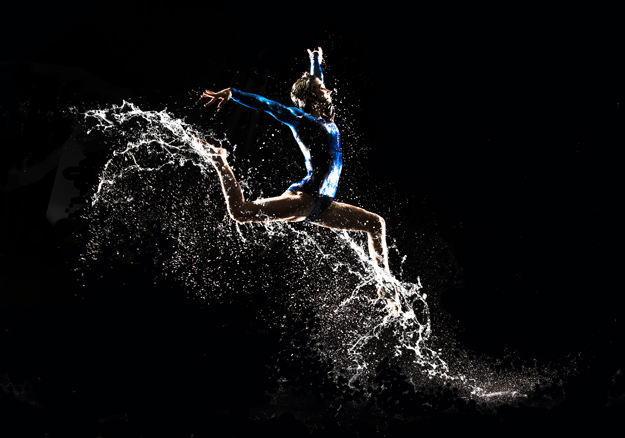
This is a great little BTS series from the good folks up at BYU. Shooting dancers and gymnast is one of my favorite subjects, and they approached this with a very unique concept... gymnasts and water. "The idea was to highlight the shapes of the gymnasts performing...
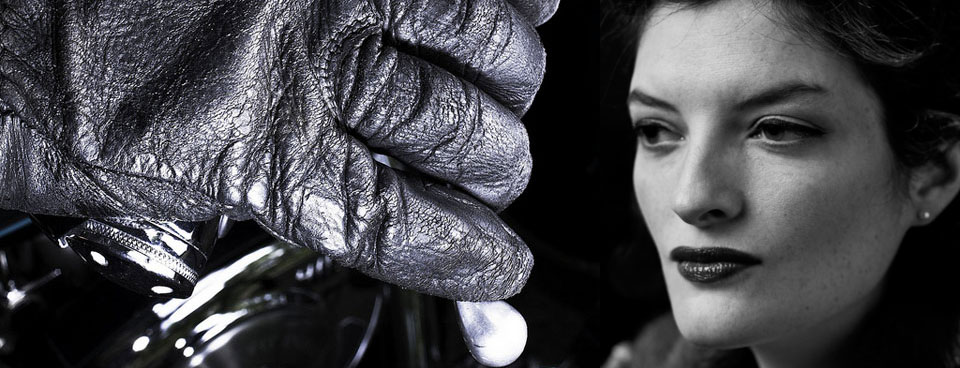
Project 52 Photographer Greg Pastuzyn
Meet Greg Pastuzyn from New Jersey. Greg attended my last New York Workshop, and hosted one of our Wednesday evening chats from his home. Greg has been working with Project 52 for a while now. "I was introduced to Project 52 through Don's blog Lighting Essentials. At...
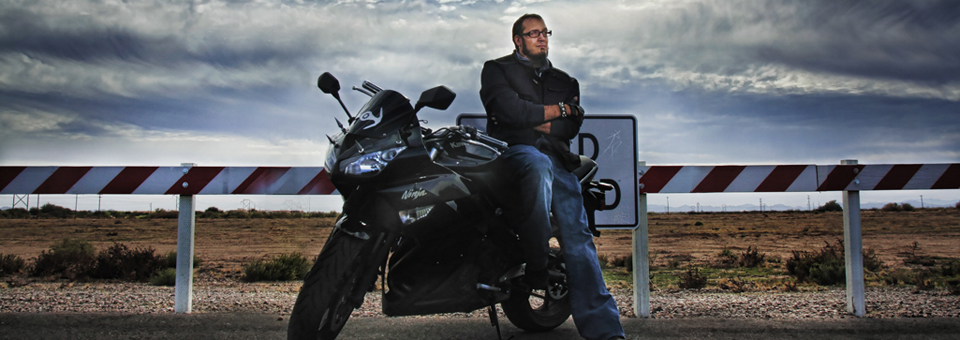
Preparing a Game Plan for 2012
Looking to start the year off right? Great. We all feel a little bit of a spring in the step and some empowerment at the first of the year. So let's get a game plan going... something not as fleshed out as a marketing plan, and not as whimpy as a resolution. A plan....
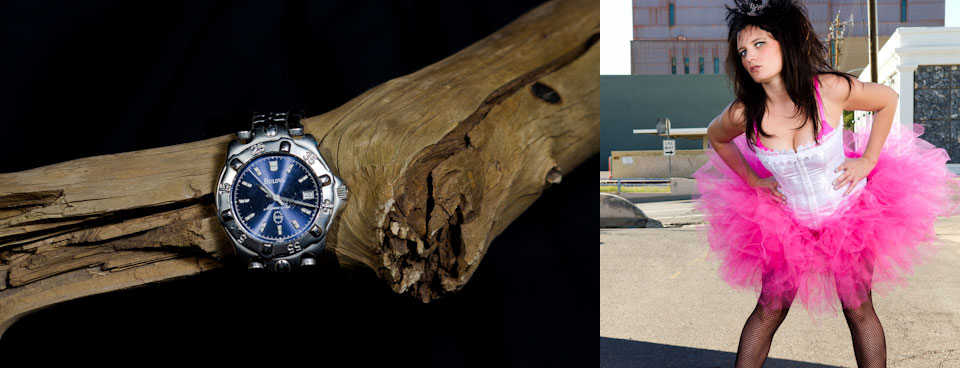
Project 52 Photographer Charles Tibbs
Charles Tibbs, Phoenix photographer weighs in on his experience with Project 52. "First I want to thank Don for taking so much time out of his busy life to teach and mentor us for an entire year, this just tells you how passionate he is about what he does. Where do I...
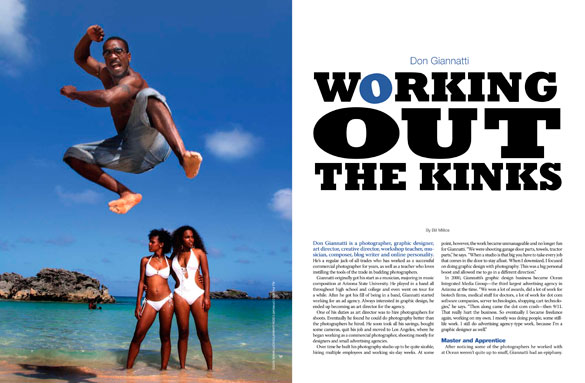
Feature Article in Rangefinder: July 2010
My friend Bill Millios wrote a nice article on me and the good folks at Rangefinder ran it in their prestigious July "Portait" issue. Bill and I chatted down in Mexico during a workshop, and his piece accurately reflected my teaching beliefs, as well as other thoughts...
Take This Photograph, It’s FREE! Free is GOOD!
So I get a tweet 'alerting' me to this interesting argument. This photographer says his photograph is not free: From PetaPixel: "As someone mentioned, THIS single photo didn’t cost me $6,612, but if you wanted to create it, from scratch, that is what is involved. So I...
Project 52 Photographer James Eisele
Say hello to James Eisele, a 'project 52' photographer in Florida. "While project 52 was challenging, I didn't feel it was overwhelming, even though it frequently forced me out of my comfort zone with assignments that were different than anything I'd shot previously....
Macro 4/3 Cameras Get A Pair of New, Fast Primes
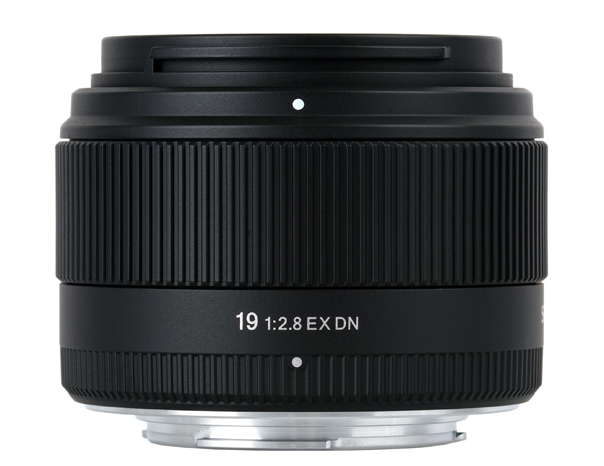
These look pretty cool. "As of now, photographers with Olympus and Panasonic Micro Four Thirds cameras and Sony NEX-series cameras have the choice to couple a pair of sharp Sigma F2.8 primes to the go-everywhere cameras. These two prime lenses for Micro Four Thirds...
Project 52 Photographer Terri Jacobson
Photographer Terri Jacobson checks in with her assessment of Project 52. "Only 52 photos In the beginning I was a point and shoot kinda girl. All I ever needed was the little green box on my Canon dial. In 2010 I began the 365 photo a day project completing it...
Judges Announced for the Wacky Winner Gets Me Contest
We had twenty five entries to the wacky contest. I have four intrepid judges working on the judging process now. Selina Maitreya Photographer Consultant Extraordinaire Site Rosh Sillars Photographer / Social Media Expert Site Seshu Photographer, Entrepreneur Site...

Project 52 Photographer David Price
David Price checks in with this assessment of Project 52. "My thanks to Don Giannatti, whom I found as Wizwow on one of the lighting forums, and followed him to Lighting Essentials. What a terrific resource! When I first heard about Project 52, I wasn’t certain what...
Meet the NEW “Essentials for Photographers”
Lighting Essentials had run its course, name wise. It was not about lighting as much as it was about photography in general. Commercial photography specifically. And the name simply didn't leave room for more options for posting. There is a reason to the change up,...
Project 52 Photographer Tucker Joenz
Today we meet Tucker Joenz, a Project 52 alumni. "Project 52 challenges... A big challenge for me was getting back to the basics of lighting and learning how to apply that to create commercial images that will really captivate my audience, express the feelings that...