
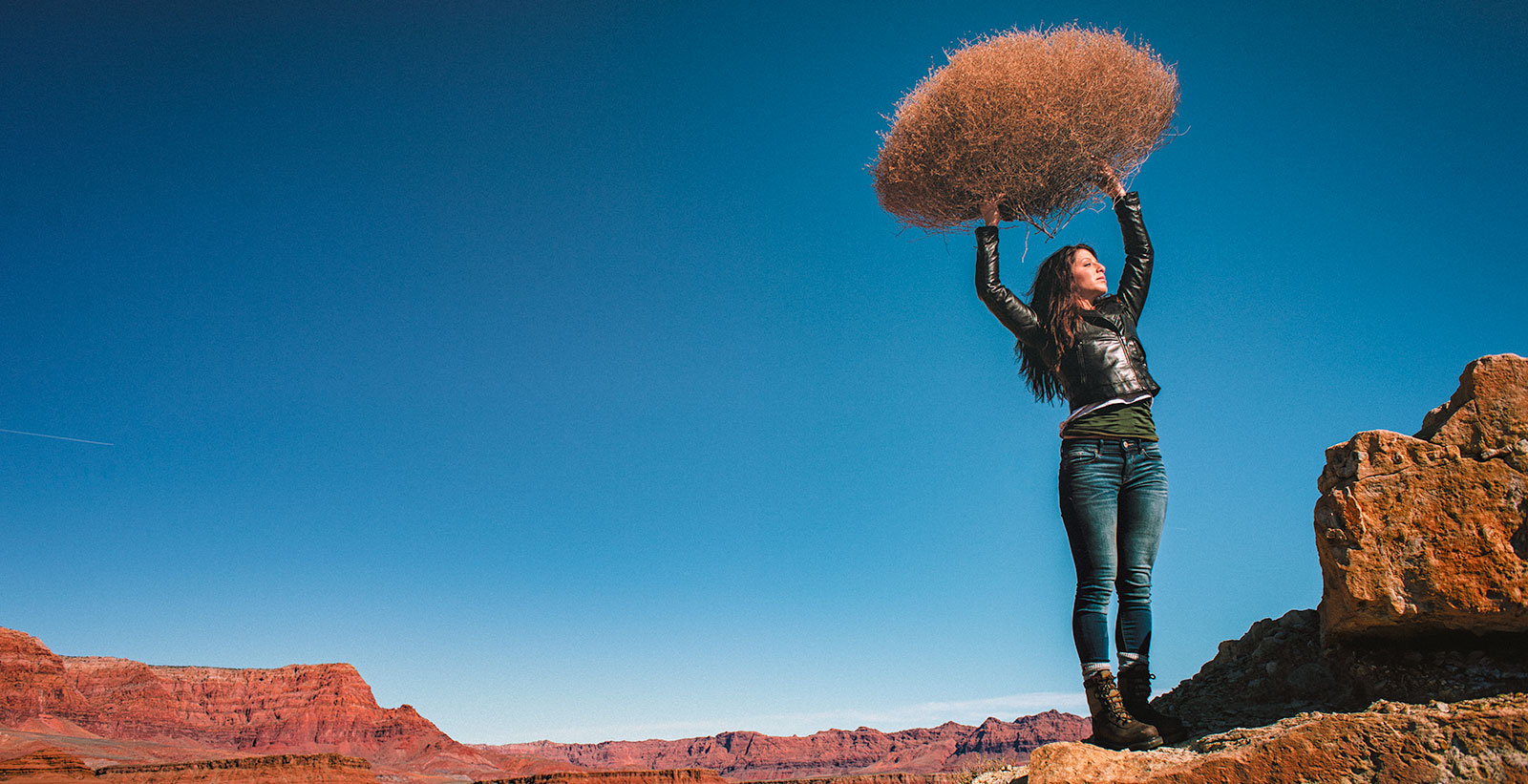
LIGHTING PRINCIPLE THREE: THE COLOR OF LIGHT
We see light usually as a white source, or at least a neutral source.
It isn’t. neutral, it has a color to it and that color can influence all the parts of your image, from shadows to highlights. We don’t see the color of light because our brain changes it to a neutral “white” color as we see it.
Here is a wonderful article that explains the way that the color of light affects your image. Read it now.
When we look at the color of the scene in front of us we can change it globally by changing our color balance in the camera, or using a filter. What “globally’ means is that everything in the photo is changed to the same setting. All the colors are altered by this global change to the color of the light.
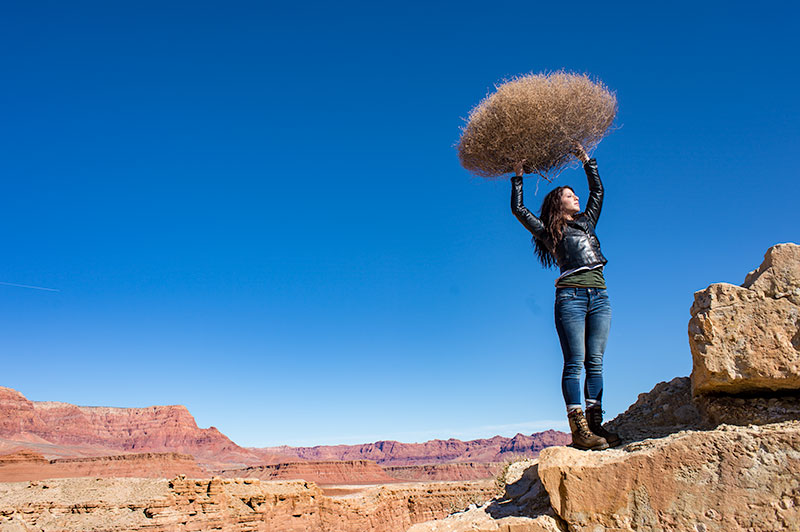
On the left is a photograph taken near Mable Canyon. The sun was quite bright, and there was a bit of warmth to the image because of all the warm browns and oranges of the topography all around us.
This image is as shot. I have applied global changes to the color of the light source so you can see what that does to the image.
Below from left to right:
Daylight / Shade / Tungsten / Flourescent
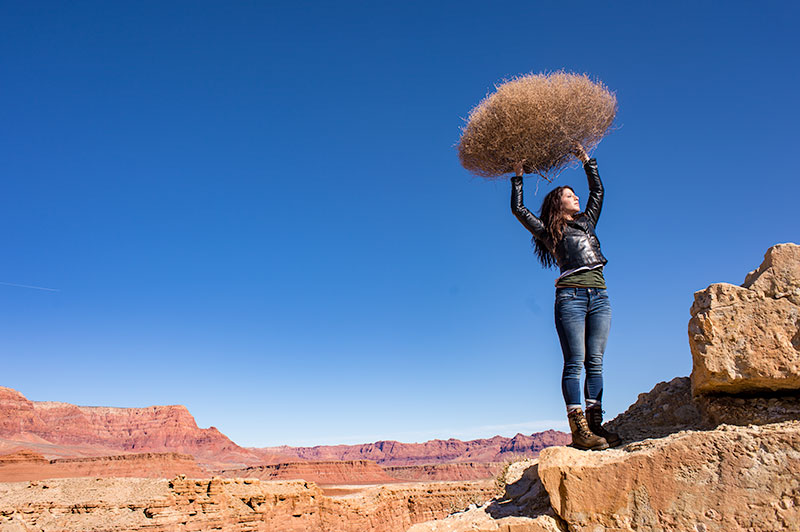
DAYLIGHT
Changing from As Shot to Daylight shows very little difference, although the daylight color balance makes it a bit more warm.
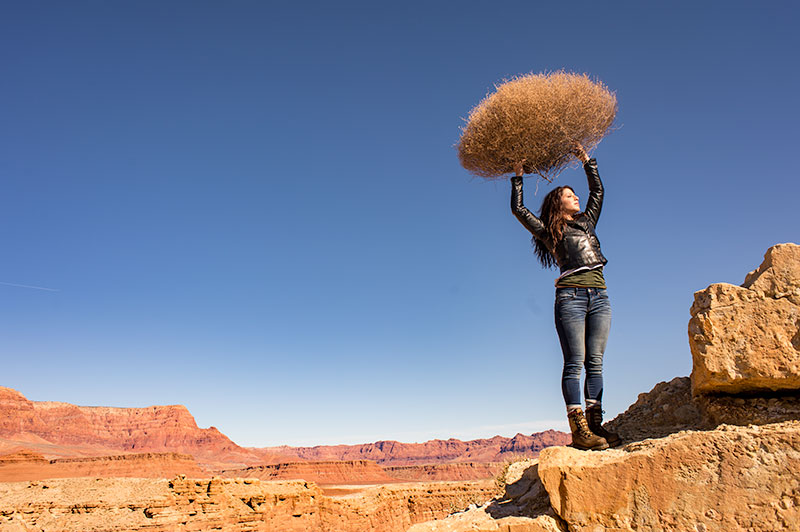
SHADE
Since the color of the light in the shade is a bit more blue, we add some warmth to the overall image to compensate for it. In this shot you can see the global warmth is not going to work because the image was not shot in the shade.
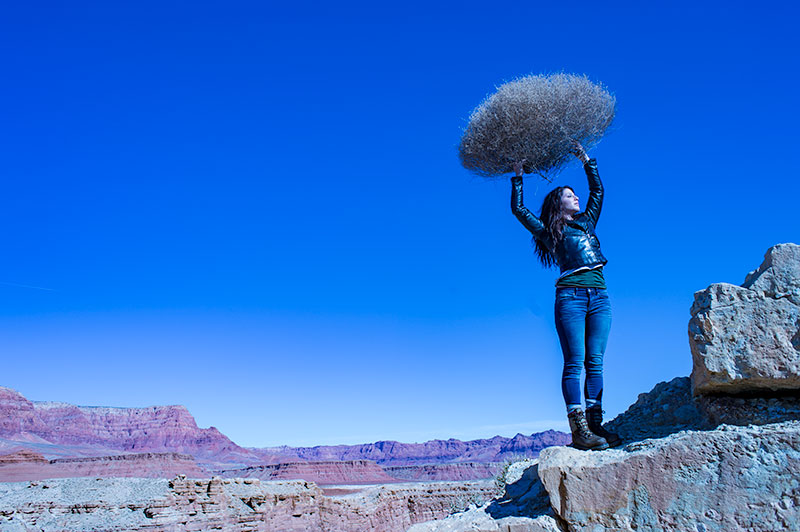
TUNGSTEN
Tungsten light is very orange, so when we apply a tungsten color balance to a shot that is not too orange, we get this very blue looking shot. This is a good reminder of just how ‘warm’ tungsten light is if it takes this much blue to make it correct.
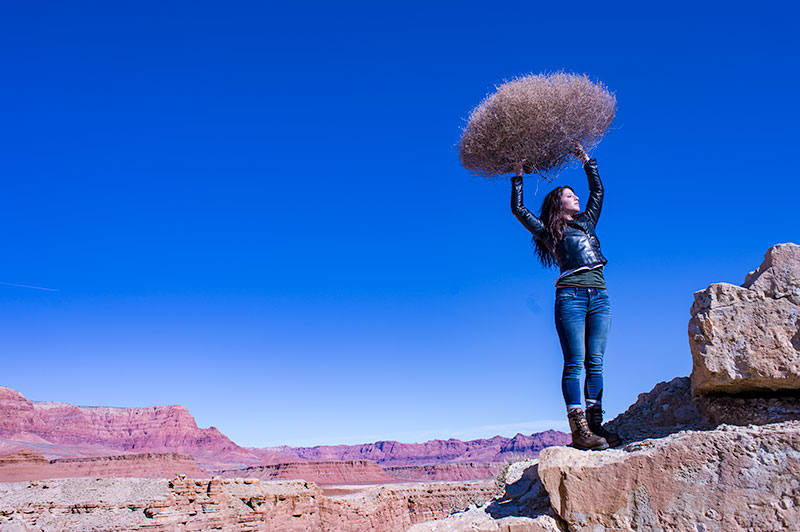
FLUORESCENT
Fluorescent light is blue/green so it makes it difficult to compensate for. In this application of the fluorescent color balance, we can see the sky going a deep blue, while the desert mountains behind become more magenta.
LOCAL LIGHT SOURCE MATCHED TO AMBIENT
Working with a secondary light source that may be a different color presents us with a challenge. We cannot change the image globally because adding a correction to the image to correct for the different light source will affect the entire image.
We must then change the different light source to the ambient (or overwhelming light) in order to ‘balance’ the subject in the ambient setting.
The ambient setting is the overwhelming light that we usually cannot change: the sun, a large warehouse, a home. Bringing in our own lights means we must know how to match what we bring to what is there.
ASSIGNMENTS FOR THIS CLASS:
- Using the color settings on your camera, take the same image with each of them. Shoot with Daylight, Shade, Tungsten, Flourescent at least and do this in places where those colors exist. In other words, shoot some images outside, inside with regular household lamps, and some place that has Flourescent. (NOTE: Many big box stores use a light source known as Mercury Vapor. Mercury Vapor is blue/green so it is very difficult to adequately address. We can add magenta to offset the green, but that turns the blue part of the light to purple. If we address the blue with something warm, we add that to the green part of the light.For Mercury Vapor correction, try “auto” on your camera setting. It is the best I have found for correcting most of that blue/green color shift.
- Using a strobe (speedlight), take a photograph of someone while the sun is going down behind them. Do not alter the strobe setting, just let it keep making the shot as the light turns warmer and warmer. You will then see how “blue” the light source seems coming from the flash.You may have to change the settings as the light gets dimmer, but I think you will see the changes pretty well.
We will be addressing color balance in all of the upcoming classes.
One Red Balloon… a Challenge
A recent assignment in my 2014 Project 52 group was to shoot one red balloon... but to stay away from cliche's as much as possible, while definitely creating an interesting photograph in which one red balloon features prominently. The students wee wonderful. Here are...
John Sharpe, Photographer: Calgary, Alberta
Meet John Sharpe, a commercial photographer in Calgary, Alberta. The great frozen north (at least in winter) has many roads to artistic and business success. John has been a photographer for 25 years and has shot for local, regional and national clients. I thought...
What Do You Charge For… (Part Two)
Part Two of our Thinking about our rates post. (Part One) Understanding what we are worth, and how to construct a pricing structure that we feel good about is quite challenging for many of us. But it is a necessary challenge for us to overcome - see previous...
Irene Liebler is Giving Her Book Away…
Project 52 Alum, and incredibly talented photographer Irene Liebler is giving her book away... and you can snag a copy of it. Head on over to her site and download some amazing photography.
Michael Clark’s 2014 Summer Magazine
I love these photographers magazines. From Michael: "This issue includes an editorial about why there was no Spring 2014 Newsletter, a review of the SmallHD DP4-EVF external video monitor, an article my recent expedition in the Amazon with the CauseCentric Production...
Bret Doss: “Fashionista”
My bud Bret Doss turned in a wonderful editorial assignment for "Viva Fashionistas", a Seattle fashion magazine. I want to have Bret on for an interview soon. See more about his shoot at his blog. "Hard to Call It Work" has links to more of his fashion work as...
“What do you charge for…”
Five scary words to a lot of photographers. There is so much of US wrapped into those five words. I think they may be the scariest words we self employed folks ever hear. Although it is exactly what we want to hear… someone wants to hire us. All that marketing paid...
Meet Josh Ross: Product Photographer, Portland, OR
I met Josh several years ago on the stobist forum. We have stayed in touch and I am knocked out by his wonderful still life and product work. I asked Josh to speak about his photography, and we chatted for an hour. Josh walks us through his transition from LA to...
Knowing Your Subjects Well
One of the most important considerations of a photographers work is the subject matter they choose to make photographs. Sounds almost simplistic, doesn’t it? But there is a great deal of thought that goes into this part of what we do. If we have chosen subject matter...
Just an Idea
Getting some pushback. Maybe need more messaging work.
ReBranding With Photography
This was an interesting week. An old friend and colleague reached out to renew a friendship and to discuss some epiphanies she had recently experienced. Lunch was near my studio and it was with a bit of trepidation that I had agreed. While I think the world of this...
Going Back in Time
The great shooters of Project 52 Pros, 2014 just completed an assignment I would like to share. The work was to be shot in a style or period and be as faithful as possible in presentation. The reason for the shoot was to introduce them to the special difficulties of...
Big Ambitions? Where Do We Start?
I want to ride a bike across the country. I want to hike the Pacific Crest Trail. I want to photograph the heartland… from an old Indian motorcycle… with a view camera. I want to do a photo story on Ecuador and Peru and the percussionists of South America. I want to...
“What is Wet?” – Project 52 Assignment
Some beautiful work from the Project 52 assignment on 'wet'. From the assignment: WET… Shiny, smooth, liquid… wet is – well, wet. And we have to show “Wet” in a photograph. For a client who wants to keep things dry. You can approach this one in three ways: You can...

An Easy Set Up For Still Life: with Virginia Smith
I needed a quick and easy set up for the small jobs I so here and there. Branding samples, food photography, accessories for the styling that I do on the side. I love window light, shadows and color so this is my easy set up for my style. The elements are: * a...

Black Angels: with Clare Bambers
Clare Bambers Photography.
Composite Image with Catherine Vibert
Photoshop file in layers for you to see: Composite_Vibert_Photoshop File.psd Catherine Vibert / Website
The “Test Shot” with Stephen Collins
Objective: Shoot rare military memorabilia (medals, daggers, insignias, etc.) for inclusion in to an auction catalog and online viewing portal. Images must be large (3000-4000px, .tiff), with no specular reflection, especially the dagger blades (ornate etchings), yet...
“Work The Scene” with Rasmus Hald
Work the scene. Rasmus Hald One of the things that separate a good photo from a great photo is often planning, patience and how we work the scene. In July 2012 I was in Italy on vacation, driving around Tuscany in an RV and we went to Florence for a couple of days. I...
Dark Field Lighting: With McGunn Media
DARK FIELD LIGHTING: A PRIMER Anna and Filipe walk you through the making of these shots. They have a full course on shooting table top and still life work at Udemy. See more of McGunn Media's work at their website.
A Food Shot for a Blog: Daniel Fenwick
Reno Photographer Daniel Fenwick walks us through a simple, but well crafted food shot for his blog. Daniel Fenwick / website / Food Blog MANY OF THE TUTORIALS DURING "SUMMER SCHOOL" ARE BY PROJECT 52 PRO MEMBERS EITHER CURRENTLY ENROLLED OR ALUMNI.
An Interesting Negotiating Tactic
... and it is true. Names have been changed a bit to keep client/photographer privacy. I had lunch with a photographer today. We had met to go over plans for a big project and chose "The Vig" for delicious sandwiches and salads. What has that to do with the story?...
One Umbrella on Location
I am a Photoshop guy who is finding a lot of love in Lightroom. I would say that about 80% of my work goes from LR (or CR) into Photoshop for finishing. But the other 20% is done totally in Lightroom. Briana and I did this shoot last year for some new portfolio...
A Simple Tool for Shooting to Layout
Sometimes we have to shoot to specific layouts or dimensions. Here is a very simple tool for working with layouts that may not be typical. I use cardboard stock for making these little screens. And as I note on the video, I always give the shot a little breathing...