
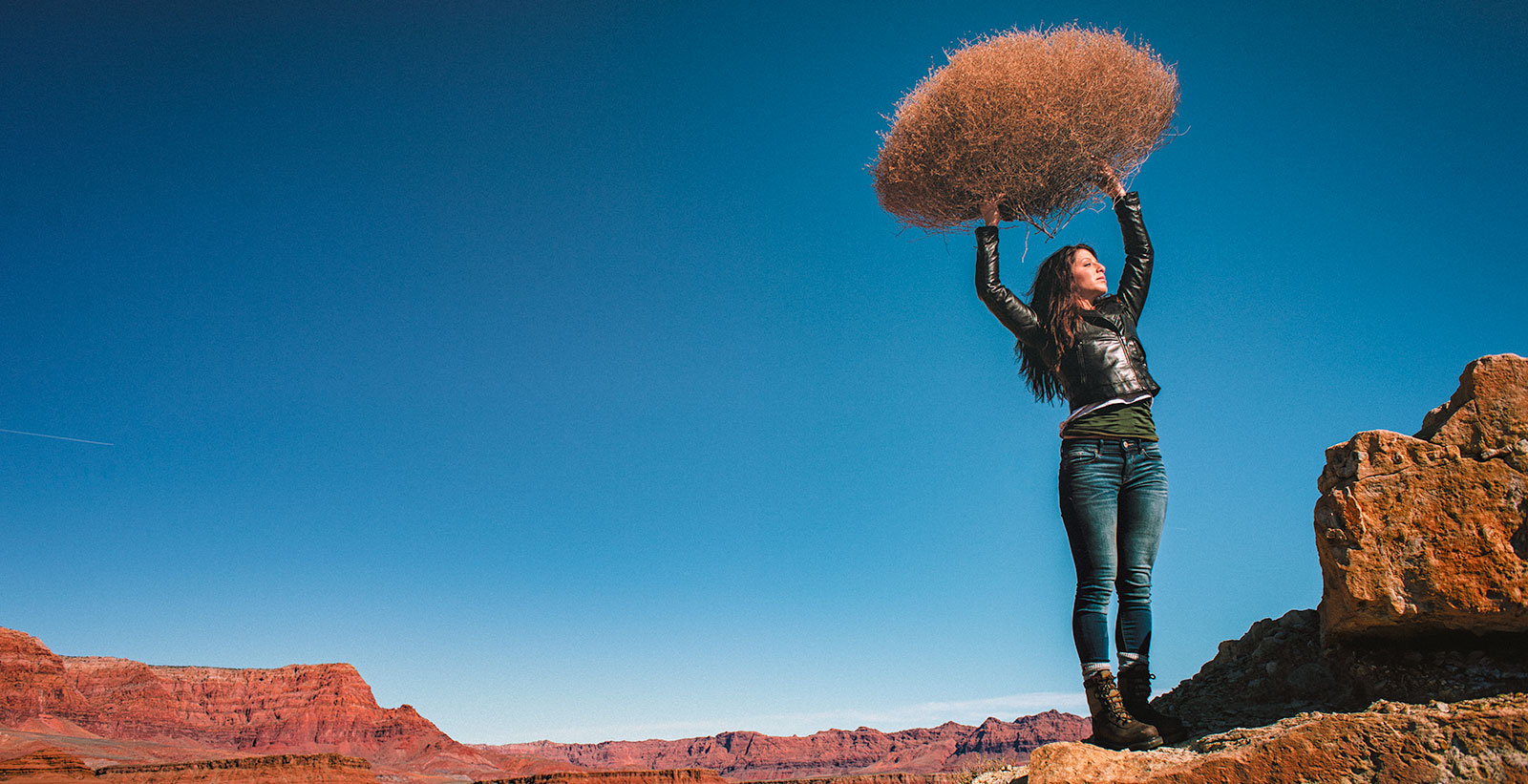
LIGHTING PRINCIPLE THREE: THE COLOR OF LIGHT
We see light usually as a white source, or at least a neutral source.
It isn’t. neutral, it has a color to it and that color can influence all the parts of your image, from shadows to highlights. We don’t see the color of light because our brain changes it to a neutral “white” color as we see it.
Here is a wonderful article that explains the way that the color of light affects your image. Read it now.
When we look at the color of the scene in front of us we can change it globally by changing our color balance in the camera, or using a filter. What “globally’ means is that everything in the photo is changed to the same setting. All the colors are altered by this global change to the color of the light.
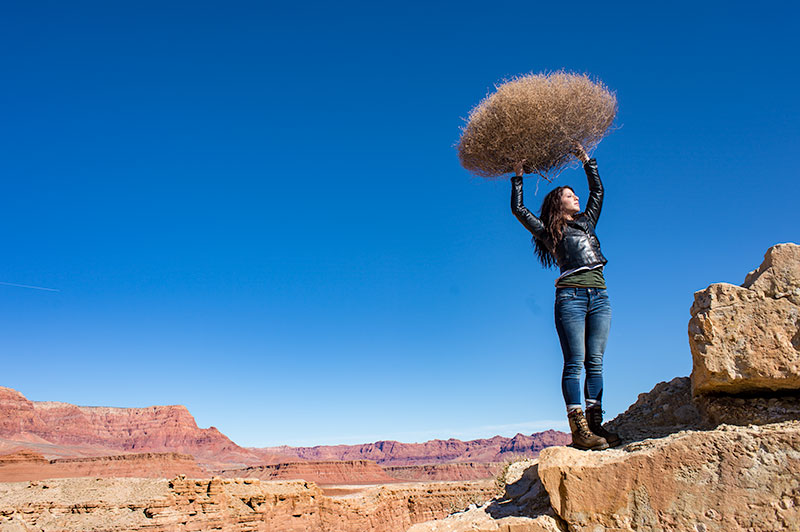
On the left is a photograph taken near Mable Canyon. The sun was quite bright, and there was a bit of warmth to the image because of all the warm browns and oranges of the topography all around us.
This image is as shot. I have applied global changes to the color of the light source so you can see what that does to the image.
Below from left to right:
Daylight / Shade / Tungsten / Flourescent
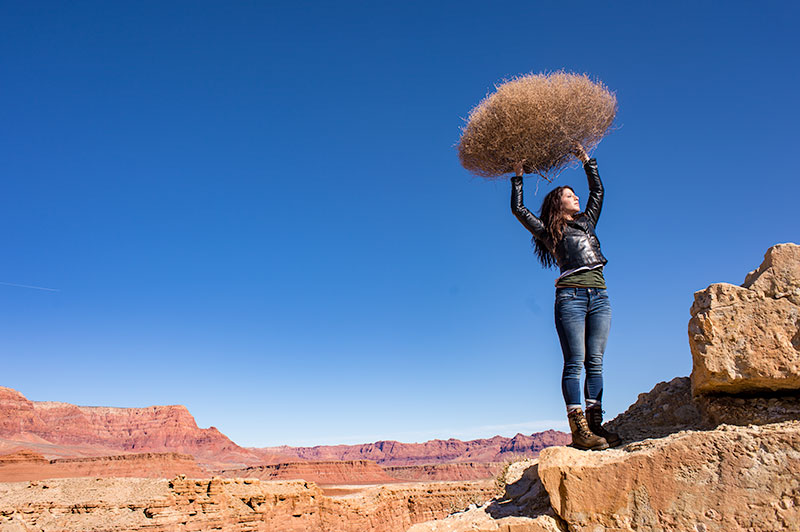
DAYLIGHT
Changing from As Shot to Daylight shows very little difference, although the daylight color balance makes it a bit more warm.
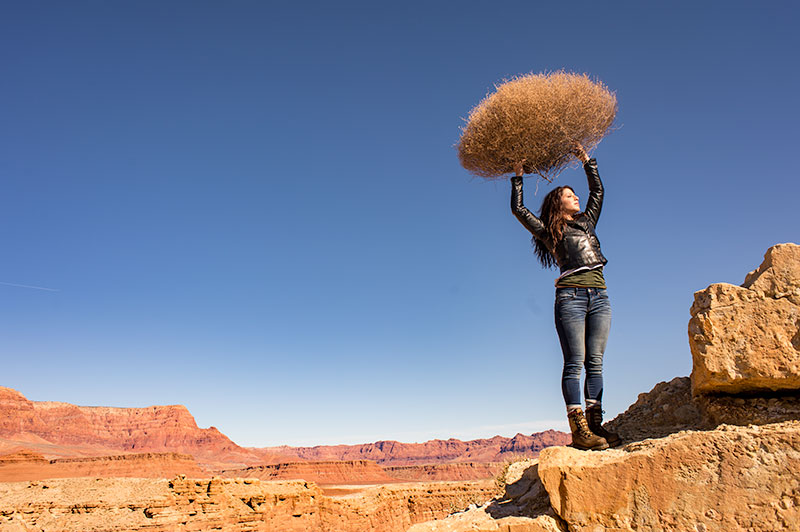
SHADE
Since the color of the light in the shade is a bit more blue, we add some warmth to the overall image to compensate for it. In this shot you can see the global warmth is not going to work because the image was not shot in the shade.
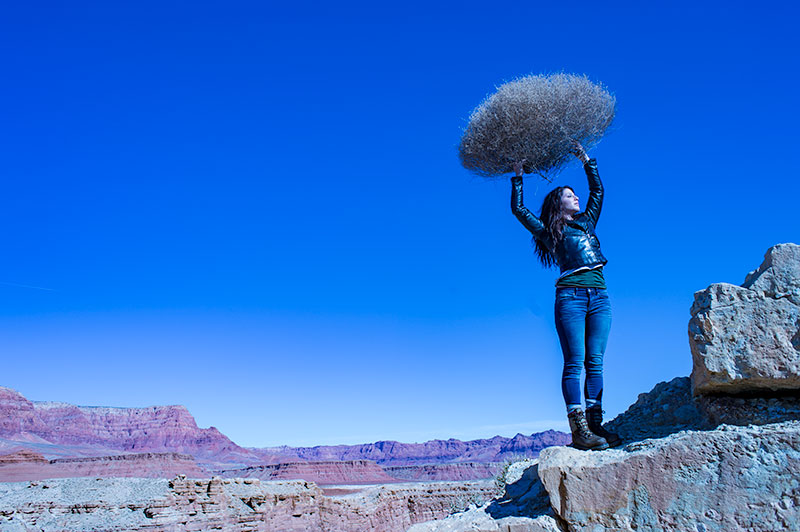
TUNGSTEN
Tungsten light is very orange, so when we apply a tungsten color balance to a shot that is not too orange, we get this very blue looking shot. This is a good reminder of just how ‘warm’ tungsten light is if it takes this much blue to make it correct.
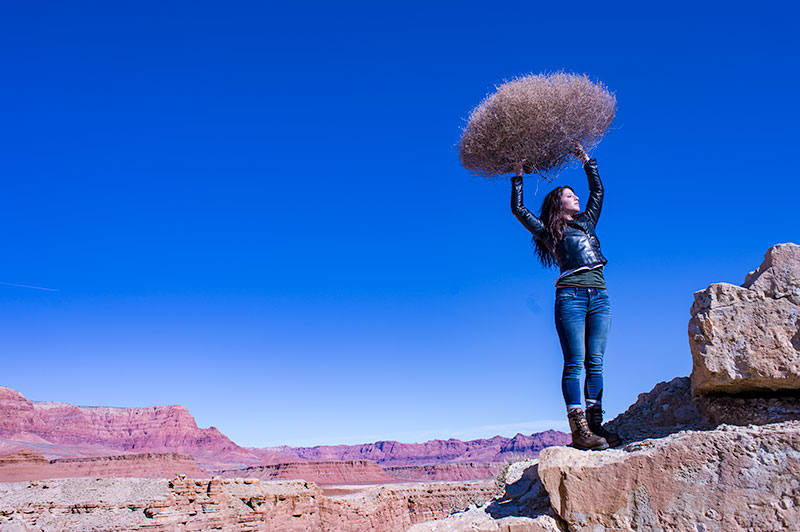
FLUORESCENT
Fluorescent light is blue/green so it makes it difficult to compensate for. In this application of the fluorescent color balance, we can see the sky going a deep blue, while the desert mountains behind become more magenta.
LOCAL LIGHT SOURCE MATCHED TO AMBIENT
Working with a secondary light source that may be a different color presents us with a challenge. We cannot change the image globally because adding a correction to the image to correct for the different light source will affect the entire image.
We must then change the different light source to the ambient (or overwhelming light) in order to ‘balance’ the subject in the ambient setting.
The ambient setting is the overwhelming light that we usually cannot change: the sun, a large warehouse, a home. Bringing in our own lights means we must know how to match what we bring to what is there.
ASSIGNMENTS FOR THIS CLASS:
- Using the color settings on your camera, take the same image with each of them. Shoot with Daylight, Shade, Tungsten, Flourescent at least and do this in places where those colors exist. In other words, shoot some images outside, inside with regular household lamps, and some place that has Flourescent. (NOTE: Many big box stores use a light source known as Mercury Vapor. Mercury Vapor is blue/green so it is very difficult to adequately address. We can add magenta to offset the green, but that turns the blue part of the light to purple. If we address the blue with something warm, we add that to the green part of the light.For Mercury Vapor correction, try “auto” on your camera setting. It is the best I have found for correcting most of that blue/green color shift.
- Using a strobe (speedlight), take a photograph of someone while the sun is going down behind them. Do not alter the strobe setting, just let it keep making the shot as the light turns warmer and warmer. You will then see how “blue” the light source seems coming from the flash.You may have to change the settings as the light gets dimmer, but I think you will see the changes pretty well.
We will be addressing color balance in all of the upcoming classes.
Food as Art: Image Review Six
[gallery link="file" columns="2"...
Protected: Story Telling With Your Camera: Module Two
Password Protected
To view this protected post, enter the password below:
TABLETOP MAGIC ASSIGNMENT FIVE
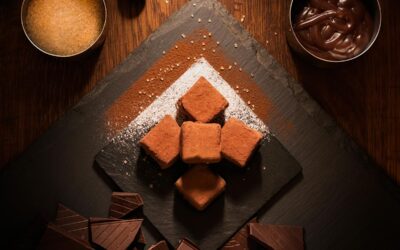
A local restaurant has decided to run a special on chocolate on their menu for the next month. They need something that says, no – SCREAMS Chocolate!!! People or still life or cute little furry animals or fish… … well… probably not fish… but you get the idea. The...
The Holiday Flash Assignment for All Members
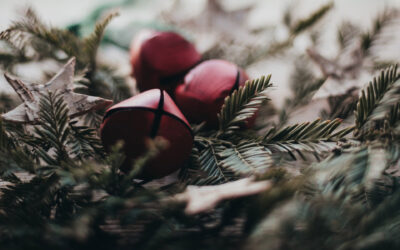
A CHRISTMAS or HOLIDAY STILL LIFE It's time to make a photograph to remember this 2022 holiday. And whether need one or not, this image should be something you can use next year for a Christmas card or promotion. This can be food-related, ornament-related,...
David Hayden 24 Frames in May 2022
David Hayden
Greg Reeves 24 Frames in May 2022
Greg Reeves
Neville Palmer 24 Frames in May 2022
Neville Palmer
Joe Cosentino 24 Frames in May 2022
Joe Cosentino
Jay Chatzkel 24 Frames in May 2022
Jay Chatzkel
Greg Kindred 24 Frames in May 2022
Greg Kindred
Carla McMahon 24 Frames in May 2022
Carla McMahon
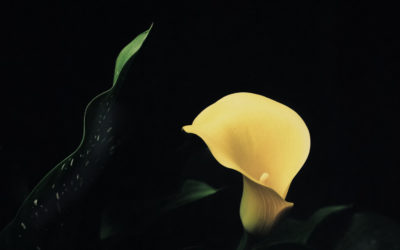
Bret Doss 24 Frames in May 2022
Bret Doss
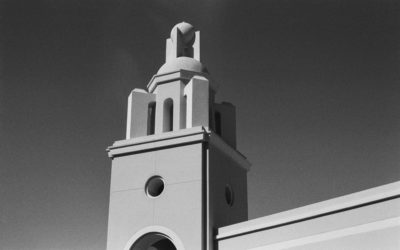
Michele DePiano 24 Frames in May 2022
Michelle DePiano
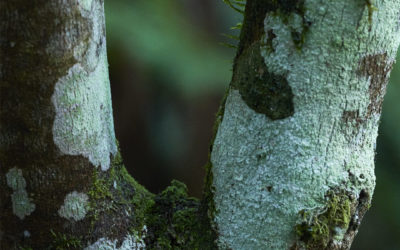
Carolyn Acuna 24 Frames in May 2022
Carolyn Acuna
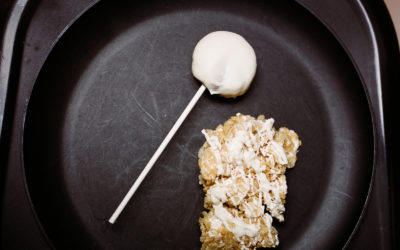
Virginia Chavez Smith 24 Frames in May 2022
Virginia Chavez Smith
Philippe Gonyea 24 Frames in May 2022
Phillippe Gonyea
Ligia Cuevas Johnson 24 Frames in May 2022
Ligia Cuevas Johnson
Gretchen Willis 24 Frames in May 2022
Gretchen Willis
Daniel Franks 24 Frames in May 2022
Daniel Franks
Sophie Benoit 24 Frames in May 2022
Sophie Benoit
Gloria McDonald 24 Frames in May 2022
Gloria McDonald
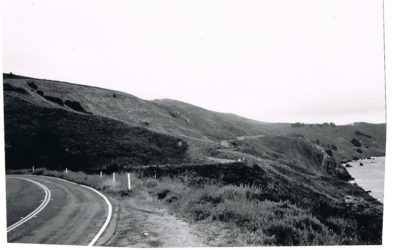
Terril Bodner: 24 Frames In May
Terril Bodner
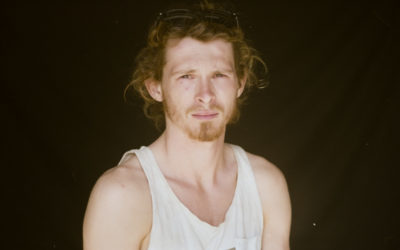
David Travis 24 Frames in May 2022
David Travis
BEVERAGE WORKSHOP ASSIGNMENT SEVEN
A PERFECT HEAD OF BEER OR SODA Two approaches here: If you have never shot a head of beer or root beer or cream soda, I want you to focus on that particular skill. A perfect head. If you have shot beer or soda before, I want you to do a "Workman's Lunch" shot. Beer...