
DISTANCE OF THE LIGHT SOURCE FROM THE SUBJECT
The second principle of light is the distance of the light source from the subject.
One thing for sure, if it is artificial light, the distance of the light source from the subject can change the size relationship, but there are other things that happen as well.
With artificial lights, one of the most important rules is The Inverse Square Law.
And it can be kinda scary that one. First, it’s a law. That seems pretty definite. And of course it has something to do with math – ‘squared[. But the word INVERSE? What the heck is that?
Let’s not sweat that right at the moment.
Let’s just acknowledge it for what it means to us.
Essentially, the Inverse Square Law (ISL) means that the farther the light is from the subject, the less bright it will appear. We know that, right. The closer we get to a light source, the brighter the reflectance of that source from whatever we are bringing close to the light.
Say you are in a very dark room, and there is only one small light in the corner. You are desperately trying to read the calory count on your small bag of Cheetos but it is way too dark where you are. Well – simple, we take the Cheetos bag over to the light and as we get close to the light, we can instantly read that we are never allowed to eat Cheetos again.
Now that is way too simple for any rule, or LAW, especially one that concerns math and something called Inverse.
The ISL is a way of measuring that light fall off and it shows us that there is actually a formula to how much that light falls off. Formulas are great. They are like systems. We can use them over and over to achieve the results we need.
This formula is way simpler than the name implies:
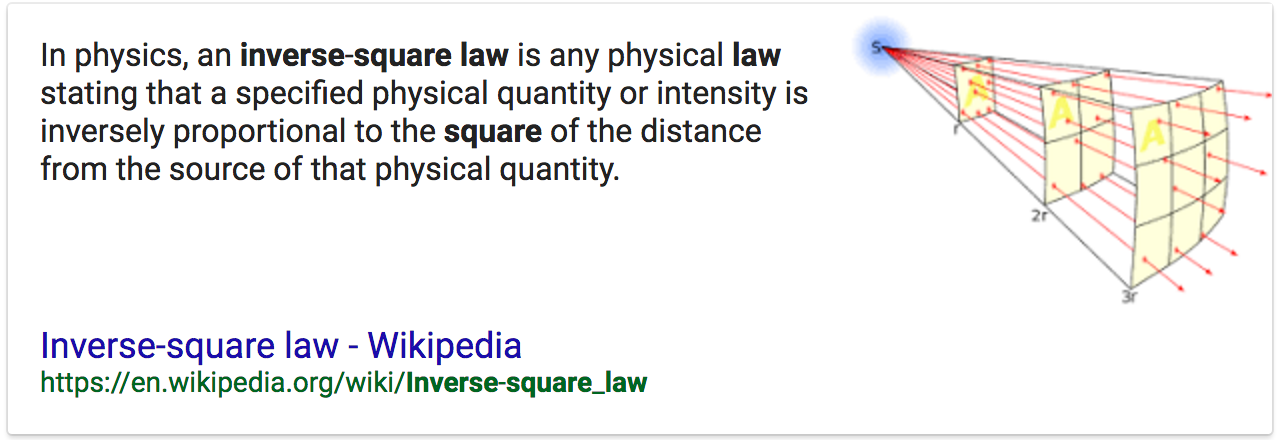
As you can see in the illustration above, at twice the distance the light has to cover four times as much space making it four times less powerful.
Four times less = 2 stops less in f-stops.
So if the light was f-8 on your subject at 4 feet, and you moved the light back to 8 feet, the amount of light on the subject would now equal f-4. If you started at f-4 at 8 ft and moved the light in to 4 ft it would be f-8.
What if instead of moving the light from 8 ft to 4 ft you decided to move it in 6 ft? Well, that would be half way between f-8 and f-4… f-5.6.
Now look at what happens when we apply the rule to a set of distances.
THE IMPORTANCE OF KNOWING RECIPROCALS
A reciprocal is simply understanding the relationships between all the numbers we throw around in photography.
F-stops, shutter speeds, ISO – all work hand in hand with each other to make the image with correct (for you) exposure. Changing any one of these three will necessitate a change in one of the others to compensate.
Let’s look at ISO:
f-4 / 1/125 @ ISO 100
If we change that to ISO 200 one of those above will have to change. Either the f-stop or the shutter speed. Since the ISO is now one stop more powerful, we either have to change to f-5.6 or change the shutter speed to 1/250. Both of these changes have the affect of decreasing the exposure setting one stop due to increasing the ISO by one stop.
Simply knowing the basics of one set will make it easy for you to re-configure for a new set.
I use ISO as my constant. In this case, I will use the settings of Sunny 16 (f-16 at 1/ISO).
ISO is 100 for these reciprocals.
f-16 @ 1/100
f-11 @ 1/200
f-8 @ 1/400
f-5.6 @ 1/800
f-4 @ 1/1600
f-2.8 @ 1/3200
These are committed to rote memory.
Changing the ISO compels me to make associated changes in these figures. If the ISO goes faster, I simply change the f-stop OR shutter speed to correlate to the amount of change in ISO. If the changes go out of the range of my camera, I will change one first, then catch up the other.
Example:
The light is getting a bit low, and I want to shoot with a shutter speed that allows me to hold the camera still. I take a meter reading and find that at ISO 100, my exposure for that shot is f-4 @ 1/15. Well, that aint’a gonna work for me handheld.
So first I decide that f-4 should be f-5.6 because of some Depth of Field issues (which moves the shutter speed down to 1/8), so that means I will have to move the ISO one stop for that aperture change to:
f-4 / ISO 100 @ 1/15 to f5.6 / ISO 100 @ 1/8 (reciprocal, one less stop in shutter speed to correlate with additional stop in aperture.
f-5.6 / ISO 200 @ 1/15
f-5.6 / ISO 400 @ 1/30
f-5.6 / ISO 800 @ 1/60
Learn your reciprocals for faster and more accurate decisions in the field.
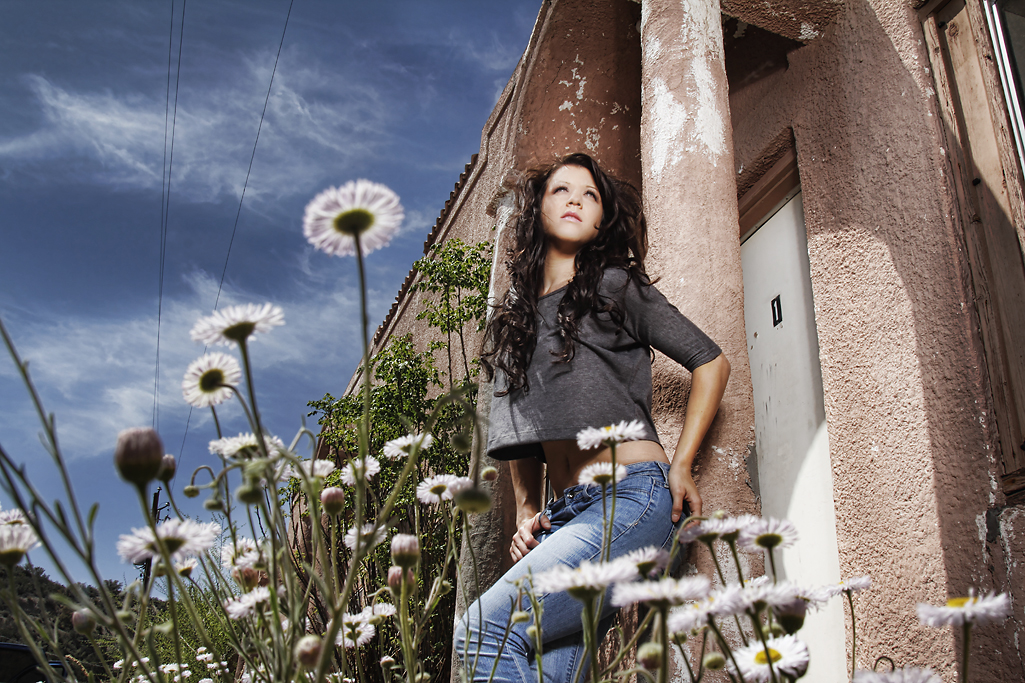
Bri in Miami.
I didn’t want the old building to go too dark behind her so I moved her next to the column. This gave me the ability to move the light in close to her, and let the background fall off fast – but retain the light and the texture right around her so she didn’t ‘pop’ out and look too overly lit.
This is a 4ft softbox with a Profoto 300 WS head and a single diffusion panel in the softbox. It is just above camera viewpoint in this shot – very close to her. You can see the light falling off as it reaches her knees.
I wanted the shot to appear somewhat realistic and not “strobed” so a careful blend of one stop over the ambient was chosen.
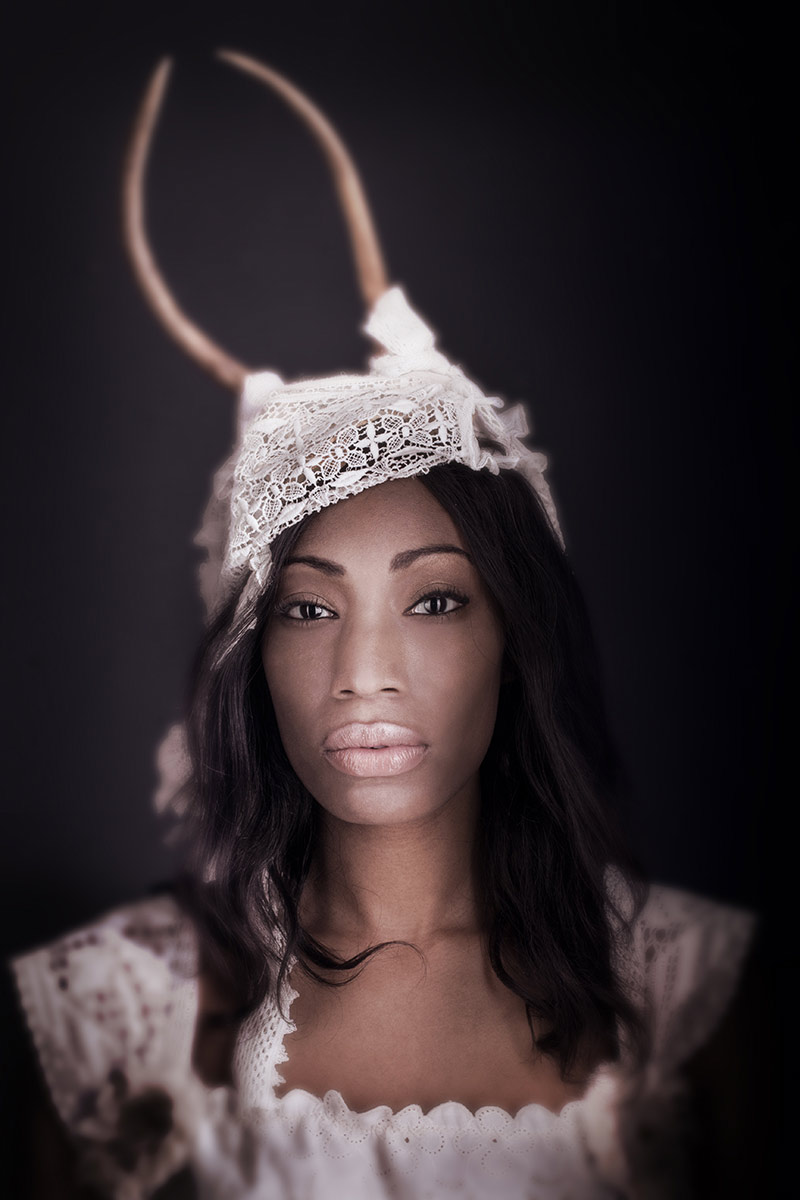
Ivy in the Studio.
My studio had bright white walls in a cove. I didn’t want this image to be on a white background so I moved Ivy far enough away that the light on her had no effect at all on the white wall behind her. It was simply way too underexposed to render at all.
Controlling the exposure through the Inverse Square Law is one of the more important tools you will have at your disposal.
And get this – it doesn’t cost a penny.
ASSIGNMENTS FOR THIS CLASS:
- Using a light source of your own: (studio strobe, speedlight, continuous light) place the light close to the subject and then move the subject AND light source closer to and farther back from a single background. Notice how the image presents itself as you go closer to the background with your subject and light, and what happens when you take subject and light farther away.
- Place camera and background at a fixed point. Then move your subject into the f-16 and make an exposure. Move back to f-11, then f-8, f-5.6, f-4 and if you can f2.8. What happens to the background as you move the subject closer to it and adjust exposure.
- Build your string meter. See below.
Find a piece of good, smallish rope. Clothesline will do nicely.
Put your light on a stand, and run the string straight out from the flash. The flash should be set at 1/8 power if possible. Not full. It should be on “normal” zoom setting neither on telephoto or wide angle.
- Using a meter and a remote flash trigger, find the exposure point for f-4 by going down the rope and aiming the ambient light meter dome directly at the strobe. Keep going until you find the point where f-4 is noted on your meter.
- Using a knot or marker, note that point as f-4.
- Now find the middle of the rope and note it with knot or marker.
- Between the end of the rope and the middle (left side) put a knot or mark in the middle of that area.
- Between the middle of the rope and the end to the right put a knot or marker
- On the right side, now find the middle between the end and the first mark, and knot it or marker
You now have simple rope meter that will be incredibly accurate in all situations.
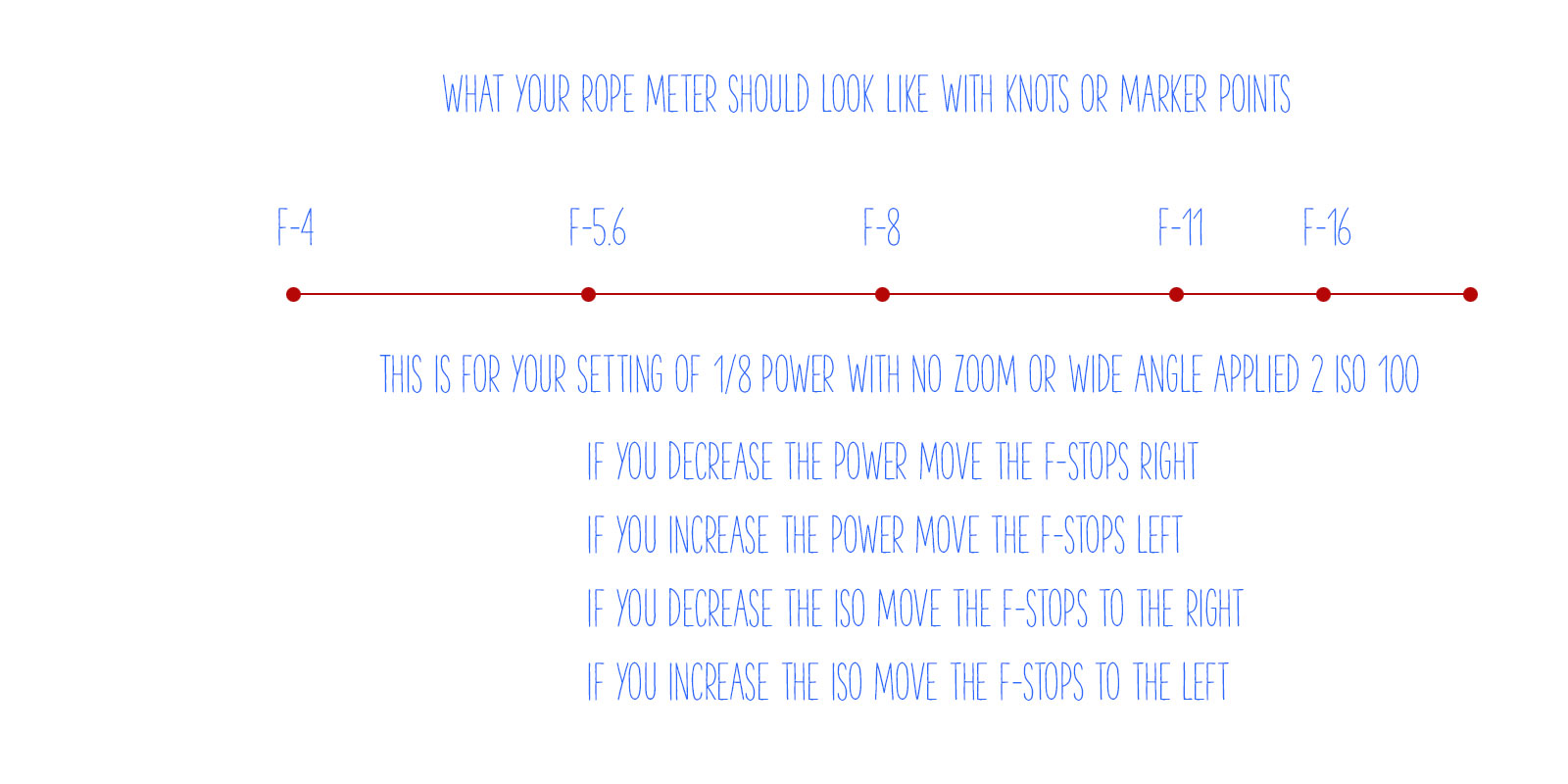
Finding f-4 is the most important part. Use a lightmeter for best results.
If you want to use a gray card, make sure it is at a very slight angle to the light source so it will not have a specular for the camera to see (the reflection of the light source). Shoot at f-4 until you find the distance that will render a single line of pixels in your histogram dead center. That is perfect exposure of a gray card.
Of course, you must fill the lens with the gray card, no extraneous stuff in the viewfinder – just the gray card.
How I Shoot with Limited Equipment (2109 SUMMER SCHOOL)
SUMMER SCHOOL 2019 CLASS ONE SHOOTING STILL LIFE WITH INEXPENSIVE GEARClass by Barbara Sherman, Flagstaff, Arizona I don’t own much equipment and no studio so my images are often made by a window in the corner of my bedroom using white and black boards,...
THE COLLECTIVE LOOKBOOK OF PHOTOGRAPHERS
... is available here as a PDF download (free). If you would like an old-fashioned analog version - you know, paper, cover, ink, binding and such... yeah... we have them at Blurb. There is no markup on the books, they are being sold at Blurb's wholesale price.
DOWNLOAD THE PROJECT 52 2019 ROAD TRIP BOOK
You should come next time... really!Every year I invite whoever wants to go with me on a week-long exursion/roadtrip/helluvatime in southern Utah and Northern Arizona. We explore slot canyons, Zion, Bryce, Escalante, and finish up at the Grand Canyon.And...

5 EASY LIGHTING SETUPS THAT MAY SURPRISE YOU
https://www.youtube.com/watch?v=yBVciD7eLWs&t=272s
The Five Biggest Mistakes I Made as a Professional Photographer
(Being a freelancer can be quite a challenge. Like this little flower above, you can be battered and surrounded by those who didn't make it, but you keep on blooming for as long as you can. Survival means making big mistakes and learning as much as you can from them.)...
8 WEEK COURSE SCHEDULE FOR FIRST HALF OF 2019…
... AND IT'S HERE!Favorite courses like Food and Product return, as well as two new classes: Editorial Portraiture and One Light Portraits. These classes are 8 weeks long with one assignment per week. They intense, fun, and full of learning. It is expected...
7 STILL LIFE IMAGES DECONSTRUCTED (WITH LIGHTING)
https://www.youtube.com/watch?v=Vbtk_v-D5jg&t=382s
BLACK FRIDAY REPLAYS, 2018
BLACK FRIDAY NON-SALE EVENT REPLAYS BELOW This is becoming a tradition. One I enjoy very much. Instead of trying to sell stuff, we just have fun and try to learn something new. We had 6 shows on Friday, November 23, 2018. One is private for P52 members as...
BLACK FRIDAY NON-SALES EVENT
(The day is passed now, but if you missed it you can see the replays of all the webinars by clicking here and having fun.)ALL DAY BLACK FRIDAY (NOVEMBER 23)Last year I did a Black Friday Free Event that was really a blast.While everyone and their cousin is...
MINIMAL VIABLE BRAND FOR PHOTOGRAPHERS
MINIMAL VIABLE BRAND FOR PHOTOGRAPHERS Is FREE for every photographer, as long as this site is up. My goal is to help you succeed. And this self-directed class will get you ready with all the tools, services, and lists you will need to start your freelance...
APACHE SOLAR: GUEST ARTICLE BY STEFANIE SPENCER
Solar Array Industrial Beauty Photo ShootThey say taking the first step is always the hardest. Overcoming our fears and pushing through can seem impossible, but it is so rewarding to come to the other side with some beautiful images to show for it.Reaching...

DON’T LET YOUR COCONUTS HOLD YOU BACK
One of the most difficult things to do is to believe it before you see it. It is our belief that makes it real or not. When I heard this story about how monkeys will not let go of their coconuts even up to being captured, it made me think of how many beliefs we hold...
I’m Very Grateful for This Award
Thank you so much, Seshu. I am proud and humbled to be in the company of so many wonderful photographers. TiffinBox. "Who is Don Giannatti? Please join me in my congratulating Don Giannatti, creative mentor and coach, as this year's recipient of the Tiffinbox Award. I...
FIND OUT IF PROJECT 52 PRO IS FOR YOU
If you have wondered if the Project 52 Pro System is right for you, this is your opportunity to check it out. This is a real, LIVE webinar where you can ask questions of me, and some of my alumni who will be joining us for this meeting. Project 52 Pro...
STOP FOCUSING ON THE GUARDRAILS
I could barely make out the song playing in the little bar in Ouray. I knew the melody, but it was damned hard to hear it over the clanking of glasses, conversation, and the air conditioning. The chorus did it for me, and I smiled big enough...
Portraits From the Environmental Workshop
[rl_gallery id="25315"]
Lists Can Save Your Bacon When Making a Photograph
I was asked if there was some sort of list of things I look at or think about before I click the shutter? There is. I used to have a checklist that included “was the film loaded correctly” and “are the dark slides clean” and such. We don’t do that anymore, but there...
Dallas J Logan and I Discuss Light and Photography
https://www.youtube.com/watch?v=u7zeXLLWJs8
My Perspective on Marketing in 2018
For more information on my coaching and mentoring programs for emerging commercial photographers, hit my site at: http://www.dongiannatti.com These are my takes on social media marketing for photographers. You may notice a few missing social media...
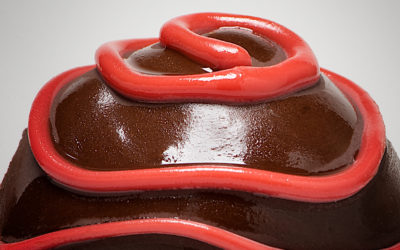
SHOOT CHOCOLATE LIKE A PRO
A few links to Chocolate photography tutorials: Bret Doss: https://www.lighting-essentials.com/ma... Sam Breach: https://www.lighting-essentials.com/ma... David Price: https://www.lighting-essentials.com/ch... For more information on Project 52 Pro System, go...
This Is The BEST Time Ever to be a Photographer! Why All the Long Faces?
This Is The Best Time EVER to Be a Photographer... Why All the Long Faces? Professional level cameras are selling for less than what we paid for one in 1980. Lower priced lenses are so much better than they used to be it is astounding. You can do all your...
My New Personal Website is Launched
I have been mentoring and coaching photographers for the last 10 years. Hundreds have been through my Project 52 System, and a great many of them are now full-time professional photographers, or at least making good money on the side doing the work. I teach...

Let’s Deconstruct A Few Pour Shots
https://www.youtube.com/watch?v=5mnmFMJGOLo
The Portfolio Workshop is Coming Up
We spend a good amount of time working with the photographers to develop the theme or story for the portfolio. Work is shot deliberately, and it is then edited and put together for flow. We have five group meetings and then a one-on-one with me to finalize the...