
EVERYTHING REFLECTS.
Let me say that again. Everything reflects.
Some things reflect more than others. Some surfaces are more reflective than others.
But since everything reflects, we are sometimes presenting what that subject reflects rather than ‘bouncing’ light into a dark area.
In portraiture, I think of providing the shadow side of the face something to reflect back to me rather than ‘filling’ as in creating light on a dark surface. The reason is that the cheek and chin and hair on the shadow side can be made to reflect the object I have placed there if it will indeed be within the angle of reflection to my camera.
I believe I get more control that way. The brighter the ‘reflectors’ the brighter the reflections back to me. Moving the reflector away from the subject increases the distance, and the reflection becomes less bright.
One of the chief reasons that things reflect the way they do is the surface of the subject. Smooth surfaces may reflect absolutely, with lots of contrast, while adding texture will cut down on the reflection of the light and actually cause it to be presented with less contrast.
It is this nature of the subject that I focus on first when deciding what kind of light to use.
I will say this before we go on… there is NO one way or right way or best way do make images. There is your way and my way and her way and his way and on and on. I will present to you what I do and you are free to take it and modify/adjust/deconstruct/start over or discard what I do. It’s OK. In fact it is what I want you to do. Take this information and make it yours. Utilize subject centric lighting in your own way and make better photographs.
Surfaces have a couple of distinct parameters for us to explore: rough, smooth matte, shiny and combinations of all three sometimes. And each one of them reflects light back to us in different and particular ways.
Shiny, glossy surfaces, matt surfaces, and textured surfaces.
We will first look at textured surfaces.
Texture is what I see first when I start to look at a subject. I just do. Of course color and shape and all play into it, but the light has its way with texture, and I notice how it is presented back to the camera. In nature it can help me decide the angle of my camera to subject and in the studio it helps me decide on what kind of lights/modifiers I will be using.
I can choose to either enhance or mitigate texture by using the angle of the light as it is presented to the subject and back to me. A very rough wood wall with light scraping down across it shows a lot of texture, and I can use that angle of light to reveal that texture to my viewers. If I decide to lessen the contrast I can wait for a cloud to come between the sun and the subject, or go around the subject to see if there is texture wood in the shade. It will still be a texture, but it will have less contrast between the bright part of the texture detail and the shadow side.
The cloud lowers the contrast just as being in the shade does. In simple form, the light source becomes larger than the detail of the texture, but we will discuss this further in the next chapter.
If the light is on either horizon, I can change the look of the texture by changing where I put the light in relation to the subject – in relation to the camera.
Light from the side shows more texture. Light from the camera means less texture. The reason is that there is more contrast between the highlights and the shadows cast on the sidelight than there is with the light coming from the same direction as the camera. The light behind the camera actually doesn’t show shadow to the camera (angle of incidence = angle of reflection) while the sidelight throws shadows and creates contrast.
Texture shows the viewer how rough an area is, or what kind of surface they would find if they were there. It delineates the shape of details and it gives us information beyond what we would see on the surface. Old things have lots of texture from the weather or the sun. Areas that are full of texture have lots of visual energy. The eye knows that the light is playing on something that shows itself with character and charm. Cookies have to have texture, as does old barn wood. We want to see the texture in an old book as we want to see it in a pasta dish or leather jacket.
In the picture below, I am using a hard light to emphasize the texture of the pods. A small light source placed at a side angle to the pods and camera gives me highlight and shadow with very little transition between.
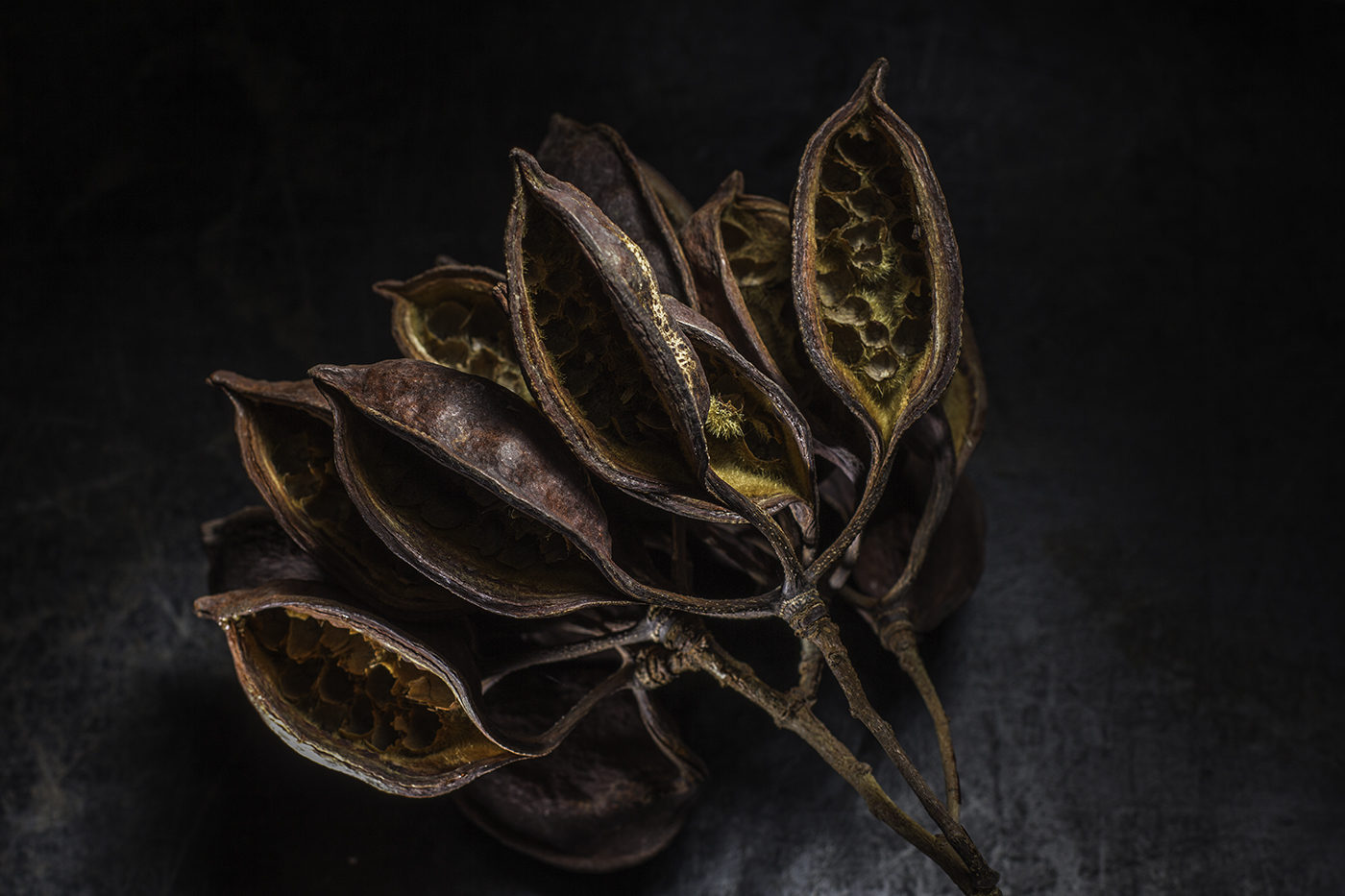
You can see the side light in the stems and the rim of light that is created by the quick fall off from reflection of the light source to the shadow.
Texture gives us context, and it is nearly unconsciously understood. We have seen what light does to texture our whole lives, so when we go to photograph it, we are naturally drawn to those times of day and places where the texture is well rendered.
But there are places where texture may not be as welcome. A subject’s face or skin may not be considered a good thing when rendered with a lot of texture. Unless, of course, they are quite interesting with the texture rendered. Age is something we can show with texture – and along with that inspiration, wisdom and the universal knowledge of what aging does to us all.
The old brick wall that Jamie is running on shows lots of texture due to the sidelight (top light) giving us edges and shadows.
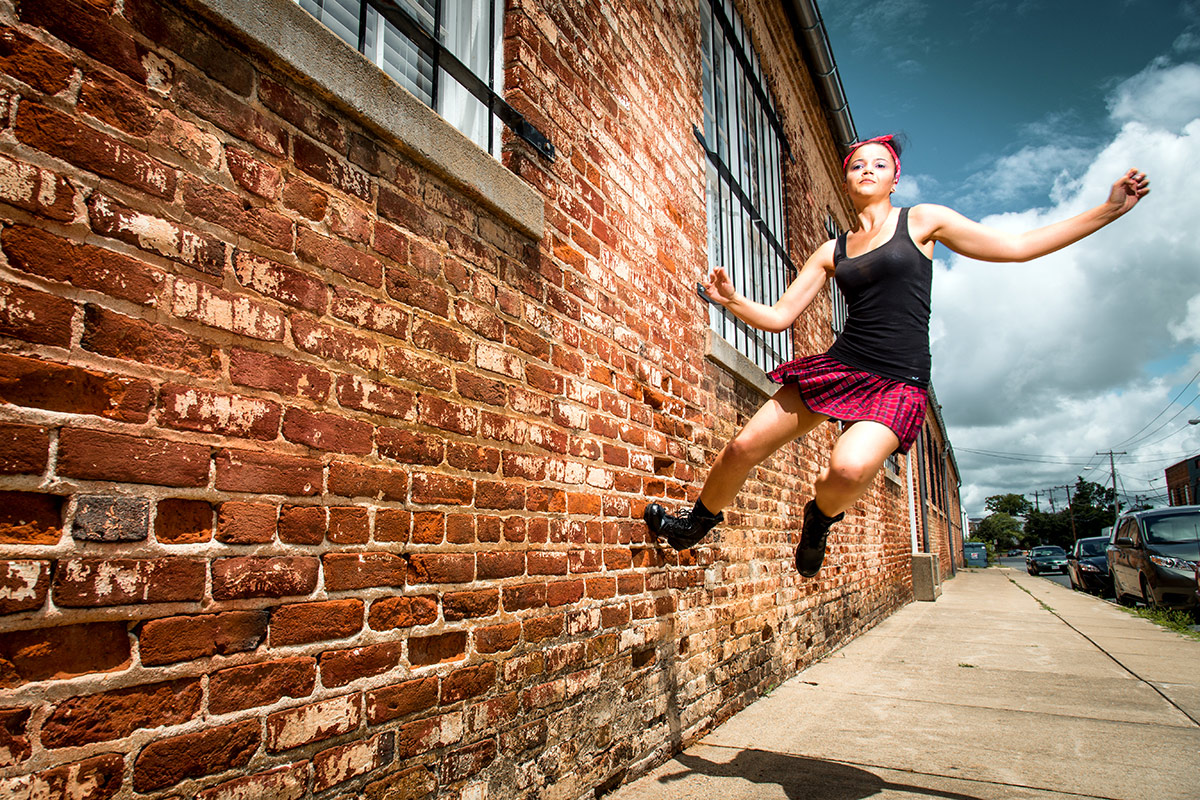
A close inspection shows us the highlights on top of the bricks and then the many indentations exacerbated by highlight and shadow with a fast fall off. This is created by using a small light source – the sun – and a large subject – the wall.
We want our things to be rendered as we expect them to be in real life. Water is wet, rough-hewn wood should look like it is a splinter waiting to happen, glassware should be very smooth, and skin should be smooth and attractive.
Sure there are examples of things being rendered in an un-natural state – and that’s fine. I am talking in a generality here, and one with a lot of history to back it up. While there may be an example of two of rough, scary skin on teenage girls, the vast majority will reject that image instantly.
This shot of cracked earth exhibits many of the properties of a subject / light relationship. Notice how much texture is shown due to the small light source side lighting the cracked earth. The sun is a small light source, and you see no soft, wrapping light, In addition, there is a bright spot in the middle of the image created by the specular – although it is a bit diffused, the dried mud is still reflective enough to show us a reflection of the sun at the same angle from camera. If I moved left or right, I would change where that bright spot was because it was locked into the same angle as my camera from the other side.
I chose to place my exposure one stop less than the recommended exposure to increase the feeling of a vignette.
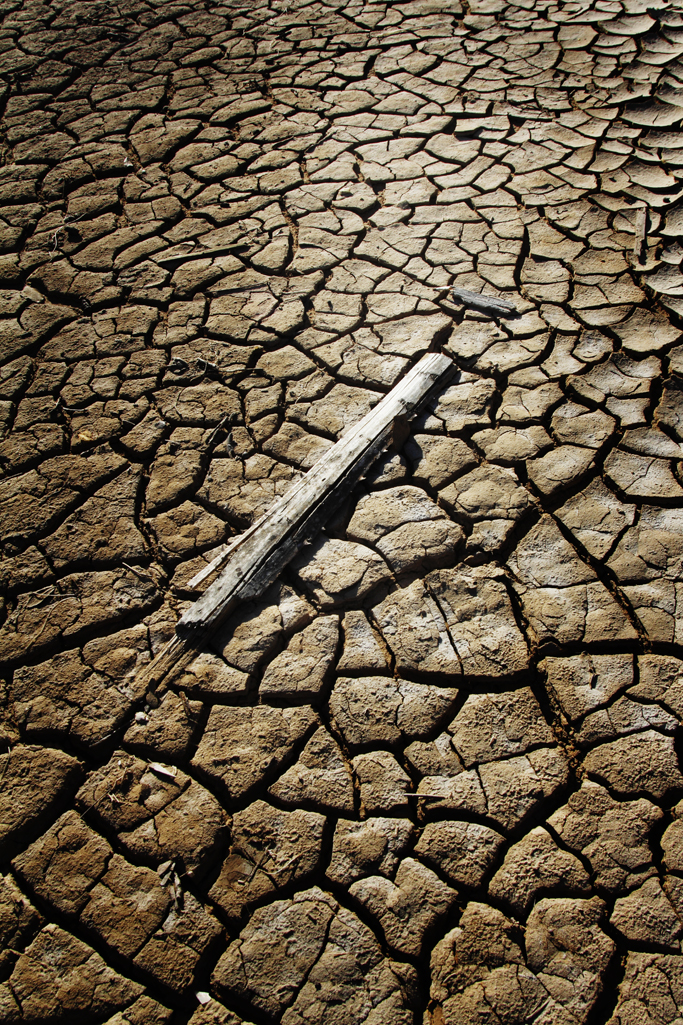
Small lightsource, at a side (back) angle and a slightly reflective surface gives us more to work with than just a dried mud slab.
Texture is also shown by the angle of incidence rule. If we choose to include the light as a part of the composition, for instance, we may choose to include its direct reflection back into the lens. A highlight on a shiny surface will show us how shiny it is by the relationship of the light and the surface around it. A less smooth surface may make a softer reflection of the light source, and that will also tell us about the surface texture.
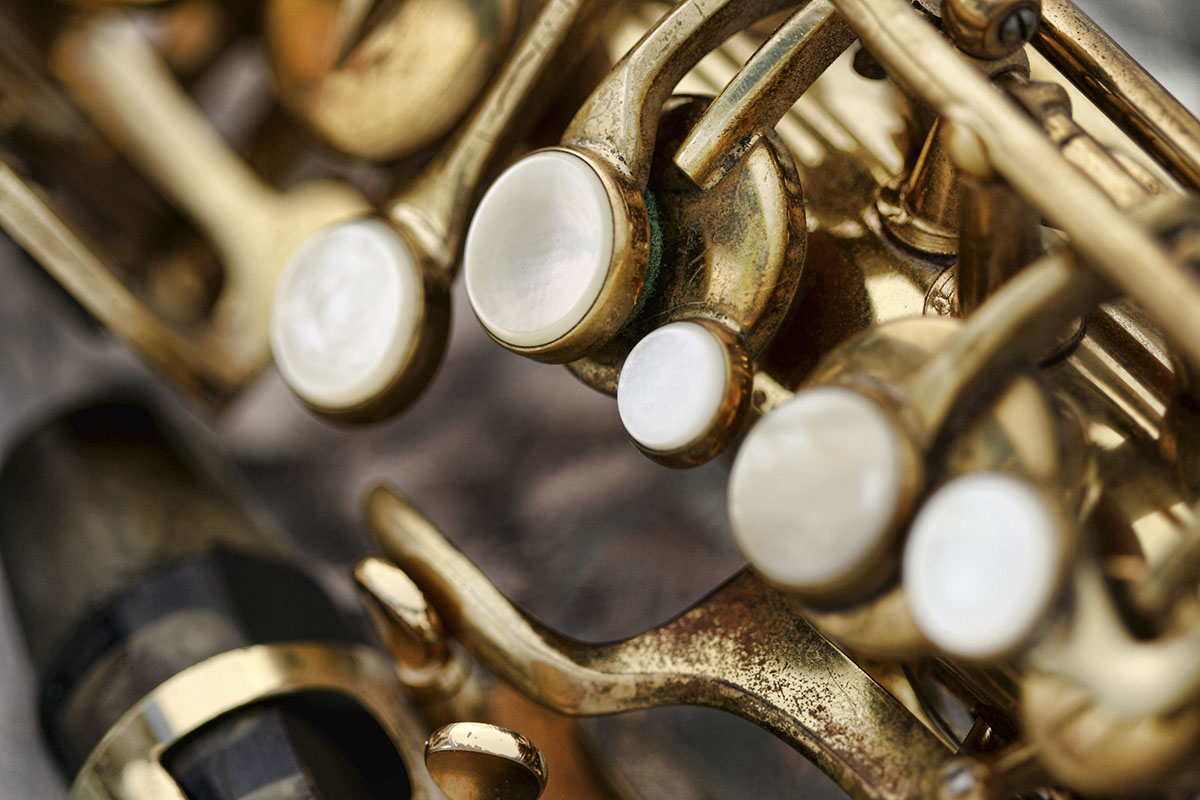
In this detail of an alto saxophone, the light is coming from the top back and it leaves small speculars on the areas that are efficient (shiny) and emphasizes the texture of the old keys and metal discoloration.
There are many places where we can use the reflection of the light source to create a cool looking gradation or highlight to create some interest as a point of composition as well.
The main point of this composition is the light on the wooden tools. By making sure the matte textured tools have a soft, directional light without any fill, the texture of the wood shows clearly in the image.

Ways to create texture:
Sidelight.
Top light.
Hard light (small source).
Backlight can also be used in many situations.
ASSIGNMENT
- Shoot a textured item (product / thing) to show the texture and find ways to mitigate or lessen the texture. Hint – front light nearly always kills texture, and sidelight nearly always makes it stronger.
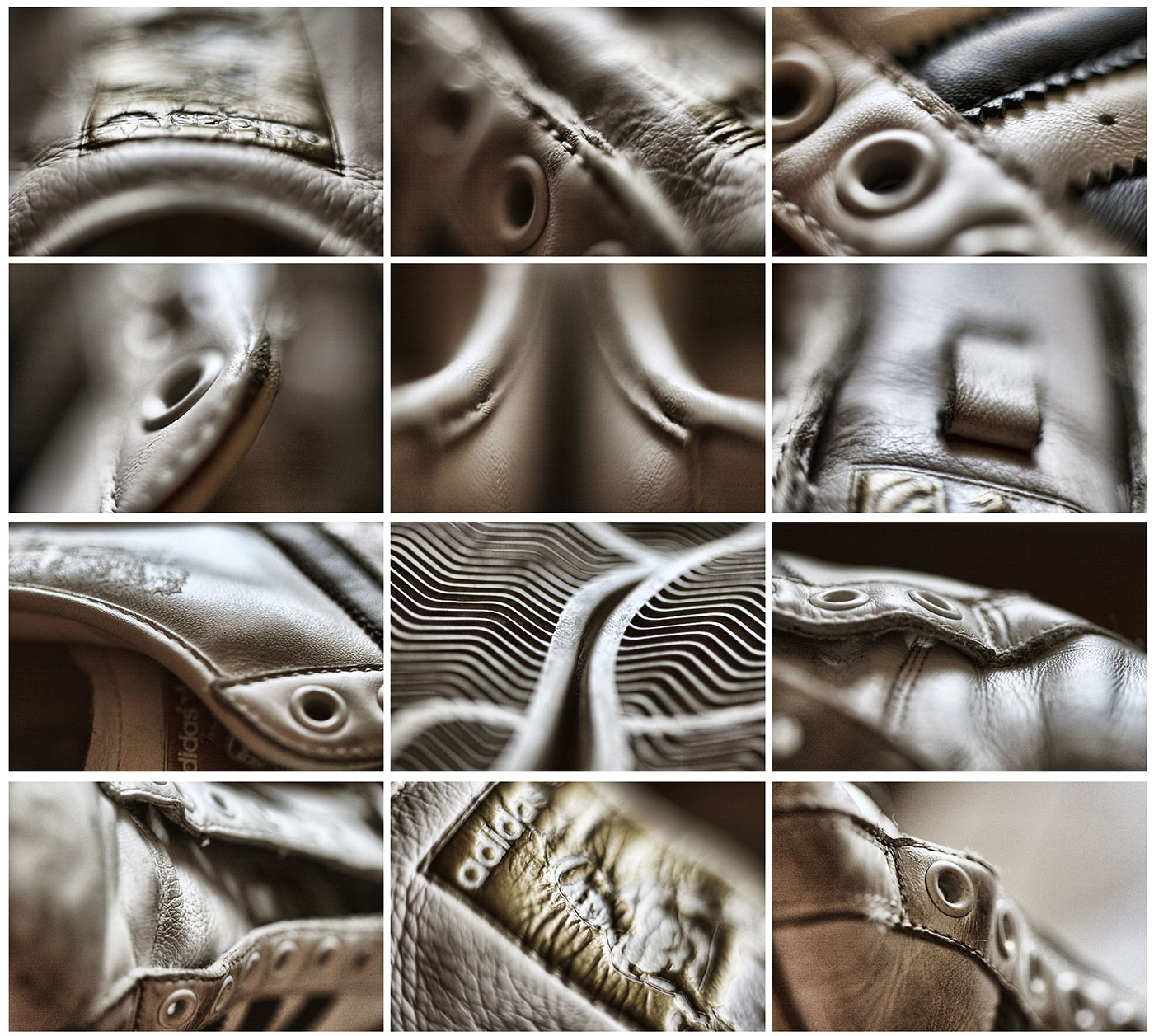
- Take a single textured item – like a shoe – and using your flashes or studio lighting, create as many different texture shots as you can using only one light – no fill.
- Look for texture in nature and shoot images that emphasize and also lessen the texture just by walking around the subject to see different angles of light to subject to camera.
IMPORTANT BREAKING NEWS
The US Forest Service is BANNING all Photography and Videography done with bent iPhone 6's and 6 Plus's. Plan accordingly.
The Internet Changed The Proposition of Value: Here is How to Fight Back
"Where photographers can succeed is if they abandon the consumers and editorial world who has been over-run by these value perception changes, and instead turn towards the same brands that still pay developers premium salaries for exclusive solutions. As Paul Melcher...
One Light Portraits: A Collection
The assignment was to shoot a portrait with one light. Studio Portrait: Clean background, Simple Light; Forceful, Expressive Portrait Specifics: A very clean portrait shot on a flat field background (wall, seamless, cyc, material, cloth, canvas…) Tightly focused and...
Read more“Here is a photographer that is infinitely patient, and interested in the stubborn core of things. Her images are captured in single exposures of up to half an hour, then painstakingly printed in her darkroom on large format, silver gelatin paper. The methodology is unapologetically old-fashioned, and the results extraordinary powerful.”
Photographing the Canary Islands.
"Here is a photographer that is infinitely patient, and interested in the stubborn core of things. Her images are captured in single exposures of up to half an hour, then painstakingly printed in her darkroom on large format, silver gelatin paper. The methodology is...
It’s A Numbers Game: Part Two
“The Numbers”: Part Two It’s a numbers game… part two of our series. Find Part One here. Last time we discussed the numbers of getting people to see your work, and how that is so important to build a business. It’s been two weeks since that post. How many of you: 1....
Ten Free Photographs for Bloggers/Marketers
PHOTOGRAPH ABOVE BY VIRGINIA SMITH: BRIANA AUSTIN AND DON GIANNATTI (NO LICENSE IS GRANTED FOR THE USE OF THIS IMAGE) Briana and I spent a lot of time making photographs all over the country. We have decided to give some of these away to creatives who may want to do...
It’s a Numbers Game, Part One
How to Play “The Numbers” Game Part One We have all heard the words, “It’s a numbers game” before. And most of us know what it means. In order to get to a certain level, more attempts than successes must be used. Selling door to door is a numbers game. The more people...

AWESOME Opportunity to be Exploited! Wow!
Crowdsourcing... that is the new name for spec work, but worse than spec work this involves an outlay by the ones being expected to be used for nothing. FORMER ADVOCATE OF PROFESSIONAL PHOTOGRAPHERS, Photo District News and Rangefinder have decided it is a great idea...
Off Topic Sunday…
Been reading a really interesting book this past couple of weeks... lots to digest. "The Power of Visual Storytelling" by Ekaterina Walter and Jessica Gioglio is about how visuals are beginning to dominate not only our news and information channels, but the ways...
10 Instagram Photographers You Should Be Following But Aren’t
I love Instagram. I should use it more, but I get so caught up with writing and other things that it sometimes skips my mind. However, I love following good image makers there and I am surprised that some of the fun photographers I follow are not being followed by...
What About Critics?
Should We Listen To Critics or Show Them The Door? Ahhh… the world of the artist. A place where we can nurture our ideas and share our bountiful creativity to others who will accept it into their lives with open arms, and smiles of gratitude. Or… not. There seems to...
Read more“Since clients haven’t held me to the lowest bid, other things factor in such as how the photographer allots the budget. How much money is going into casting, scouting, model-making, travel? What kinds of fees are they looking for? What usage are they including?. The creative call/treatment are very important too. Are they connecting with the art director and how are they approaching the job? Are they (or their agent) flexible regarding any changes in usage or scope? Let’s be honest here, if I like working with their agent I am more likely to recommend them for the job.”
On Preparing a Bid
3) We all know there are many reasons for a photographer not getting a project. Besides the obvious of price or creative, can you share some other reasons that they may not be awarded a project? "Since clients haven’t held me to the lowest bid, other things factor in...
One Layout – Many Solutions: The SANDWICH
The Project52 Pros knocked it out of the park with this assignment to shoot "The Infinitely Amazing, Always Tantalizing Sandwich". With layout provided, type in place on a layer, they had to shoot to the specs of the shot and keep it all perfect. That means the type...
From This to That
PHOTOGRAPH BY ALICIA BONTERRE One of the recent assignments at Project 52 PROS was to make the worst photograph they could make. The assignment was designed to make the students think about what makes a good photograph in order to negate that in order to make a...
Shooting Analog with Tomas Jansson
Some beautiful work by my friend Tomas Jansson in Sweden. Tomas began shooting film on our trip up to northern AZ last February. He's hooked.
The Romantic Portraits of Alicia Bonterre
Alicia Bonterre is a photographer in Trinidad. This post on making the romantic portrait is fun and informative. Alicia is a member of Project 52 Pros.
What Do You Charge For… Part Four
What is the value of a photograph? (What Do You Charge For... Part 1 / Part 2 / Part 3 /) Seriously... what IS the value of a photograph? If you need a calculator, go ahead and get it… I’ll wait. What’s that… you need more information to make that calculation? OK,...
Does the Best Photographer Make the Most Money?
Have you ever thought to yourself that as soon as you get to be the best photographer in your area, town, city, state, region, country, universe or whatever, you will be the highest paid? You may be in for a shock - but that ain't how the game is played, my friend....
Smartphone Camera Photography
“Every shift in photography has been linked to a shift in technology,” the exhibit’s curator, Henry Jacobson, told me. “But what makes smartphone photography so different is the instantaneous sharing that this device enables.” -- Henry Jacobson in The New...
“This Boring Old Photo…”
"In total, it took roughly two hours to get a single correct frame. I made every mistake you could make. I forgot to pull the dark slide out so I had at least one totally blank sheet of film. I forgot to dial the aperture back down after focusing so I significantly...
Steve Pamp: Tintypes of Gravestones: Colorado Front Range
Steve is a photographer in Colorado, and a Project 52 Alum. These photographs were taken during a summer project covering the Front Range of Colorado and the grave markers in the old cemeteries there. Steve chose to do these photographs on dry tin type, a very old...
What Do You Charge For… (Part Three)
Working and bidding for small businesses and entrepreneurial startups. (What Do You Charge For... Part One / Part Two) Mom and Pop businesses, self-employed artisans, service providers, entrepreneurs and all of the small businesses that are the lifeblood of the...
Are You a Commodity or a Brand?
Brooke from way back in the day... can you spot the 'brand' we were inspired by? Why Thinking of Yourself as a Brand is More Important Than You Know There are brands and there are commodities. A brand is something or someone that people choose because of what they...
Old Mama Dog – New Tricks…
"I am changing the direction of my photography as I shoot more film. Overall I hate my own results but I love the work itself. I've been all over the place trying to figure out what type of photographer I want to be when I grow up. As I get older I realize the small...