
Subject Centric Lighting
LIGHTING ESSENTIALS WORKSHOP: SUBJECT CENTRIC LIGHTING
I hope you enjoy this workshop.
It is the culmination of decades of being a working, professional photographer and having to meet the challenges of making images for other people. Other people with high expectations and demands for the work. Other people who didn’t necessarily care how hard it was to make the shot they wanted, they wanted that shot. Now.
Being a photographer in a small market meant I didn’t necessarily have a strict specialty, although people and still life did make up the bulk of my work. I would occasionally shoot architecture and food, as well as the now and then corporate shoot.
I wasn’t really a ‘generalist’, but some weeks it seemed as though my assignments were as unrelated as they possibly could be.
One week I had a food shot going on in one corner of the studio, with a catalog shoot going on in the other part. All of this while I was shooting a lingerie shoot for an ad agency in the rest of the studio. Heady times, long hours, really damned fun.
This workshop will take us through many of the ways to light photographic subjects. And lighting is, as they say, lighting. Yeah, I am so old I remember when “off camera flash” was simply called lighting.
We are going back to that time. Lighting is lighting and the goal is always the same: to make an image that represents what we see in our mind’s eye. Knowing what we want is step one, making it happen with the tools at hand is step two.
The assignments will be given one per week. They will remain in place for future photographers. You do not have to start at the beginning, but the first five lessons are absolutely important to review before moving to the assignments you want to do.
SUBJECT CENTRIC LIGHTING
I call my system “Subject Centric Lighting” because the subject plays a bigger part in the lighting than the lighting gear does. How a subject renders the lighting we apply to it, and how the camera receives that light is what makes our images interesting.
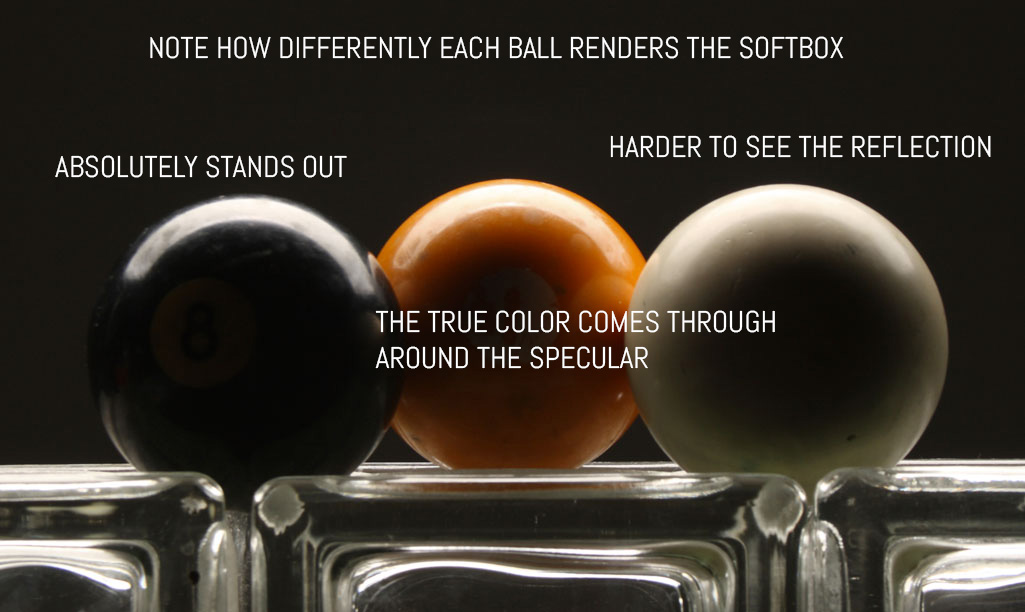
Subject Centric Lighting recognizes that light does the same thing every time. It is the subject that changes the way the light reflects back to our camera, not the light tool we choose to light the subject with. Lighting a dark bowling ball with a soft box presents a far different rendition of the light than using the same light for a white bowling ball. Everything is changed – from specular presentation to shadow fall.
But more of that as we go along.
First, let’s get into the basic principals of light and lighting.
LIGHT DOES THE SAME THING EVERY TIME
It must. Otherwise, we could never control it.
Imagine a saxophone with its many variations of keys. A sax player has to know that if a certain set of keys are pushed, a specific sound will come out. If it was random, then no music could be produced. There would be no point in learning the saxophone since there was no knowledge to be applied that would render it usable.
The same with lighting. We have to know that if we have a flash at 1/4 power, 15′ from the subject, that a specific exposure will be generated. We can control how much exposure that is by changing the ISO of course, but always at any specific setting that flash will produce the same measurable amount of light. Every time.
It is the same thing with modifiers. A softbox will look like a softbox when it is being reflected from a shiny surface. An umbrella will wrap the light if used to do so based on science and physics, not some magical desire to use an umbrella.
So if light does the same thing, how can we use that knowledge to make light do what we want it to do? And if it does the same thing every time, why do images look different from each other when using the same or similar lighting?
Subjects.
Subjects are dimensional, with textures and surfaces, and shadows and speculars and more. A shiny subject renders the light back to the camera differently than a diffuse subject does. A dark subject renders the perceptible highlights differently than a light subject. Subject change, but the physics of light do not.
WHAT YOU WILL NEED:
This workshop is designed to teach you the basic principles of lighting for photography. We will have weekly assignments and you can start anywhere, anytime. There is no charge for this workshop, although we will be asking for your email so we can keep you up-to-date with all that is going on in the workshop.
We have a Facebook Group for this workshop, and you will be able to meet others in the workshop, ask questions and find out when the open webinars will be.
You will need a camera, of course. And while much of the natural light information can be used with even a cell phone camera, much of the photographic education will require a camera with aperture / shutter speed controls.
Lighting gear:
A 5-in-one reflector kit would be a great purchase since it will be something you will be available to use over and over for all sorts of image lighting effects. I call them the best bang for the buck in lighting gear.
White cards. From the Dollar Store or Target, white foam style boards will be a vital part of your gear.
Photographic light stands. A couple of cheap ones would be fine if you do not have any at the moment.
A couple of ‘A’ Clamps from the local hardware store will hold the boards and reflectors to the stands. Get the cheap ones.
A tripod will make your work a lot easier, and there are some good ones that are not expensive.
If you are going to use artificial light, there are too many options for me to tell you much other than we will be doing a lot with them. So whether you are a speedlight shooter, have a couple of studio lights, or even continuous light set ups, all the information is the same. Light is light, and the gear is there to provide that light.
We will learn to control light and make it do provide the look we want.
On the black cue ball, the light is distinctly shaped and no other light is seen. On the orange ball, we see the softbox specular, and a bit of the true tone of the orange around it. That bright orange makes the highlight specular a bit harder to see distinctly – at least as distinctly as the black ball. On the white ball, the specular all but disappears into the white true tone of the ball.
Same light is seen differently by the camera because of the makeup of the subject. We will be discussing this in length in future posts.
Light.
It is a substance that we cannot smell, touch or hear.
Can we see light? No… we can only see what it reflects from. The subject.
I will refer to that as the “presentation of the light” in this workshop. That refers to the way the subject is taking the light onto its surface, then reflecting it back to the camera lens.
No… we can only see what it reflects from. The subject defines the light… we cannot see the light in transit from source to subject, only what the subject reveals after the light has come into contact with it.
To me, that is one of the magical qualities of light, almost mysterious and yet compliant with our wishes. I think of light as a liquid when planning my lighting… it helps
I think of light as a liquid when planning my lighting… it helps me ‘see’ something that isn’t there but yet has similar properties. Direct light is like water from a hose, while diffused light is mist. Ambient is similar to fog in my mind, while umbrellas are more like garden sprinklers.
You can think of light in many different ways to help you plan your shots, but whatever you do to help, keep in mind that light does the same thing every time. Everytime. If you have a light that gives you an exposure at f-ll
If you have a light tool that gives you an exposure at f-ll on 1/2 power at ISO 100 at 6 feet… it will repeat that for you (barring some sort of malfunction) every single time you set it at that distance, power, and ISO.
The predictability of light tools makes controlling it a matter of understanding what it does and how to use the tools at our disposal to modify, control, and adjust it to suit our plan.
Even the sun is predictable. F-16 at 1/100 with ISO 100 film. (Sunny 16 Rule: F-16 at 1/ISO). This makes understanding light far easier than if it was unpredictable.
Getting the idea of what to shoot is harder than shooting it in most case… once you know how to light correctly.
Important Note:
Everything reflects. Everything.
Dark, rough fabric does not reflect as much as a shiny, painted surface. But it does indeed reflect.
It is important to know that as we begin.
We will first turn our study to the four principles of light. While I am not a fan of rules, I will say that understanding these four principles will definitely enhance your ability to handle any lighting situation you may have.
SIZE OF THE LIGHTSOURCE RELATIVE TO THE SUBJECT
DISTANCE OF THE LIGHTSOURCE
COLOR OF THE LIGHTSOURCE
ANGLE OF THE LIGHTSOURCE
Now here is the hard part: there is no hierarchy to these principles. What that means is there is no ‘first, second’, etc. Each one of these four principles are as important as the others. We do not approach it from size first, then color – or any of that. All of it is very important and all are important at the same time.
This single idea – that all four of these principles are equal in importance is perhaps the hardest one to think about – but it starts to flow when you get it down. You can do this.
Now to be sure there are times when we start with one or another of these principles because that is the biggest challenge at the moment. And those priorities will change from shot to shot. It is to be expected since we never know what is going to be in front of us at any specific moment.
LIGHT DOES THE SAME THING EVERY TIME.
And we can control that light by the way we understand the principles of light, and understand how those principles affect a given subject depending on their properties.
Let’s look at the four principles of light.
THE FOUR MAIN PRINCIPLES OF LIGHT
A Beauty Dish and Cheyenne
A beauty dish is one of the most fun, and unique light modifiers for people shooters. It's very 'poppy' light, combined with a focused throw of light makes it ideal when you want to create a definite direction to the lighting. Most beauty dishes are metal parabolic...
Playin’ in the Studio When it is 115 Degrees Outside.
I wanted to do some playing around with hot lights and chose my Lowell Omni and a Home Depot work light. I kept them without modification (no umbrellas or softboxes.) Hard light is tricky, but it can really keep you on your toes when you are looking at the light and...
One Light, and a dash of Photoshop
This is a fun little project. I shot Briana in the studio and recorded most of it on Video. I took the video, did very little editing and added a soundtrack of me explaining what I was doing. You see all of her posing as well as hearing me giving directions along with...
Glamour in the Studio with Briana
This set of shots was done to show how to use some of the tools simply and easily when in a studio setting. I used very simple tools, a softbox and some reflectors and a hot light with cookies and fill cards. The shoot was a lot of fun and you can see how many ways...
Minimalist Shooting
Sometimes we get too caught up in having the latest and greatest and forget that the at the core a lens and a camera are what we use to create images. I refer to it as minimalist shooting, and I do it occasionally to bring me closer to the base... find my center, so...
Simple, Yet Dramatic Light for Headshots and Portraits
This is what I refer to as my "Classic Glamour" light. Single light, with large umbrella, shiny fill card and two large fill cards close in on both sides. I can control the fill by moving the shiny card up and down. In this shot it is right out of frame. I keep the...
Single Light Fashion
This is a single light approach with a large softbox. I chose the large box because of the incredible texture of the dress. I wanted a nearly liquid look to the fabric and the large surface of the box would reflect nicely on it. The box spilled too much light on the...
A Selection of Headshots with Different Styles
I thought it would be good to discuss a few images from the past. You can tell by the hair and makeup that these are not recent images, but I thought I would share a few interesting lighting schemes that are easy and fun to deploy. The goal for the lighting for me is...
One Strobe, a Diffuser and a Touch of Natural Light
These shots were taken on location in a dance studio. There was a lot of light bouncing around in there, but not enough for pretty headshots. I set up the shower curtain hanging from a boom. Since the client was my wife, it was fine to use these materials without a...
One Large Light on Location for Portraits
Asked to shoot 40 non-models at an upscale salon was quite a challenge. I needed a light that would serve many different faces and people types. I would literally have only a few minutes with each and they would be nervous so working the light in many different ways...
Mini Workshop: Location Portraits and Glamour: 9/1/07
I didn't realize until too late that I had chosen the Labor Day weekend for the workshop date. I had lots of interest, but only a few folks could actually make the date. Rather than cancel, I took it as an opportunity to change up the workshop to a totally location...
Glamour Lighting: lots of fill
This lighting is a staple of mine and creates a beautiful, soft, glamour light that wraps around the face. Keeping the umbrella this close gives some fantastic highlights in the hair and a very bright, kick to the eyes. Notice in the movie that the photographer moves...
Creating Good Headshot Lighting in ‘Bad Light’
There are times when the light simply sucks. We shot these at noon in May in Phoenix. Not the most perfect light at all. In fact, the harshness of the nearly top down light was brutal. This little soundslide movie will discuss how we did it. Enjoy
Using Gold Reflectors for Effect
I work with reflectors a lot. They are used for main light, bounced light, fill light, areas of light or color to be reflected back... all kinds of uses can be found for these versatile and lightweight tools. There are generally three different types of reflectors:...
LIGHTING ESSENTIALS IS UNDERGOING CHANGES
Hi... Lighting Essentials is undergoing a big overhaul. It will be live as we go along, with much better navigation and a much easier way to find what you need... Items are going up now and as we keep uploading you will see the site expand to its original glory...
What I’ve Learned So Far: Twelve; “Nice Shot… Who Cares?
Back when I was first starting out in this business, I shot nearly every day. Maybe for an hour or two, maybe only for a few minutes. When I wasn't shooting, I was in the darkroom developing film, making contact sheets or printing. Lots of printing. There was a lot to...
What I’ve Learned So Far: Eleven; “They Don’t Pay Me Enough To…”
Have you ever heard someone say this? "They're not paying me enough to do my best work." Possibly some variation of that? What a terrible, awful, self-defeating way of doing anything. It's an amazingly stupid, self-absorbed sense of entitlement that brings nothing but...
What I’ve Learned So Far: Ten; Listen to Your Gut
... it knows what the heck is going on. That place deep inside you where you just know something is not right. Listen to that feeling. It is right more than it is wrong. Now I know that your head will be arguing with you the whole time. There is a reason for that is...
What I’ve Learned So Far: Nine; Loyalty Should Be a Brand Attribute
I am a pretty strict believer in loyalty. I live it and I demand it. Not in harsh, 'kingly' sort of way, but more of a gentle 'I am way too busy for your call' way. I can list loyalty as one of my strong traits. I may sometimes be loyal to a fault. I have always felt...
What I’ve Learned So Far: Eight; Life – Through a Lens…
... is different - depending on what lens you choose. Choose wisely. One of the joys of photography is being able to use a different lens for a different perspective. Something very far away can be brought 'closer' by a long (telephoto) lens. We can add depth to a...
What I’ve Learned So Far: Seven; Gear Envy Sucks
Gear envy takes two major forms; 1. "I can't do what I want with this crummy gear." 2. "I can't believe that guy/gal has such great equipment when their work sucks so bad." Actually envying someone by what their gear collection is - "I so wish I was him, I...