
Subject Centric Lighting
LIGHTING ESSENTIALS WORKSHOP: SUBJECT CENTRIC LIGHTING
I hope you enjoy this workshop.
It is the culmination of decades of being a working, professional photographer and having to meet the challenges of making images for other people. Other people with high expectations and demands for the work. Other people who didn’t necessarily care how hard it was to make the shot they wanted, they wanted that shot. Now.
Being a photographer in a small market meant I didn’t necessarily have a strict specialty, although people and still life did make up the bulk of my work. I would occasionally shoot architecture and food, as well as the now and then corporate shoot.
I wasn’t really a ‘generalist’, but some weeks it seemed as though my assignments were as unrelated as they possibly could be.
One week I had a food shot going on in one corner of the studio, with a catalog shoot going on in the other part. All of this while I was shooting a lingerie shoot for an ad agency in the rest of the studio. Heady times, long hours, really damned fun.
This workshop will take us through many of the ways to light photographic subjects. And lighting is, as they say, lighting. Yeah, I am so old I remember when “off camera flash” was simply called lighting.
We are going back to that time. Lighting is lighting and the goal is always the same: to make an image that represents what we see in our mind’s eye. Knowing what we want is step one, making it happen with the tools at hand is step two.
The assignments will be given one per week. They will remain in place for future photographers. You do not have to start at the beginning, but the first five lessons are absolutely important to review before moving to the assignments you want to do.
SUBJECT CENTRIC LIGHTING
I call my system “Subject Centric Lighting” because the subject plays a bigger part in the lighting than the lighting gear does. How a subject renders the lighting we apply to it, and how the camera receives that light is what makes our images interesting.
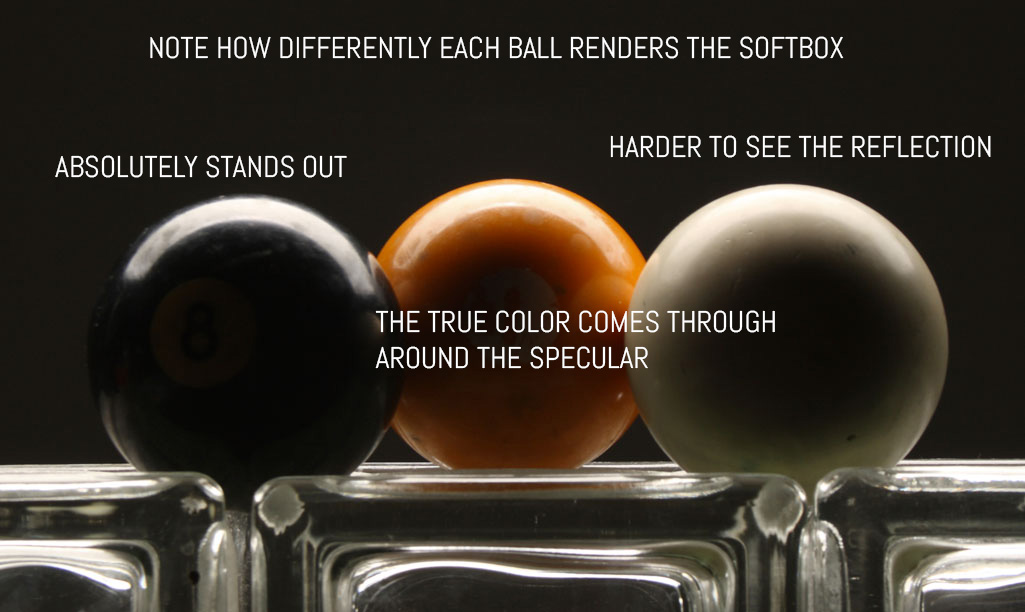
Subject Centric Lighting recognizes that light does the same thing every time. It is the subject that changes the way the light reflects back to our camera, not the light tool we choose to light the subject with. Lighting a dark bowling ball with a soft box presents a far different rendition of the light than using the same light for a white bowling ball. Everything is changed – from specular presentation to shadow fall.
But more of that as we go along.
First, let’s get into the basic principals of light and lighting.
LIGHT DOES THE SAME THING EVERY TIME
It must. Otherwise, we could never control it.
Imagine a saxophone with its many variations of keys. A sax player has to know that if a certain set of keys are pushed, a specific sound will come out. If it was random, then no music could be produced. There would be no point in learning the saxophone since there was no knowledge to be applied that would render it usable.
The same with lighting. We have to know that if we have a flash at 1/4 power, 15′ from the subject, that a specific exposure will be generated. We can control how much exposure that is by changing the ISO of course, but always at any specific setting that flash will produce the same measurable amount of light. Every time.
It is the same thing with modifiers. A softbox will look like a softbox when it is being reflected from a shiny surface. An umbrella will wrap the light if used to do so based on science and physics, not some magical desire to use an umbrella.
So if light does the same thing, how can we use that knowledge to make light do what we want it to do? And if it does the same thing every time, why do images look different from each other when using the same or similar lighting?
Subjects.
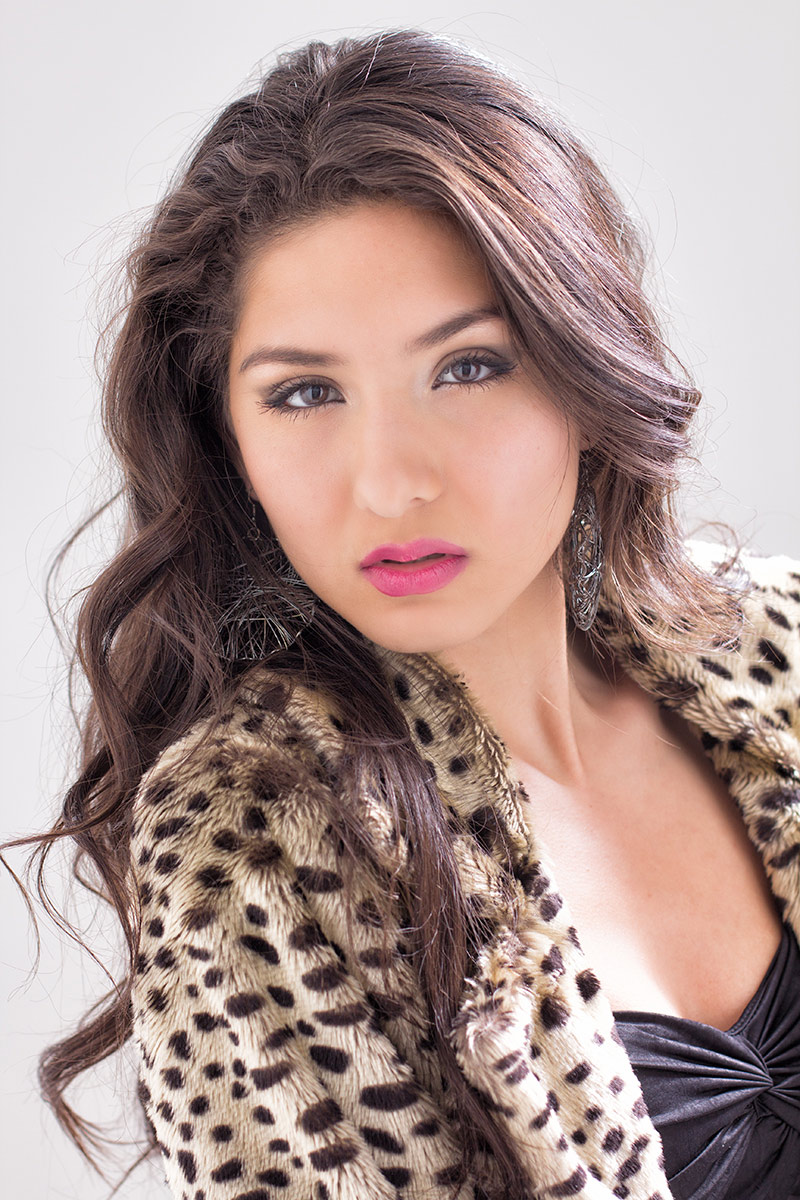
Subjects are dimensional, with textures and surfaces, and shadows and speculars and more. A shiny subject renders the light back to the camera differently than a diffuse subject does. A dark subject renders the perceptible highlights differently than a light subject. Subject change, but the physics of light do not.
WHAT YOU WILL NEED:
This workshop is designed to teach you the basic principles of lighting for photography. We will have weekly assignments and you can start anywhere, anytime. There is no charge for this workshop, although we will be asking for your email so we can keep you up-to-date with all that is going on in the workshop.
We have a Facebook Group for this workshop, and you will be able to meet others in the workshop, ask questions and find out when the open webinars will be.
You will need a camera, of course. And while much of the natural light information can be used with even a cell phone camera, much of the photographic education will require a camera with aperture / shutter speed controls.
Lighting gear:
A 5-in-one reflector kit would be a great purchase since it will be something you will be available to use over and over for all sorts of image lighting effects. I call them the best bang for the buck in lighting gear.
White cards. From the Dollar Store or Target, white foam style boards will be a vital part of your gear.
Photographic light stands. A couple of cheap ones would be fine if you do not have any at the moment.
A couple of ‘A’ Clamps from the local hardware store will hold the boards and reflectors to the stands. Get the cheap ones.
A tripod will make your work a lot easier, and there are some good ones that are not expensive.
If you are going to use artificial light, there are too many options for me to tell you much other than we will be doing a lot with them. So whether you are a speedlight shooter, have a couple of studio lights, or even continuous light set ups, all the information is the same. Light is light, and the gear is there to provide that light.
We will learn to control light and make it do provide the look we want.
On the black cue ball, the light is distinctly shaped and no other light is seen. On the orange ball, we see the softbox specular, and a bit of the true tone of the orange around it. That bright orange makes the highlight specular a bit harder to see distinctly – at least as distinctly as the black ball. On the white ball, the specular all but disappears into the white true tone of the ball.
Same light is seen differently by the camera because of the makeup of the subject. We will be discussing this in length in future posts.
Light.
It is a substance that we cannot smell, touch or hear.
Can we see light? No… we can only see what it reflects from. The subject.
I will refer to that as the “presentation of the light” in this workshop. That refers to the way the subject is taking the light onto its surface, then reflecting it back to the camera lens.
No… we can only see what it reflects from. The subject defines the light… we cannot see the light in transit from source to subject, only what the subject reveals after the light has come into contact with it.
To me, that is one of the magical qualities of light, almost mysterious and yet compliant with our wishes. I think of light as a liquid when planning my lighting… it helps
I think of light as a liquid when planning my lighting… it helps me ‘see’ something that isn’t there but yet has similar properties. Direct light is like water from a hose, while diffused light is mist. Ambient is similar to fog in my mind, while umbrellas are more like garden sprinklers.
You can think of light in many different ways to help you plan your shots, but whatever you do to help, keep in mind that light does the same thing every time. Everytime. If you have a light that gives you an exposure at f-ll
If you have a light tool that gives you an exposure at f-ll on 1/2 power at ISO 100 at 6 feet… it will repeat that for you (barring some sort of malfunction) every single time you set it at that distance, power, and ISO.
The predictability of light tools makes controlling it a matter of understanding what it does and how to use the tools at our disposal to modify, control, and adjust it to suit our plan.
Even the sun is predictable. F-16 at 1/100 with ISO 100 film. (Sunny 16 Rule: F-16 at 1/ISO). This makes understanding light far easier than if it was unpredictable.
Getting the idea of what to shoot is harder than shooting it in most case… once you know how to light correctly.
Important Note:
Everything reflects. Everything.
Dark, rough fabric does not reflect as much as a shiny, painted surface. But it does indeed reflect.
It is important to know that as we begin.
We will first turn our study to the four principles of light. While I am not a fan of rules, I will say that understanding these four principles will definitely enhance your ability to handle any lighting situation you may have.
SIZE OF THE LIGHTSOURCE RELATIVE TO THE SUBJECT
DISTANCE OF THE LIGHTSOURCE
COLOR OF THE LIGHTSOURCE
ANGLE OF THE LIGHTSOURCE
Now here is the hard part: there is no hierarchy to these principles. What that means is there is no ‘first, second’, etc. Each one of these four principles are as important as the others. We do not approach it from size first, then color – or any of that. All of it is very important and all are important at the same time.
This single idea – that all four of these principles are equal in importance is perhaps the hardest one to think about – but it starts to flow when you get it down. You can do this.
Now to be sure there are times when we start with one or another of these principles because that is the biggest challenge at the moment. And those priorities will change from shot to shot. It is to be expected since we never know what is going to be in front of us at any specific moment.
LIGHT DOES THE SAME THING EVERY TIME.
And we can control that light by the way we understand the principles of light, and understand how those principles affect a given subject depending on their properties.
Let’s look at the four principles of light.
THE FOUR MAIN PRINCIPLES OF LIGHT
On Work Ethic – Nick Giron, Photographer
"Drive through your town and look at the businesses YOU DON'T go into and figure out why they work without you. Look at your business and ask why someone would want to come into yours. If you're the only one that knows the answer to that it could be part of the...
James Eisele, West Palm Beach FL Commercial Photographer
I met James Eisele down in West Palm Beach, FL when I did a workshop in that area. He showed a lot of talent and when I started the Project 52 course, he jumped in and became involved. I have watched his work improve at a very high rate, and his studio in West Palm is...
Tne New Sony Alpha a7RII Mirrorless Digital Camera
Is ready for purchase for those of you who may want a killer mirrorless camera.
Please Don’t Buy Stolen Gear
LensProToGo, a popular camera gear rental house and studio in Massachusetts was hit by the lowest of scum and had over a half million dollars of gear stolen. This gear will undoubtedly be offered for sale in shady cesspools of slime (their homes) and on line at...
Why I Have Decided to do Project 52 One More Time
https://vimeo.com/130593335 This will be year 5 of Project 52. It has matured and seen many alumni start businesses going from weekend warrior to full time shooter. P52 has helped many more photographers find their creative voice and look at the world in a different...
Off Topic Sunday: Gadgets, Gizmos, and Music
Every once in a while I get so many little things going on that I decide to share them with you all. I call them Off-Topic Sundays and they are always fun for me. So here we go: First... ever have your phone die on location? Not good, and since so many of us USE our...
Tucker Joenz, St, Augustine FL Commercial Photographer
Tucker Joenz was with Project 52 for a couple of years and in that time I watched him go from hobbyist to serious photographer. He works hard and creates wonderful pictures for his clients. Tucker also shoots self assigned personal projects that have garnered some...
Stephen Collins: Fredricksburg VA Commercial Photographer
I first met Steve when I did a workshop in Baltimore. It was a hot, muggy day but Steve never tired. He shot and asked questions and seemed to be very interested in getting better... which was a good thing. I kid Steve about how far he has come, but it is true. His...
Eric Muetterties: East Bay Commercial Photographer
Meet Eric Muetterties, a working photographer in the East Bay area of San Francisco. I met Eric 4 years ago at a workshop in North Carolina, and we shared a plane coming home. His attention to detail and love for the medium made me think he could actually do this...
Finding and Keeping Commercial Photography Clients: Part Four, Staying Connected
(NOTE) If you are just coming into this series, I highly suggest you start at Part One, and then do Part Two and Part Three before starting Part Four. Links for all of them are inside the protected area, and you can access them easily. A brilliant portfolio won't get...
Irene Liebler and Sandy Connolly: Starting the Journey
Irene Liebler was one of the Project 52 members from a few years ago. She did the course twice, I believe and rarely missed an assignment. She also rarely did an image that we were not blown away by. Irene is a consummate artist, and a painstaking perfectionist when...
Finding Commercial Photography Clients: Part Three; Getting Personal
(NOTE) If you are just coming into this series, I highly suggest you start at Part One, and then do Part Two before starting Part Three. Links for all of them are inside the protected area, and you can access them easily. So far we have been working on our portfolios,...
Finding Commercial Photography Clients: Part Two
"How do I find clients?" One of the most asked questions I get when chatting with photographers is where can they find clients. It is one of the questions I ask when reviewing a portfolio; "OK, these are nice shots. Who do you know who will pay you for this kind of...
Finding Commercial Photography Clients: Pt. One – Portfolio
https://www.youtube.com/watch?v=c7rj_D9t-kw Image Uses PDF Image Audit Tool PDF Ad Image Assessment PDF Finding and Keeping Clients Part One PDF Build a Solid Client List Finding and Keeping Commercial Photography Clients NOTE: This is a course for emerging...
Inspired by Skrebneski
The first set of images from the 8 Week Portrait Class came in last evening and they are really good. The class takes a close look at 8 major portrait photographers by analyzing what they do, how they accomplished their imagery and what the thought process was behind...
“Light Conversation” Volume Three
https://youtu.be/tv2EBtW5YLY Our next Light Conversations will be Monday, May 25. Join us.

PROJECT 52 PRO IS NOW A SUBSCRIPTION COMMUNITY
After 6 years of single start dates, it is time to move the workshop to a monthly subscription service that allows you to join, do assignments, communicate with and learn from peers, and most of all have a highly creative experience. We call it Project 52 Pro System...

10 Questions That May Predict Your Success as a Photographer
Commercial photography is a lot of fun, and it is a lot of work. Hard work. Some of it mind-numbing boring work, but more important than most anything else you do. Understanding what we do, who we do it for, and what its value is can be a crucial part of getting work...
A New Workshop for Learning Video
CREATE A 2-3 MINUTE VIDEO FOR SELF PROMOTION LINK to Enroll. We do it together. Creative Approach > Storyboard > Simple Special Effects (Slow Motion, B Roll, etc…) > Shoot Video to Storyboard > Assembling Assets: A Roll / B Roll / Audio > Building Video...
You Must Believe BEFORE You Will Ever See Success
https://www.youtube.com/watch?v=VrtT-WIka8s
Are Free Images Destroying the Professional Photographer?
IS UNSPLASH DESTROYING THE BUSINESS OF PHOTOGRAPHY?NOTE:MY BELIEFS HAVE EVOLVED QUITE A BIT.I LOVE UNSPLASH AND AM A VERY ACTIVE CONTRIBUTOR.Edited July 2, 2019https://www.youtube.com/watch?v=1VDR7mI5dJM&t=3sA recent article in PDN noted that Unsplash...
Meet Neville Palmer, Project 52 Photographer in Calgary
Calgary Photographer Neville Palmer https://www.youtube.com/watch?v=r510ZZ_FtTg What brought out your interest in photography? How'd you get started? When I was a very young kid I got a Kodak 126(?) cassette type camera for Christmas. I used it to make images of...