
Subject Centric Lighting: The Five Areas of Light Presentation
Cover image by Project 52 student, Gabriel Alvarez.
When the lighting choices we have made are used, the light is ‘presented’ back to the camera in expected, and controlled ways. There are five parts of the light presentation, and we use them in every image we make.
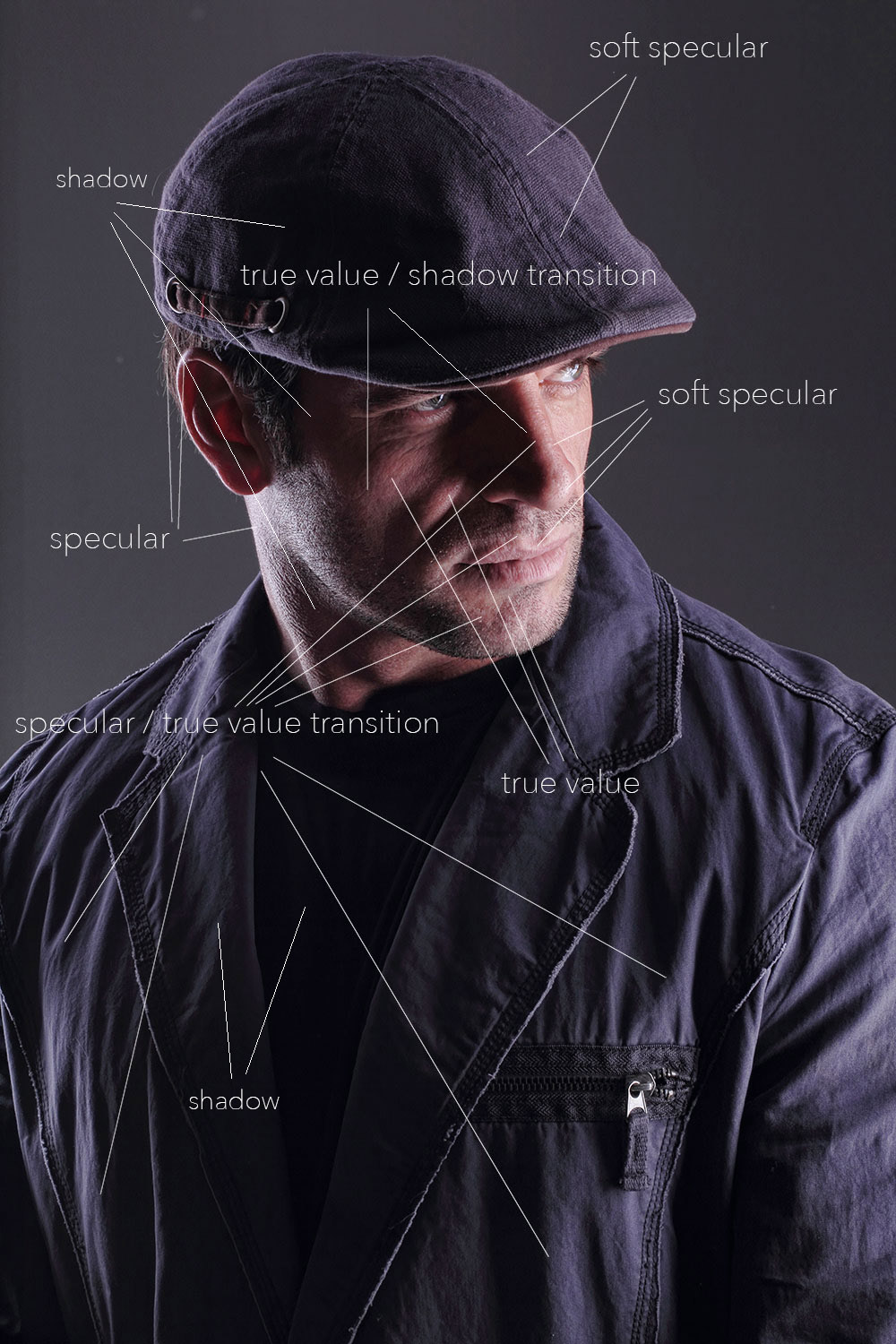
True Subject Value:
What the subject looks like when not in specular or shadow, this is the area that shows us the color of the subject as well.
Specular:
The exact or absolute reflection of the light source.
Specular Transition:
The point where the specular reflection transitions to the true subject value
Shadow Transition:
The transition between True Subject Value and Shadow
Shadow:
The places on the image that are not lit, the opposite side of the light source.
These areas of light are found in nearly every subject. By understanding what they do, and how they are controlled, we can understand much more about the light that is used to present these areas in the ways we want to show them.
In other words, knowing what causes a shadow transition, how to present true value, and how to control a specular highlight means we have control over our lighting and we can create the looks we want. Whenever we want.
Photographers and artists use these representations of light to show texture, shape, dimension, color, clarity and mood. Illustrators use highlight and shadow in their work to create their own light. And they use the same tools to light their drawings, although quite imaginary, as photographers do.
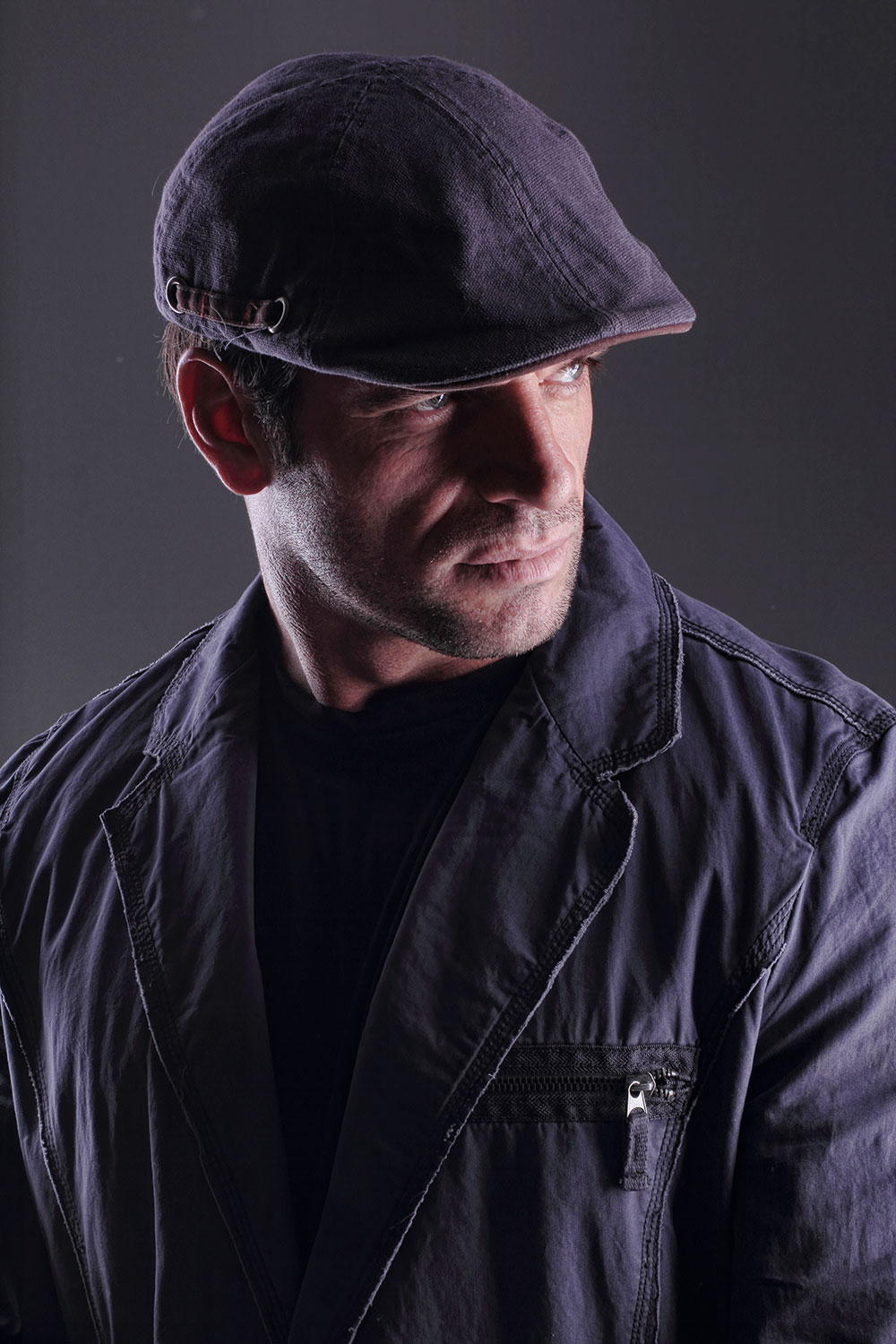
We can see all the presentations of light in this image of Inaudia.
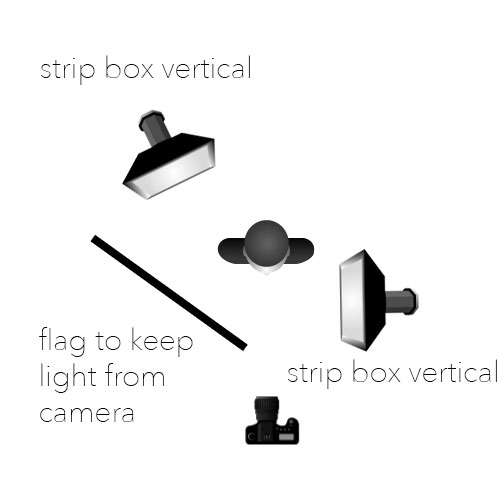
Lit with two strip lights (one on each side), the one on camera left is behind Inaudia and aimed forward just bit. The one on the right is slightly in front of him, and angled at an oblique angle.
This renders two different kinds of specular presentations, the absolute one on his neck and left side, and the softer one on the right side.
All of the transitions are there, and these transitions are what we see when we are determining soft light from hard light. A fast transition is a hard light, where a softer transition – as in the picture below – is a softer light. We would call this image a hard light image because of the fast fall off in the transitions between highlight and true value, and true value and shadow.
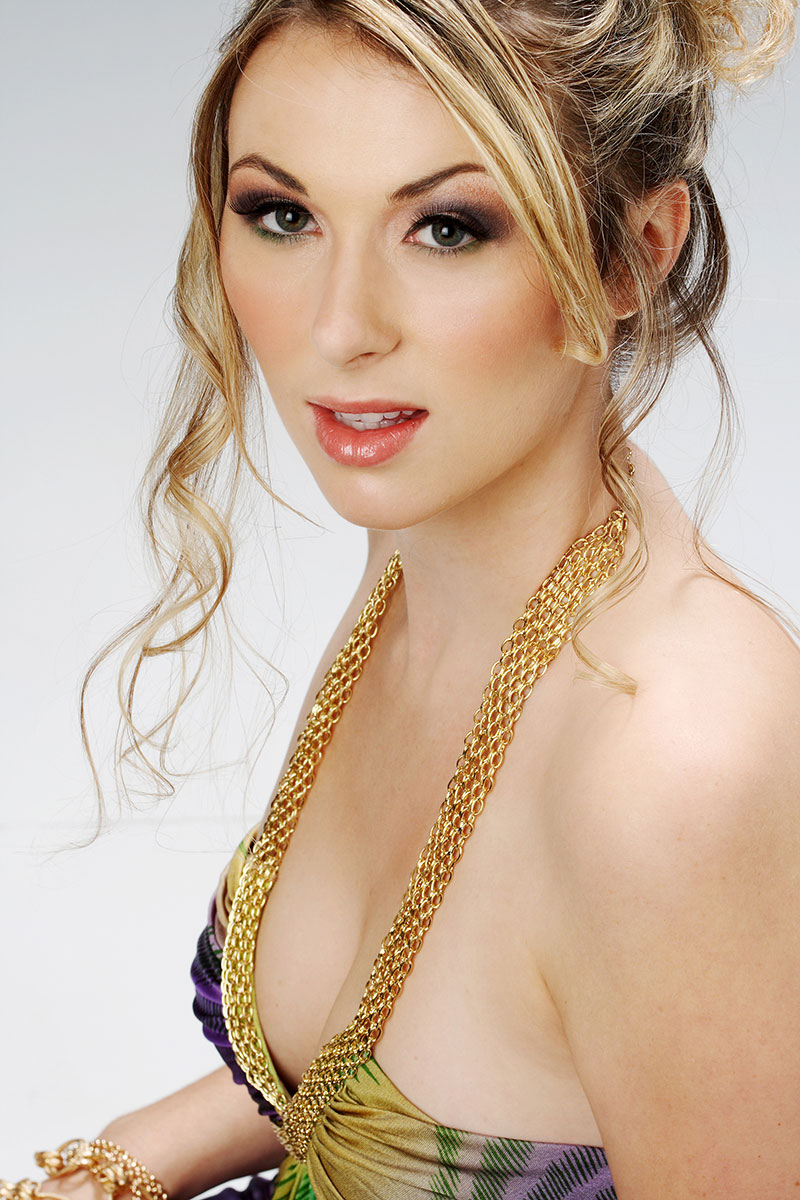
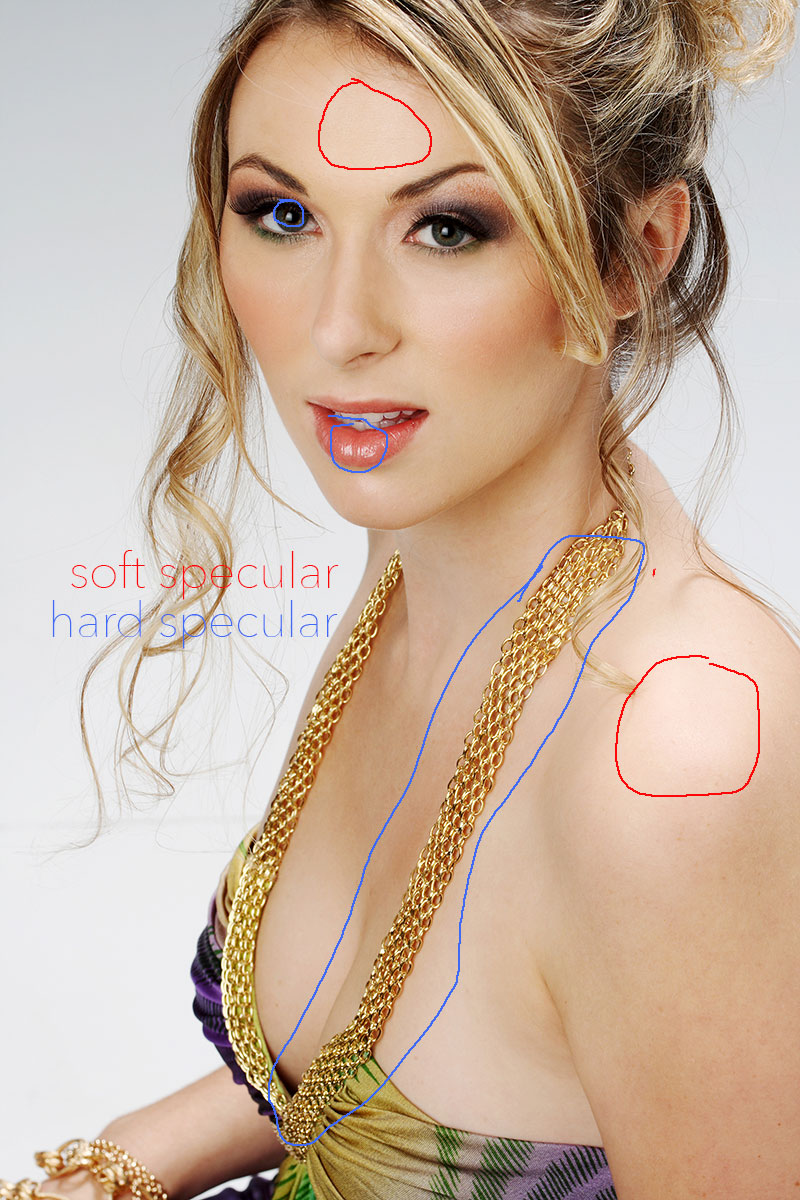
This image shows a lot of true value skin tone. One of the reasons is that the model is not shiny (wet) or perspiring to cause a shinier surface. Powder is used to intensify the diffuse skin (true value) so the speculars (in red) are presented softly. The blue speculars, however, are presented with very sharp transitions. Note that the specular on the shiny lips is absolute, with no soft transition. The gold jewelry on the dress shows as highlight/black because the reflection of the light source from the shiny metal is absolute.
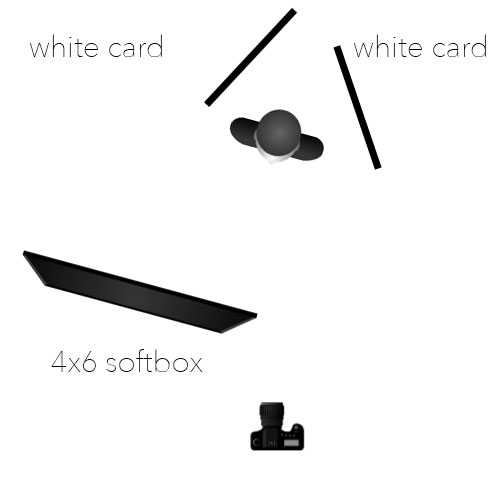
Lighting: Very large softbox directly in front of the model, and back 5 feet. White cards are positioned on either side of her, but pulled back to a point where they will not reflect in her eyes.

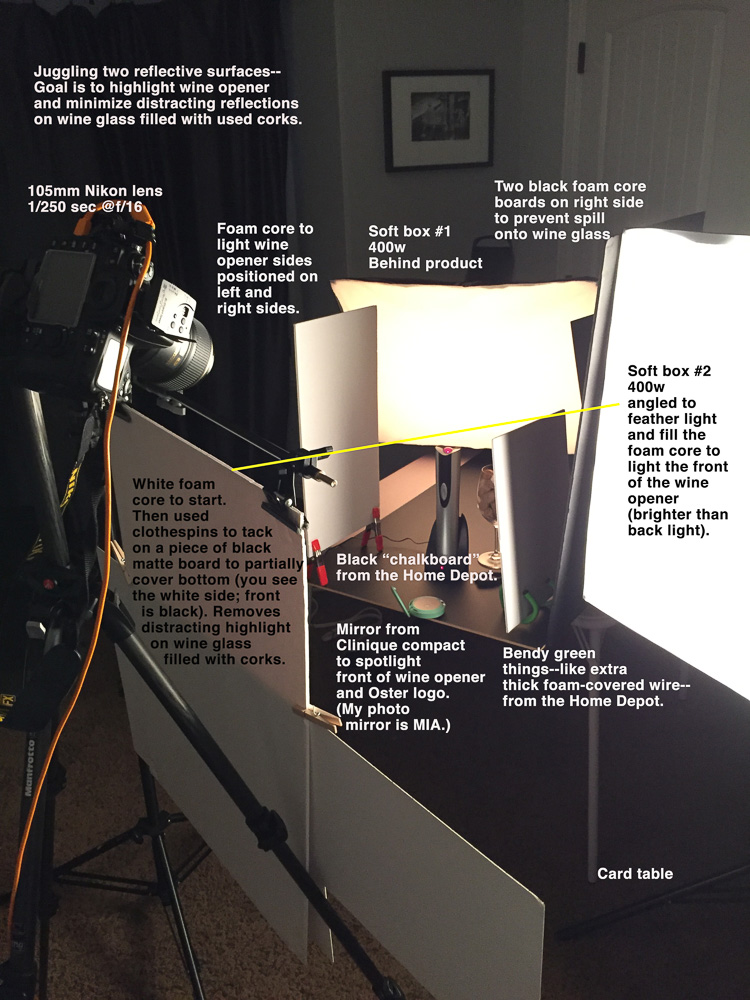
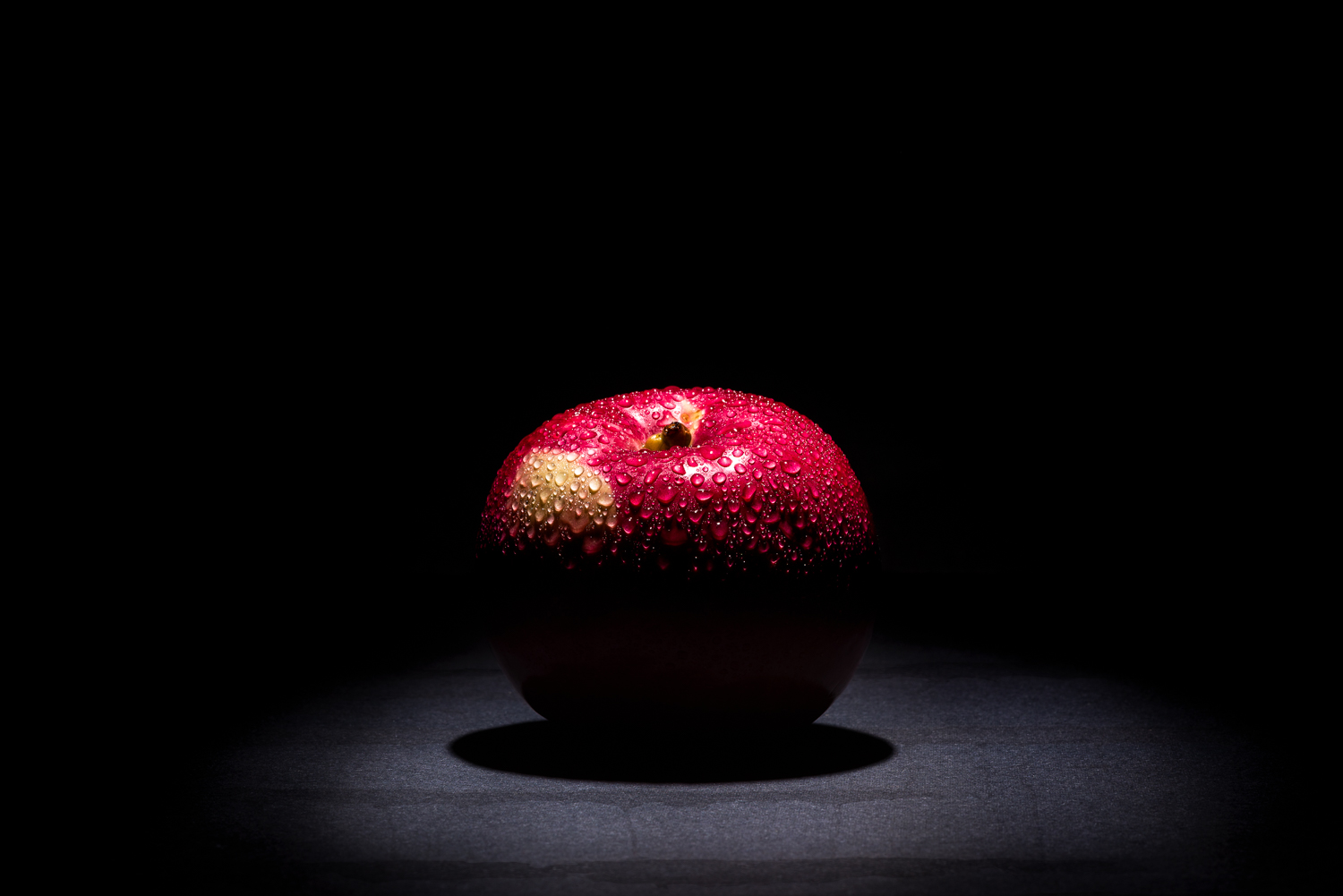
Photographer Anne Stephenson shows how to control the specular, true value, shadow and transitions in this seemingly simple table top product shot. As you can see, nothing done well is simple. Every kind of surface is in this shot.
Let’s start to put all of this together now.
What I’ve Learned So Far: Twenty Eight; “Photography is Jazz With a Camera”
[ REPOST FROM 2014. ] JAZZ... with a camera. Let's start out by saying I love jazz. I love the swing, the blues, the instruments and most of all the improvisation of jazz. I listen to all kinds of music as well, from Opera to Country, but jazz is where I return to get...

How To Find Your Style (Video)
How to Find Your Style in Photography. We find it looking back at our output, not ahead at someone else’s. Imitate. Assimilate. Innovate. - Clark Terry It is not what you shoot, it is how you shoot what you shoot. Most of us start out shooting everything that comes in...

The Top 10% Club and the $10,000 Gig
I discuss the 10% rule. It's easy to get to 50% in your art. Then it gets progressively harder. https://www.youtube.com/watch?v=7R634RFscpk Breaking into the 80% is hard, and many photographers work to stay in that group hoping to push into the 90% group. The ninety...
15 Things To Consider When Leaving Your Corporate Gig
Going Pro Photographer from a corporate gig is not as easy as many think it is. Here is part one of things that you should think about before making the switch. https://www.youtube.com/watch?v=s-Ddh2-BBnw The List Turn a 9 - 5 job into a 5 - 9 job Do not underestimate...
Planning for a Portrait: What Gear Do I Bring
https://www.youtube.com/watch?v=X0o1AbQOZKU Gear List: I would say that there are three levels of shooting, and unless I know ABSOLUTELY what I am walking into, I take it all. That said: Level one. Quick, on location shoot. 2 booms, C-stands 4 additional stands Tripod...
Behind the Image: Shoes
The assignment was to shoot men's or women's shoes. Keeping in mind all the parameters that shooting footwear demands, the photographers did a wonderful job. Here are a few of the best. https://www.youtube.com/watch?v=C2kIe9nvemM

One Image: One Vision
Here is our first "One Image / One Vision" online sharing meet. Each photographer has chosen a favorite image and will have a few minutes to discuss it. Helpful and positive feedback is encouraged. Our photographs: [gallery columns="4" link="file"...
The Headshot Ebook: For You
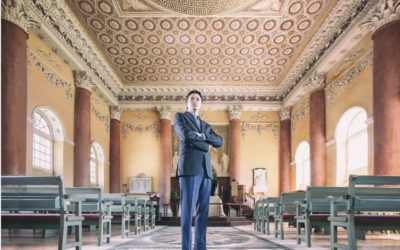
John McAllister is a talented and hard working photographer in High Wickham, Buckinghamshire. He specializes in product and people photography for commercial clients who expect exacting standards and high creativity. In order to serve his corporate and headshot...
THE MAMIYA RB 67; ONE OF MY FAVORITE CAMERAS
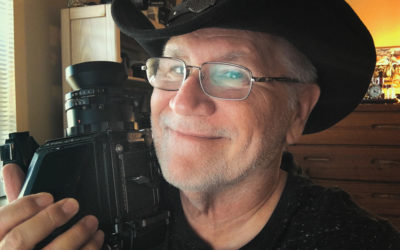
Looking to get and play with a film camera that has some weight to the images... well, this bad boy has some weight, and it makes exceptionally wonderful images as well. The Mamiya RB 67 is a medium format film camera that makes a 6x7CM image (2 1/4 x 2 3/4) on 120...

24 Frames In May; 2017
ANNOUNCING: 24 FRAMES IN MAY Our annual tip of the hat to Analog is underway next week. We will have some judges and some prizes may be awarded. We'll see. SUBMITTING IMAGES. CLOSES ON JUNE 15. Please attach one single image and the contact sheet from your roll of...
My Utah Trip With Maciej
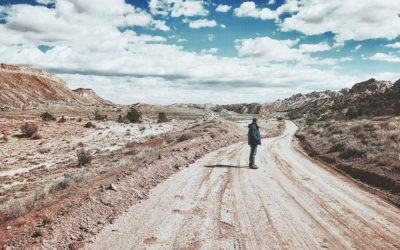
A few weeks ago, photographer Maciej Blaszczuk and I took a road-trip together. This was a consultation with him on how to grow his business, where to go with his new ideas, and how to implement them in order to be more manageable. I help photographers focus, and I...

Protected: FPCN AND P52PRO: OFFICE HOURS APRIL 22, 2017
Password Protected
To view this protected post, enter the password below:
Protected: FPCN: APRIL 15TH, 2017
Password Protected
To view this protected post, enter the password below:
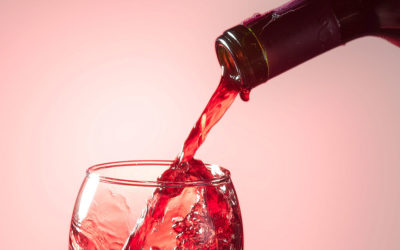
Protected: FPCN: April 8, 2017
Password Protected
To view this protected post, enter the password below:
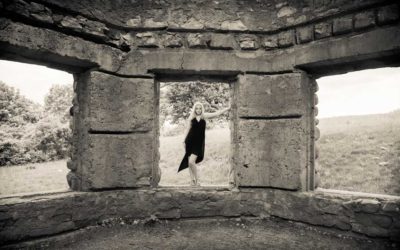
27 Images That Show the Diversity and Power of Black and White Portraiture
27 Images That Show the Diversity and Power of Black and White Portraiture Black and white portraiture is not simply the decision to desaturate the color from an image, it is a decision to remove color to create something powerful and artistic. Monochrome portraitists...
Behind the Image: Pour Shots
The assignment was to shoot a pour shot, and the P52 members really stepped up. These four shots caught my eye not only because they are really fun but because their approach and setups were quite well thought out. I hope you enjoy the little critique and BTS shots by...
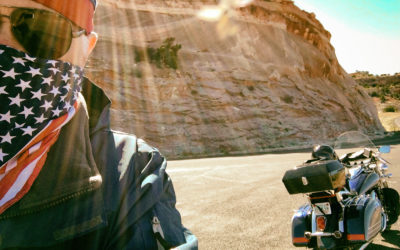
“Understanding Photography in a Social Media World”
I was asked to speak at CapturePhotoCon in Phoenix a few weeks ago. This is the slide deck for that presentation. If you have any questions, let me know in the comments. UNDERSTANDING PHOTOGRAPHY IN A SOCIAL MEDIA WORLD: KEYNOTE

Protected: FPCN WEBINAR: APRIL 1, 2017
Password Protected
To view this protected post, enter the password below:
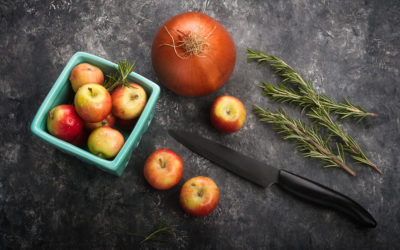
Protected: FPCN: Webinar, March 11
Password Protected
To view this protected post, enter the password below:
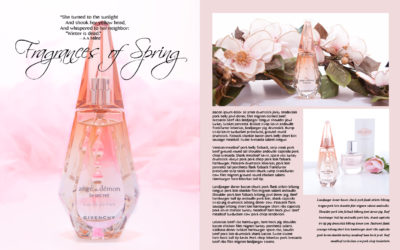
Behind The Image: Selections 3-12-17
I chose nine images to look at today. These were all gathered from recent Project 52 assignments, and I think you will find them very intriguing. Project 52 introduces photographers to the real world working environment of assignment photography. The challenge of...
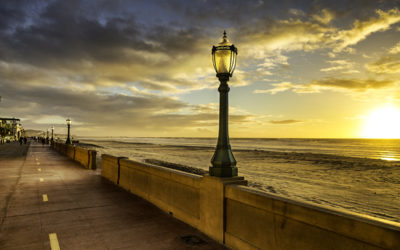
“Are We Entering Photography’s Golden Age”
Always nice to be published on DIY. Are we entering the "Golden Age of Photography"? Actually, I think we are. In many, many situations, the visual is the main thing driving the brand. From red soles on women's shoes to the shape of a vodka bottle, visual stimulus...
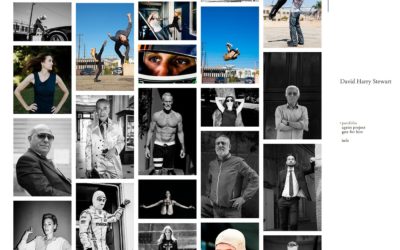
INTERVIEW: DAVID HARRY STEWART
David Harry Stewart is a photographer that I have been following for many years. His work touches every point in my aesthetic list, and it was a super treat to speak to him last Tuesday. David Harry Stewart Website Instagram Behance Ageist...

Protected: FPCN: Webinar, March 4, 2017
Password Protected
To view this protected post, enter the password below:
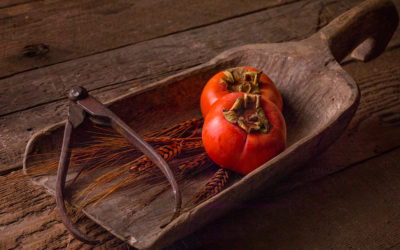
Behind The Image: Still Life
The assignment was to focus on textures and patterns for backgrounds or surfaces. These photographers created images that blended texture / subjects together to make images that are compelling and draw the viewer in. Let's take a look at the images. Barbara...