
Subject Centric Lighting: The Five Areas of Light Presentation
Cover image by Project 52 student, Gabriel Alvarez.
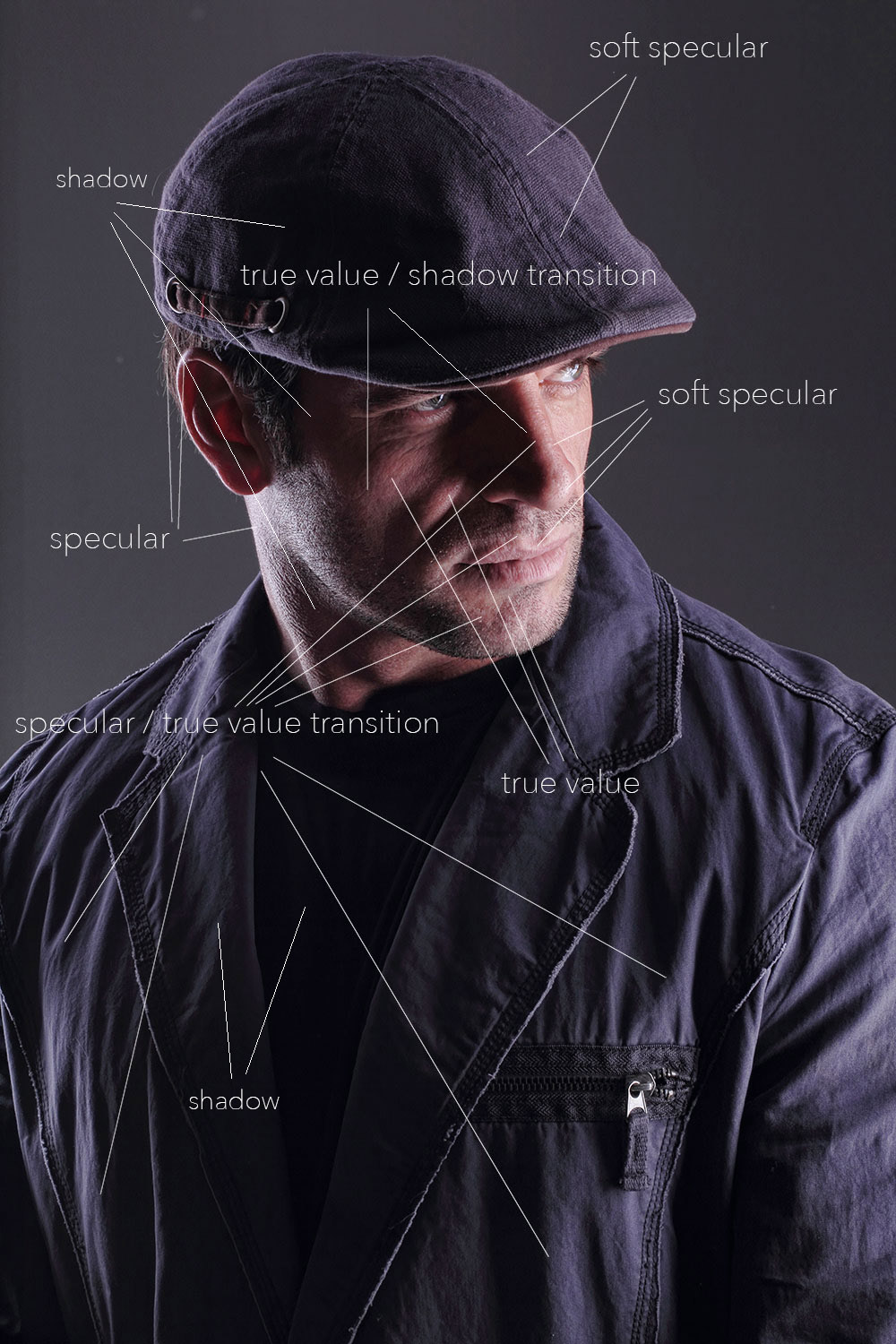
When the lighting choices we have made are used, the light is ‘presented’ back to the camera in expected, and controlled ways. There are five parts of the light presentation, and we use them in every image we make.
True Subject Value:
What the subject looks like when not in specular or shadow, this is the area that shows us the color of the subject as well.
Specular:
The exact or absolute reflection of the light source.
Specular Transition:
The point where the specular reflection transitions to the true subject value
Shadow Transition:
The transition between True Subject Value and Shadow
Shadow:
The places on the image that are not lit, the opposite side of the light source.
These areas of light are found in nearly every subject. By understanding what they do, and how they are controlled, we can understand much more about the light that is used to present these areas in the ways we want to show them.
In other words, knowing what causes a shadow transition, how to present true value, and how to control a specular highlight means we have control over our lighting and we can create the looks we want. Whenever we want.
Photographers and artists use these representations of light to show texture, shape, dimension, color, clarity and mood. Illustrators use highlight and shadow in their work to create their own light. And they use the same tools to light their drawings, although quite imaginary, as photographers do.
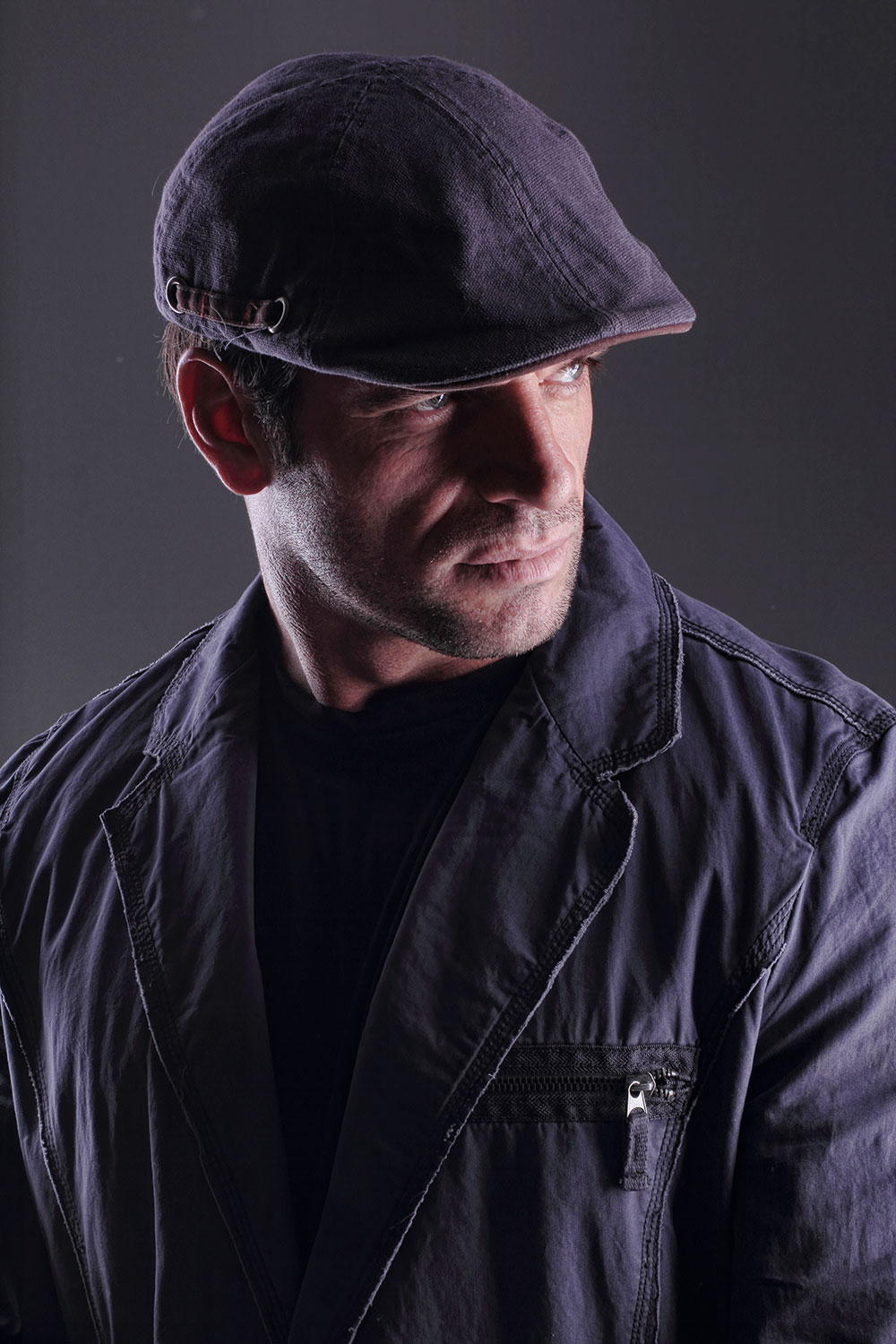
We can see all the presentations of light in this image of Inaudia.
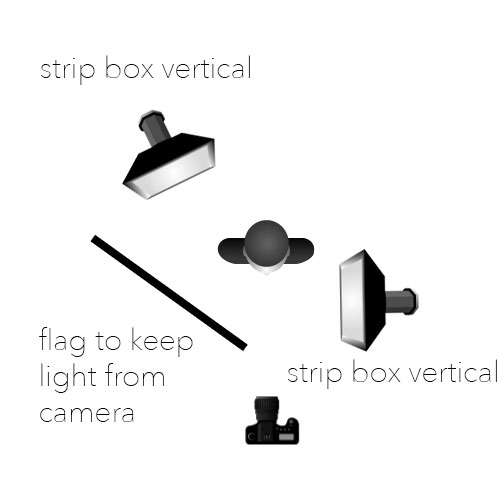
Lit with two strip lights (one on each side), the one on camera left is behind Inaudia and aimed forward just bit. The one on the right is slightly in front of him, and angled at an oblique angle.
This renders two different kinds of specular presentations, the absolute one on his neck and left side, and the softer one on the right side.
All of the transitions are there, and these transitions are what we see when we are determining soft light from hard light. A fast transition is a hard light, where a softer transition – as in the picture below – is a softer light. We would call this image a hard light image because of the fast fall off in the transitions between highlight and true value, and true value and shadow.
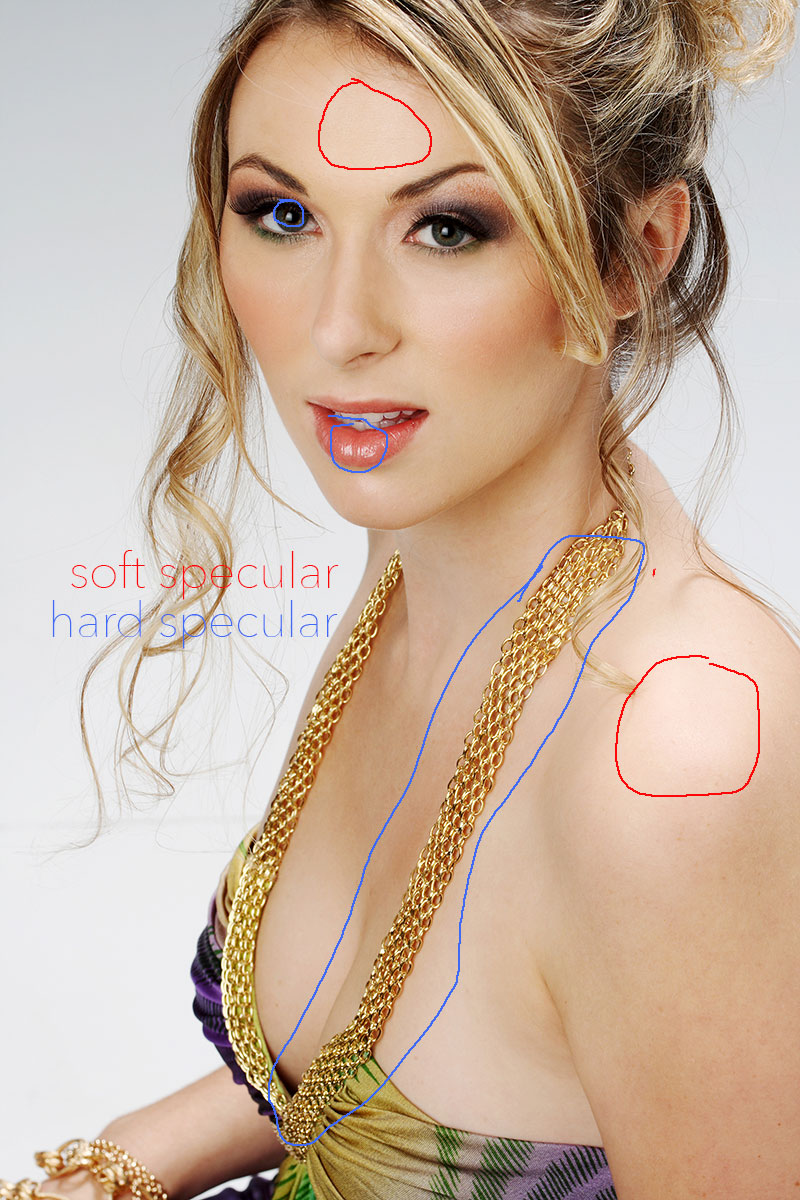
This image shows a lot of true value skin tone. One of the reasons is that the model is not shiny (wet) or perspiring to cause a shinier surface. Powder is used to intensify the diffuse skin (true value) so the speculars (in red) are presented softly. The blue speculars, however, are presented with very sharp transitions. Note that the specular on the shiny lips is absolute, with no soft transition. The gold jewelry on the dress shows as highlight/black because the reflection of the light source from the shiny metal is absolute.
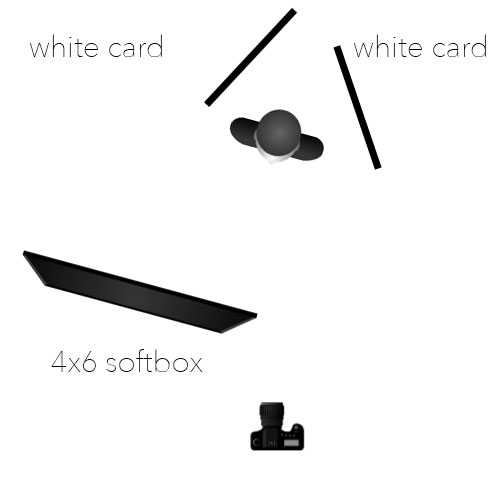
Lighting: Very large softbox directly in front of the model, and back 5 feet. White cards are positioned on either side of her, but pulled back to a point where they will not reflect in her eyes.


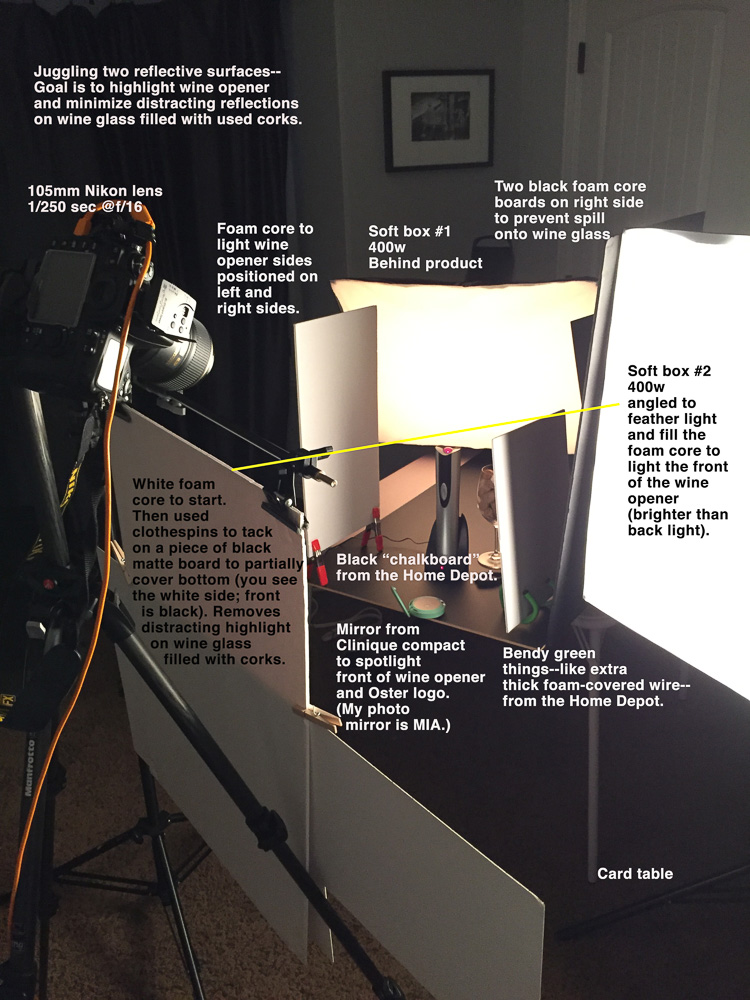
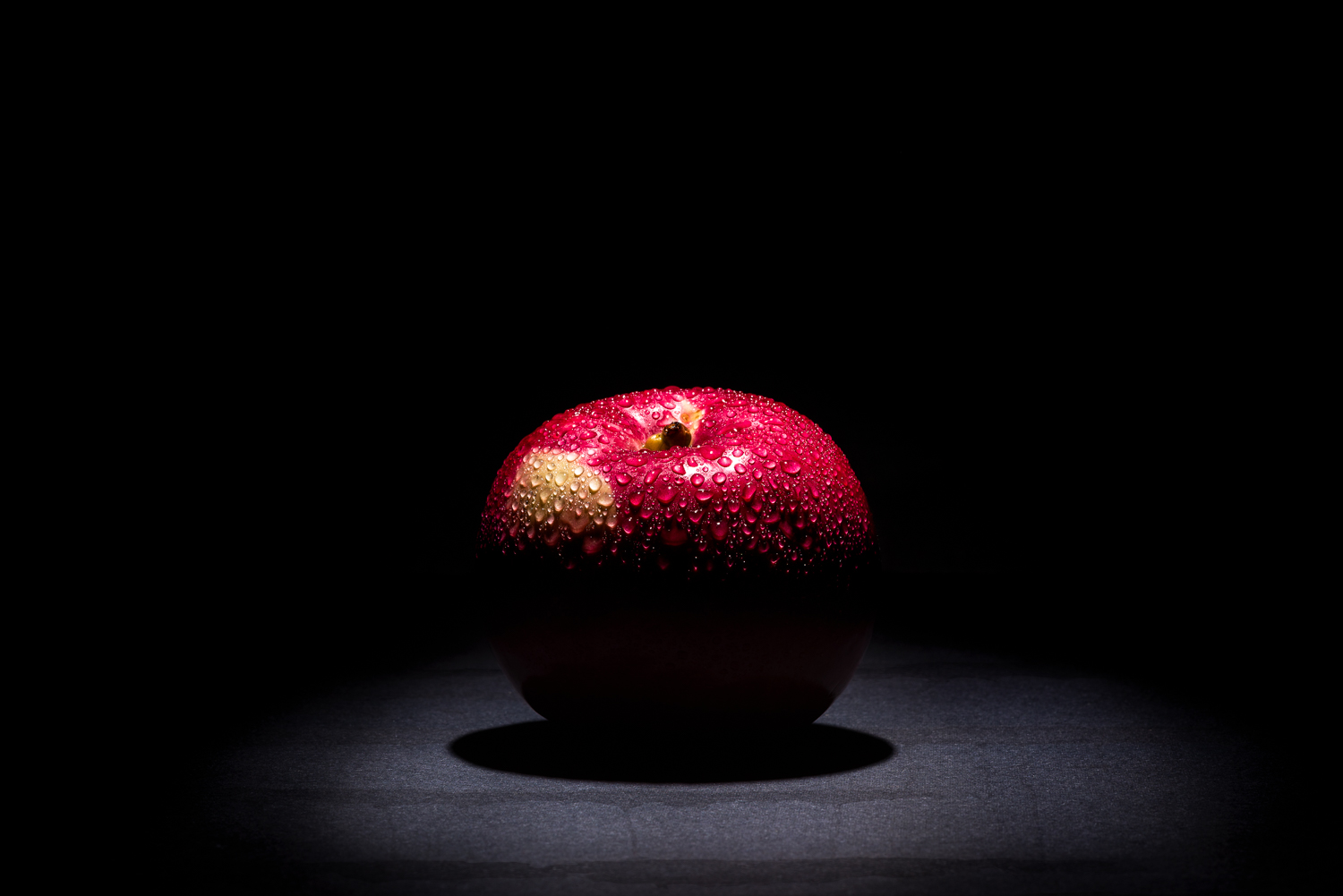
Photographer Anne Stephenson shows how to control the specular, true value, shadow and transitions in this seemingly simple table top product shot. As you can see, nothing done well is simple. Every kind of surface is in this shot.
Let’s start to put all of this together now.
Portrait Class Members Discuss the Workshop
"Imitate. Assimilate. Innovate." - Clark Terry, Jazz trumpet genius. This portrait class (and the companion 102 class) have been huge successes. The students are fired up and some are saying they are making the best images of their lives. We look closely at the work...
24 Frames In May
Begins today. It's a non-contest, and just for fun. Not many rules, but a few guidelines: This is for film cameras only. Black and White or Color is fine, and there are no restrictions on the type of film you shoot. Polaroid is OK. 4×5 or sheet film cameras are OK....
New Photography Books
From Amazon. I love Photography Books, and have a wall of them waiting for me when I have some quiet time and simply want to stimulate my brain. From early works of Steichen and Cunningham to books by Demarchelier and Watson, the photography book is one of my great...
Light Conversation, Volume 2
A new bi-weekly, Lighting Essentials program. I call it "Light Conversation" and we discuss all things photography. Our next discussion will be Monday, May 11. Open to all LE readers. https://youtu.be/_O4uR0bU04Y Some links from this discussion: Canon white balance...
Two New Online Workshops
Project 52 Project: Incredible Egg (Shot to Layout)
The layout was furnished and the photographers had to shoot to a fixed set of parameters. Size and position of the type could not change. [gallery link="file"...
Nicole Fernley: Cookbook Project
Project 52 members sharing recent work. Nicole Fernley: "These four images come from a larger selection of images that I recently shot for The Cheese Lover’s Cookbook, so the common thread is, of course, cheese. The cookbook author made most of the food, and we worked...
David Price: Illustrated Proverbs
David Price: "This project grew out of some recent discussions about drawing inspiration from anyone, anything, and everything around you. I admit, I drew a lot of inspiration for this idea from Irene Liebler’s series she did across last year of Common and Idiomatic...
Learning from the work of Ritts, Lindbergh and Moon; Hiram Chee
Hiram Chee, one of the longest running members of Project 52, shares a post of portraits he did during the 8 Week Portrait Class. Learning from the work of Herb Ritts, Peter Lindbergh and Sarah Moon Check it out for some wonderful portrait work.
Anders Eriksson: “Cars and Drivers”
Anders Eriksson: Anders Eriksson
From the Early Days of Color Photography
The year was 1913. I absolutely love these images. From composition through framing and of course the patina, they are simply lovely. "Mervyn O'Gorman was 42 when he took these pictures of his daughter, Christina O'Gorman at Lulworth Cove, in the English county of...
Carol Rioux “Revealing a Portrait”
Carol Rioux: "I chose to make a series of portraits of a single person. I chose this project because I am very interested in everything that constitutes a person as it is important to me to capture who a person is not just a pretty picture. I photographed parts of...
Jay Chatzkel: “The Neighborhood”
Project 52 members share recent projects. Jay Chatzkel: A Day in the Life of the Neighborhood (PDF) Jay Chatzkel
Anna Gunn “Dreams in a Suitcase”
Project 52 Member shares recent work. Anna Gunn: "Concept: a girl who carries her dreams in a suitcase. These dreams aren’t plans, or in any way constructive – they are merely a distraction from the beautiful, fleeting moments that life places in front of her. Yet...
Read more“I have always been more interested in the power of what a good photograph or film can do – not who created it and what box that creator fits into. I’m interested in the story one has to tell. We are visual communicators and we are all unique but only if we listen to our own voice and create from that voice. Whenever I have trusted and listened to my internal voice and created from my own unique perspective and my life’s experiences, I have been “on purpose” and my work has resonated across genders, race and age. I suppose I could copy or mimic the “style du jour” whether it is HDR or photographing hipsters with tattoos and attempt to be someone I’m not. I don’t have the desire to do that because that is not why I became a photographer or filmmaker. That’s not to say that I don’t like and appreciate photographers who are following these styles but it’s not me and creativity doesn’t come from mimicking others. I’ve seen a lot of styles and techniques over the decades I’ve been in the photo business. They come and they go – just like the photographers who chase after the latest trend.”
“Labels, Finger Pointing, Fear, and the Real Value of Photography”
"I have always been more interested in the power of what a good photograph or film can do – not who created it and what box that creator fits into. I’m interested in the story one has to tell. We are visual communicators and we are all unique but only if we listen to...
Catherine Vibert: Environmental Portraits
Project 52 Members share some of their recent project work over the next five posts. Catherine Vibert: "Environmental Portraits & Personal Branding. Through the course of the year of the Project 52, I found that my favorite subject to shoot is people. I especially...
Portraits Inspired by Gregory Heisler
We spent a couple of weeks studying the work of Gregory Heisler. He is a remarkably talented photographer with a very disciplined approach to image making. The goal was to learn from his approach and find the inspiration to make images from what you garnered from the...
24 Frames In May (2015 Edition)
TWENTY FOUR FRAMES IN MAY Last year the Project 52 folks were invited to a special project: shoot 24 frames of film in the month of May. The idea was to treat a single frame of film with the same deliberate attention we would give it if it were a sheet of 8x10....
Portraits Inspired by David Bailey
Monday I shared the images from the 8 Week Workshop, and today I share some from the Portrait 102 Workshop. These photographers studied the work of David Bailey and were inspired to make some lovely portraits. [gallery columns="4" link="file"...
Ten Things About ‘Creativity’
Occasionally we find ourselves in an argument of whether or not 'creativity' can be taught, or does it have to be born within us? We read all about creativity and how important it is. We award little statuettes to really "creative" people. Creativity is blessed,...
Protected: “Light Conversation” Volume One
Password Protected
To view this protected post, enter the password below:
Portraits Inspired by Jeanloup Sieff
One of the photographers we are studying in the 8 Week Portrait class is Jeanloup Sieff. This master photographer created images in almost every genre from portraits and nudes to landscape and commercial. The idea is not to copy the work of each of the photographers...
These photos are sweeet!
The project 52 group looked at photographing sweets and chocolate this week. Some very tasty images were shot by the gang. I figured since it is Friday, I should let you in on some of them.
An Open Letter to People Who Write Open Letters
Last week an open letter dispute erupted on social media. That could be said of just about any week on social media, but this time it was about a photographer and a band who wanted to use a photograph. I found myself intrigued but after reading both letters I felt...