
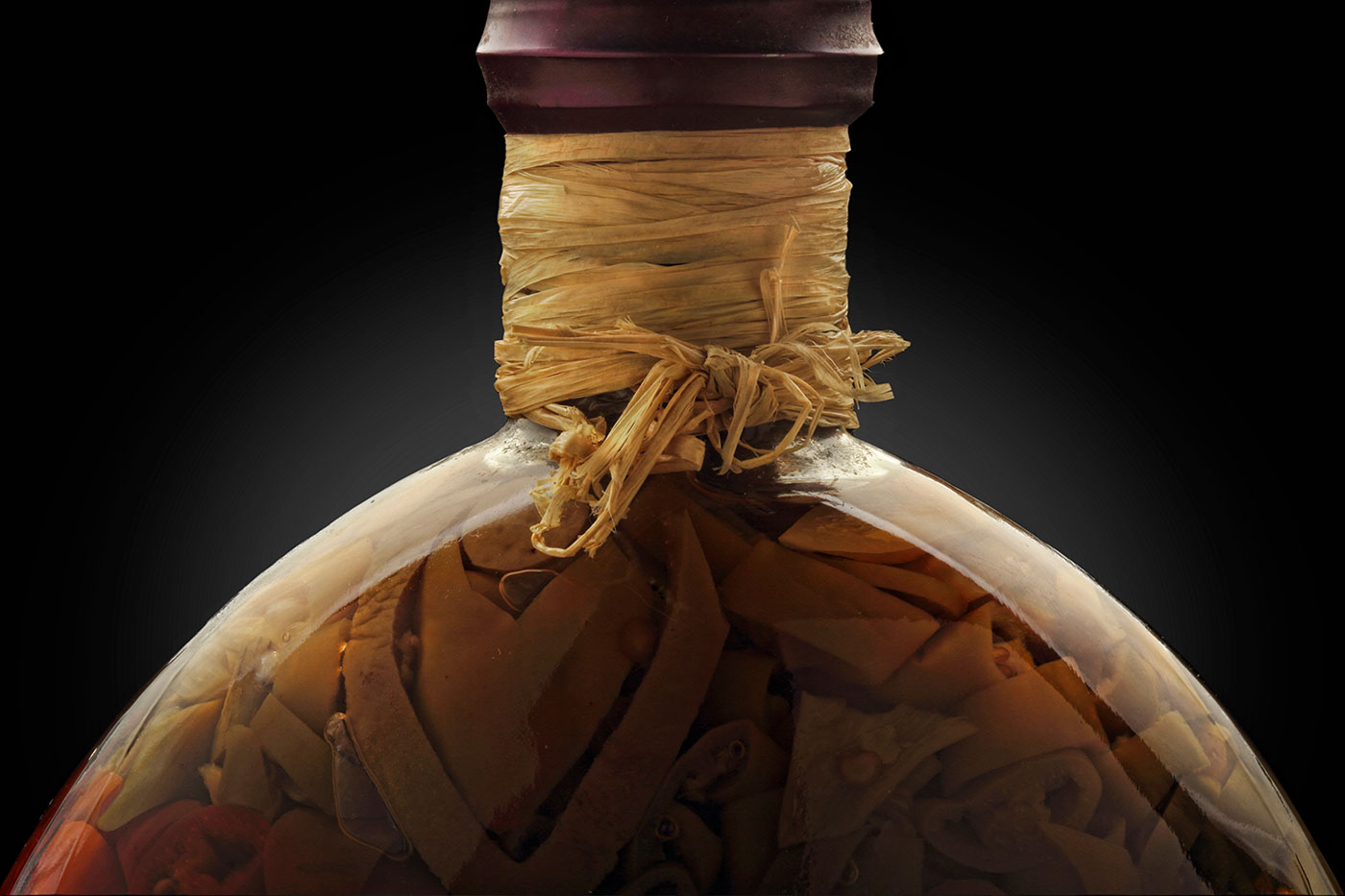
Shiny or Glossy surfaces:
The third of our major surface efficiencies is glossy or very shiny surfaces.
The complete opposite of the textured surface, the glossy surface will record the reflection of the light source absolutely. That means we have to be very careful with our light sources… they will be shown in the object.
Umbrellas may be seen in their totality, the studio can be reflected into the camera, busy, confusing surroundings will find their way to our lens via the absolute reflectance of the subjects extremely efficient surface.
Of all the surfaces, shiny will be the most challenging. There is no room for even a bit of sloppiness in lighting angle or source choice. We will actually see the light in the reflection so it is part of our subject.
Where light was used to render subjects with texture and matte, it is itself part of the image when the surface is shiny, or very efficient.
(I am often asked how to light a car. The first thing I say is that you shouldn’t light the car, light what the car is going to reflect… because that IS the lighting on the car. The absolute efficiency of the paint is going to reflect whatever the photographer has put at the angle of incidence in order to present it to the lens.)
Example of a car shot:
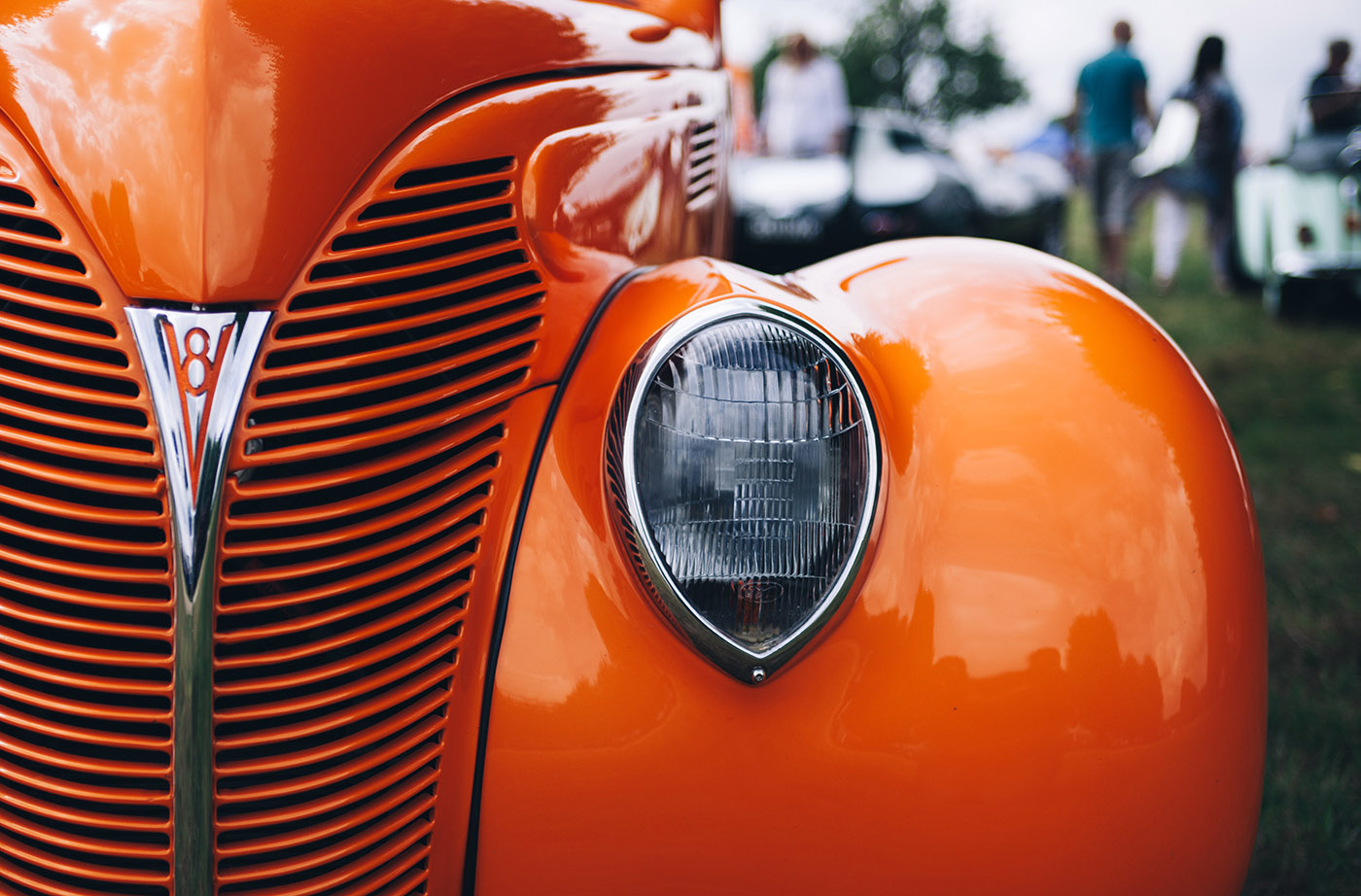
In the shot above you can see the reflection of the trees and buildings behind the photographer. The absolute efficiency (gloss) of the paint reflects what it sees (angle of incidence = angle of reflection) and we can see clouds, threes and more in the paint. If we wanted the paint to be more controlled we would have to control what it ‘sees’. And then reflects.
Motorcycle in the sun.
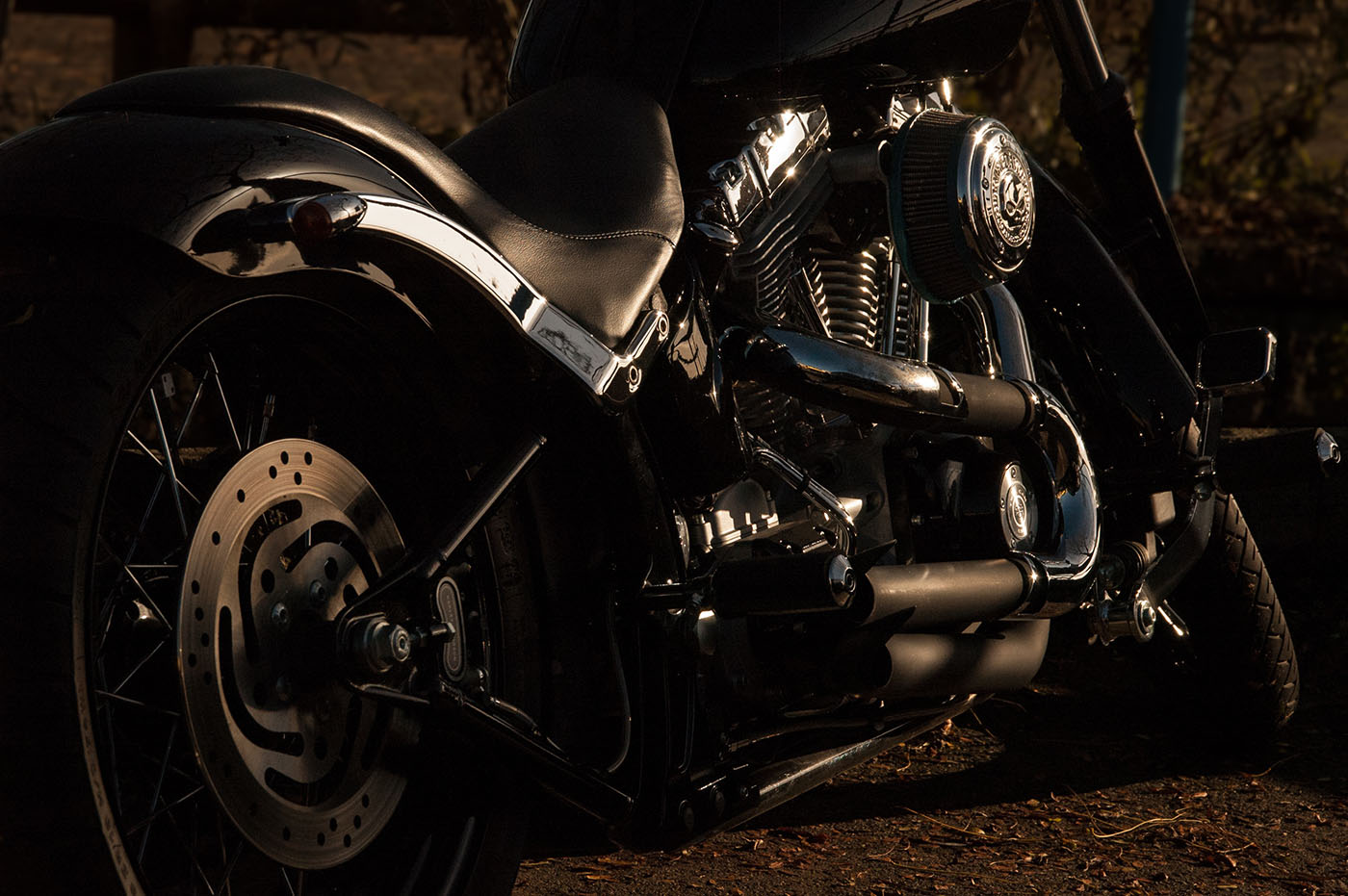
The motorcycle above shows different efficiencies on the surfaces. The sun, a very small light source, provides a diffuse light on the textured leather seat and the brushed metal braking pad in the back. It also provides a somewhat diffused presentation from the black parts of the chrome pipes. But where it is striking the chrome, it is either an absolute specular or there is no reflected light at all. The chrome areas are reflecting what they see, and in most cases, they are seeing a dark void. You can see the street and surrounding area in the curved pipe in the middle of the photograph. Want ‘chrome’ pipes? Put white cards where they will be reflected back to the camera.
Glossy and shiny items are everywhere in our lives. From iPads and computers to glassware and furniture. We must learn the difference between lighting for texture and matte, and lighting for glossy. While both are photographic lighting, they have very different results if approached the same way.
I approach shooting something shiny differently than shooting texture or matte. The reason? Texture and matte will not show my light sources and shiny will – absolutely.
One place that shiny surface exist in an otherwise matte area are eyes. Eyes are quite efficient because they are a glossy surface with moisture. Can’t get more efficient than that.
Eyes absolutely reflect the source of the light. If you are shooting with a big umbrella, it will be seen in the eyes. If the choice is a softbox, it will be seen as a square highlight in the eyes. A photographer can even simulate ‘window’ light by putting black tape in a grid pattern across the softbox diffusion panel, and the eyes will render it as ‘window panes’… pretty cool, eh?
And it is a challenge too. Eyes reveal what the light source is, where it is, and how many lights were used. We can see reflectors and occasionally ourselves, in the reflections from the eyes.
Example of eyes;
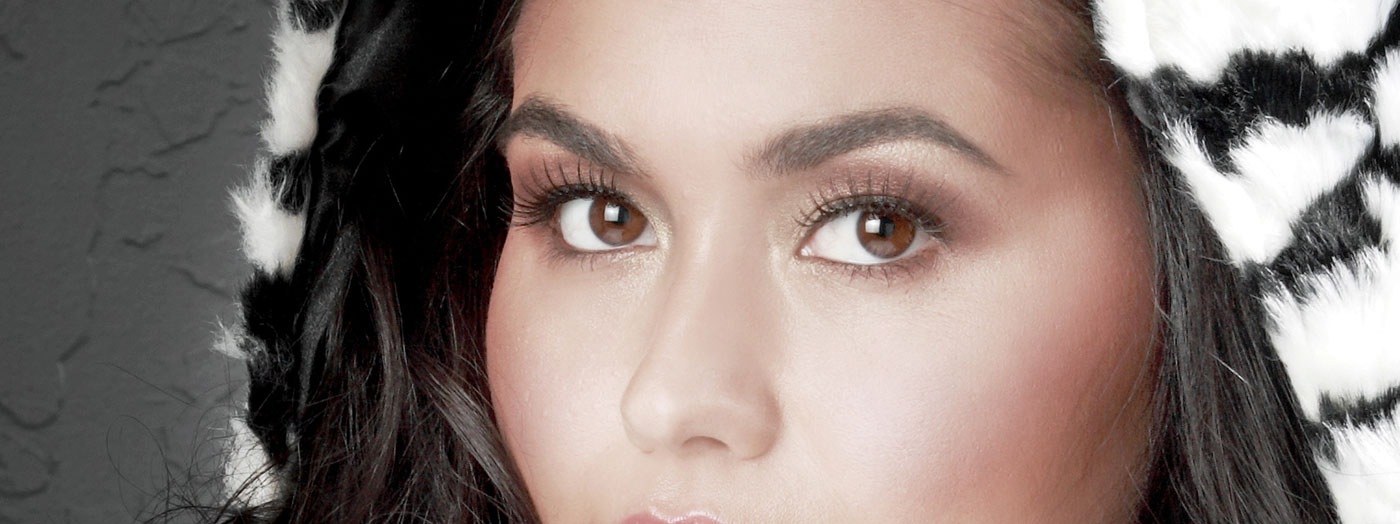
As you can see, the eyes are so glossy they reflect the square softbox used for the main light. Look closely and you will see the white card in front of her providing the ‘beauty fill’ to the underside of chin, nose, and eyes. Surrounding the super efficient eyes is a more matte surface that allows the light to be diffused in presentation.
Another area on a face that can become efficient is the lips. We can add lipstick or lip gloss to enhance the surface efficiency of that area. After adding shiny lipstick, the lips will begin to reflect the light source absolutely, but because the area is small, and still has texture, the source is not revealed absolutely as it is with the eyes.
Shiny, efficient surfaces, like glassware and computers, become a challenge because of the rounded edges and absolute reflections of the surroundings.
Controlling the area around the shiny subject can be as important as the lighting itself. I have large black pieces of cloth that I regularly hang to make sure that the studio itself is not registering as a reflection in some of the glossy objects I shoot.
When shooting subjects with high surface efficiency, control is the word of the day; Control of the surroundings, control of the light, and control of the reflection. Other than all those control issues, shooting shiny stuff is a piece of cake.
Just put the light at the angle that puts it where you want to see it reflecting from the subject. Done.
Done.
Well, yeah, there is a little more to it than that.
And we are going to go into depth with all the controls we can use as we progress through the course.
ASSIGNMENT
- Find glossy items and photograph them in the natural world, and then surround them with white cards in such a way they reflect those cards back to you.
- Explore ways to show how glossy something is by using the light source reflecting in it.
- Photograph cars or motorcycles with interesting reflections.
Playin’ in the Studio When it is 115 Degrees Outside.
I wanted to do some playing around with hot lights and chose my Lowell Omni and a Home Depot work light. I kept them without modification (no umbrellas or softboxes.) Hard light is tricky, but it can really keep you on your toes when you are looking at the light and...
One Light, and a dash of Photoshop
This is a fun little project. I shot Briana in the studio and recorded most of it on Video. I took the video, did very little editing and added a soundtrack of me explaining what I was doing. You see all of her posing as well as hearing me giving directions along with...
Glamour in the Studio with Briana
This set of shots was done to show how to use some of the tools simply and easily when in a studio setting. I used very simple tools, a softbox and some reflectors and a hot light with cookies and fill cards. The shoot was a lot of fun and you can see how many ways...
Minimalist Shooting
Sometimes we get too caught up in having the latest and greatest and forget that the at the core a lens and a camera are what we use to create images. I refer to it as minimalist shooting, and I do it occasionally to bring me closer to the base... find my center, so...
Simple, Yet Dramatic Light for Headshots and Portraits
This is what I refer to as my "Classic Glamour" light. Single light, with large umbrella, shiny fill card and two large fill cards close in on both sides. I can control the fill by moving the shiny card up and down. In this shot it is right out of frame. I keep the...
Single Light Fashion
This is a single light approach with a large softbox. I chose the large box because of the incredible texture of the dress. I wanted a nearly liquid look to the fabric and the large surface of the box would reflect nicely on it. The box spilled too much light on the...
A Selection of Headshots with Different Styles
I thought it would be good to discuss a few images from the past. You can tell by the hair and makeup that these are not recent images, but I thought I would share a few interesting lighting schemes that are easy and fun to deploy. The goal for the lighting for me is...
One Strobe, a Diffuser and a Touch of Natural Light
These shots were taken on location in a dance studio. There was a lot of light bouncing around in there, but not enough for pretty headshots. I set up the shower curtain hanging from a boom. Since the client was my wife, it was fine to use these materials without a...
One Large Light on Location for Portraits
Asked to shoot 40 non-models at an upscale salon was quite a challenge. I needed a light that would serve many different faces and people types. I would literally have only a few minutes with each and they would be nervous so working the light in many different ways...
Mini Workshop: Location Portraits and Glamour: 9/1/07
I didn't realize until too late that I had chosen the Labor Day weekend for the workshop date. I had lots of interest, but only a few folks could actually make the date. Rather than cancel, I took it as an opportunity to change up the workshop to a totally location...
Glamour Lighting: lots of fill
This lighting is a staple of mine and creates a beautiful, soft, glamour light that wraps around the face. Keeping the umbrella this close gives some fantastic highlights in the hair and a very bright, kick to the eyes. Notice in the movie that the photographer moves...
Creating Good Headshot Lighting in ‘Bad Light’
There are times when the light simply sucks. We shot these at noon in May in Phoenix. Not the most perfect light at all. In fact, the harshness of the nearly top down light was brutal. This little soundslide movie will discuss how we did it. Enjoy
Using Gold Reflectors for Effect
I work with reflectors a lot. They are used for main light, bounced light, fill light, areas of light or color to be reflected back... all kinds of uses can be found for these versatile and lightweight tools. There are generally three different types of reflectors:...
LIGHTING ESSENTIALS IS UNDERGOING CHANGES
Hi... Lighting Essentials is undergoing a big overhaul. It will be live as we go along, with much better navigation and a much easier way to find what you need... Items are going up now and as we keep uploading you will see the site expand to its original glory...