
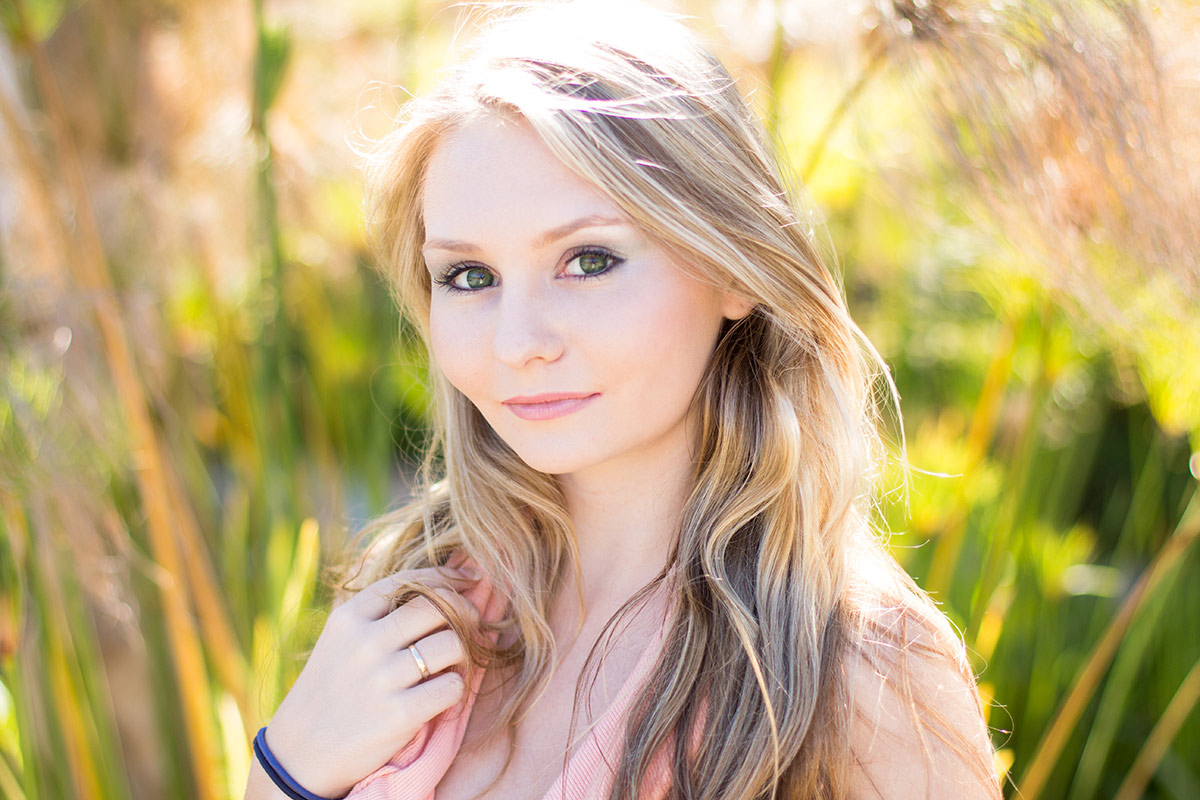
Matte Surfaces
These are surfaces that are not as rough as texture, but not smooth either. Skin, cloth, natural leather, finished woods and many food items are examples. Most of what we deal with in our daily lives would fall under the Matte surface example.
Matte surfaces have a softer way of showing us the reflection of the light source. Where texture showed us mini sources next to mini shadows, the matte surfaces have less of a drastic presentation. The surface doesn’t have that much difference between the size of the components of the texture. A cloth book cover has texture, but it is much more tightly confined than say old barn wood.
And the reflection of the source is shown as a larger area rather than many tiny reflections. This gives the texture a smooth and not altogether recognizable shape. There is an angle where the incidence will match the reflection, and be seen by the camera, but it will be a muted reflection, not a harsh one.
EXAMPLE of Matte Surface reflection of the light source. You can clearly see the reflection of the source, but the transition to the non-reflective areas is gradual and not defined.
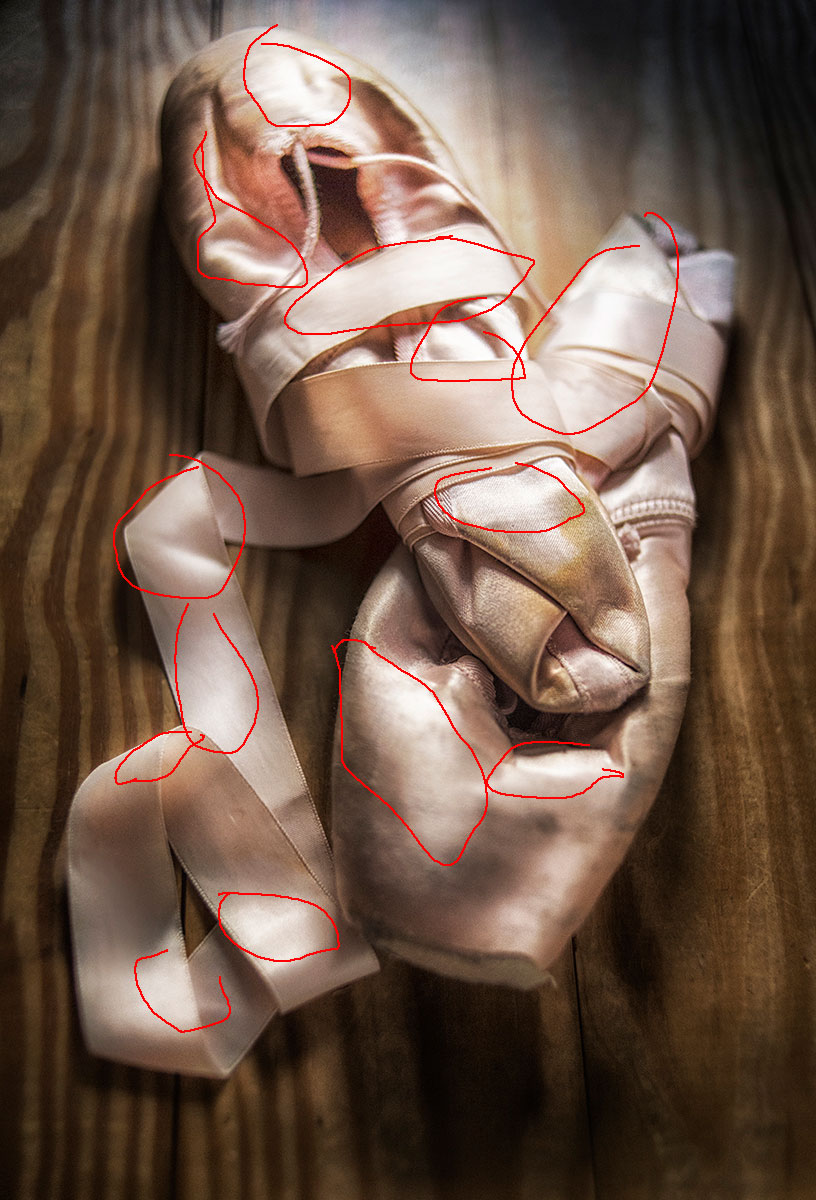
The ballet shoes are most defintely NOT a highly textured object, nor are they glossy.
Skin is one area of great interest. Portrait, beauty and fashion photographers have to be able to control the way skin looks for their imagery. And skin can present some widely diverse efficiency. Dry skin has a very matte look, wet skin becomes more efficient due to the water, and then the reflection is nearly absolute, and skin color can become an issue with the wrong kind of light presentation.
A good makeup artist helps to smooth out skin blemishes, we know. But the MUA also helps to matte the skin evenly so that the reflections of the light sources do not create very bright reflections on the face.
A model begins to sweat…err, sorry, perspire with the heat, and the skin becomes a bit more efficient due to the moisture. Liquid is much more efficient than skin, so the perspiration on the face becomes shinier. The remedy is a little bit of powder, which of course renders the skin more matte and less efficient.
Faces are full of contours and angles that can reflect the light source back to us. Tips of noses, eyebrows, cheeks, chins and foreheads are all areas of concern when we are shooting with light that has a small source. The small source can become a direct reflection on even matted skin, so keeping it within our tolerances is very important.
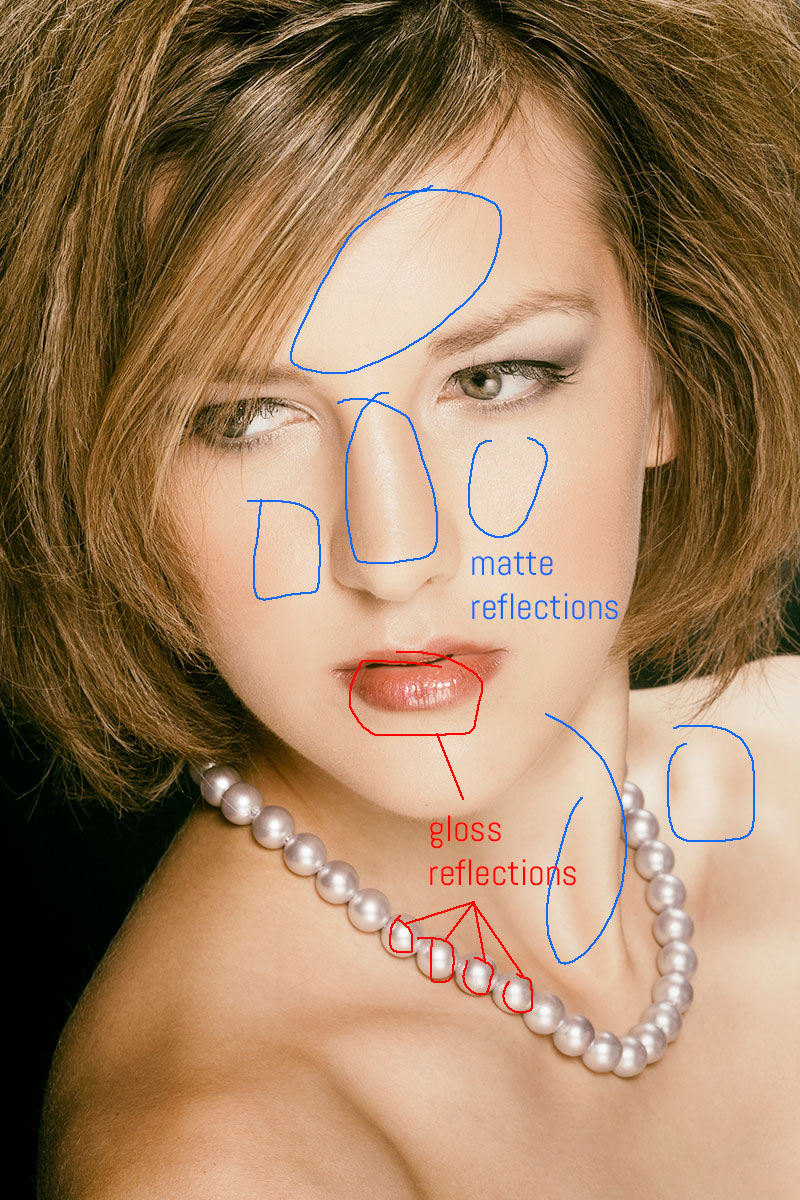
Again, you can see the very soft transition from the highlight to the non-highlight matte surface, where as the gloss lipstick provides a sharp, immediate transition to the non-reflective area.
Photoshop Note:
Trying to fix a small highlight on the tip of the nose, or one that is across the whole front of the forehead is painstaking and difficult. It can be done, of course, but working with the subject to make sure he/she is not rendering the light back to you in such a way as to need the Photoshop is much more preferable.
There may be times when we may want to enhance the matte texture, to make it more discernible, and bring out the texture instead of mitigating it.
Angle of incidence again comes to the fore. Angled to present even the smallest texture, the photographer can decide between broad light, like a softbox, or sharper light, like a direct, unmodified head, or a snoot.
Example of enhanced texture: Portrait of Tomas.
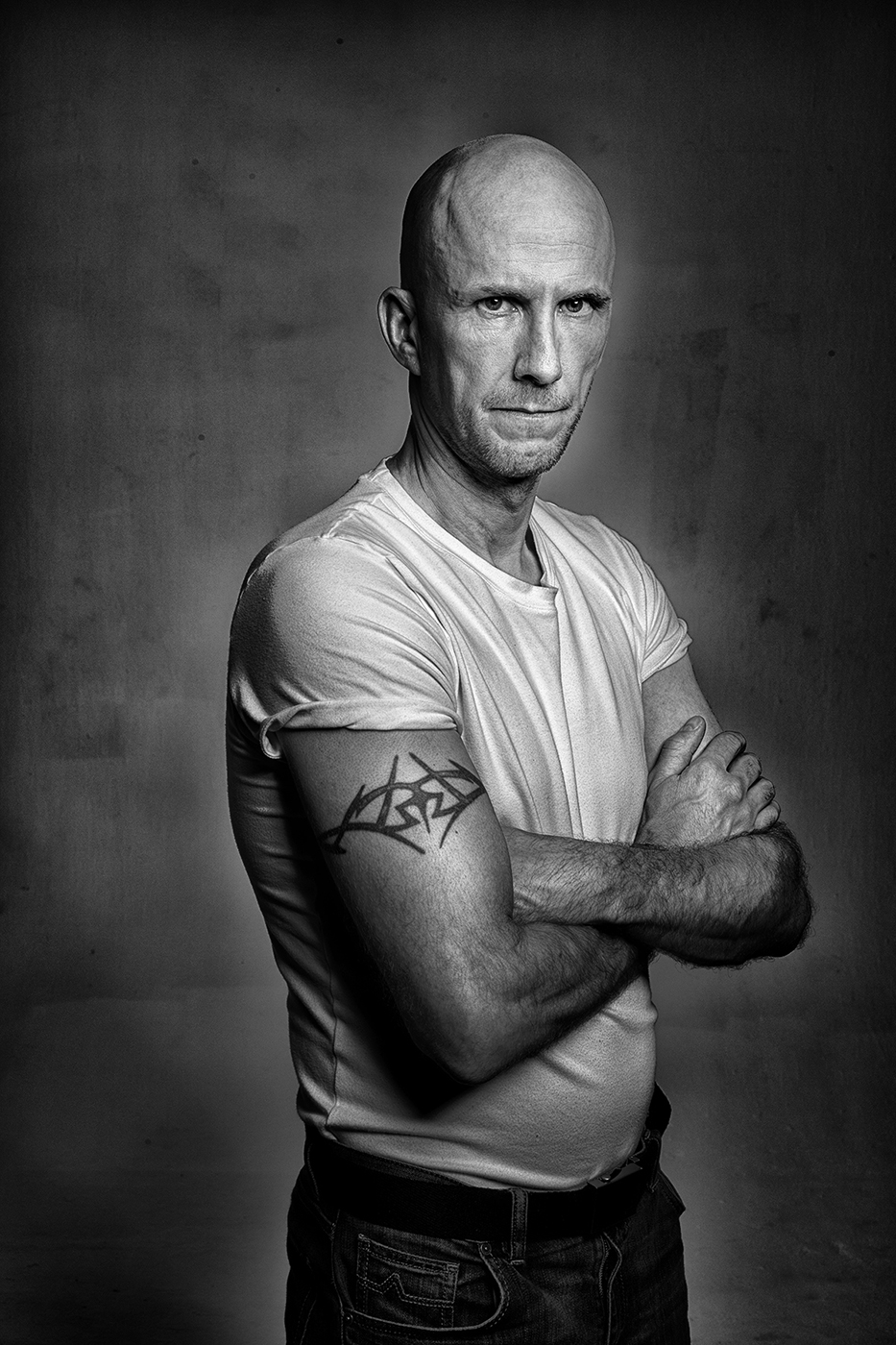
Even with the matte surface of the skin, by using a small lightsource (beauty dish at a distance) we can create more texture in this portrait by putting the light at more of a wide distance from the camera. This adds some texture from the sidelit properties of the subject. Enhancement in Photoshop is then easy, and keeps the matte surface for a cleaner presentation of skin.
Matte surfaces are where we can experiment and work with light to play down or enhance, or simply show it as it really is.
And most matte surfaces can be altered to create something more efficient or less. As we have seen, powder for skin can take away the ‘shine’ that we know is really the reflection of the light. Water or liquid can add sheen to the subject when we want the reflection. And we can use materials to create shine, like wax on a wood floor to enhance the matte to be more shiny by showing the reflection of the light as it renders back to us.
Remember that we all KNOW what shiny looks like, what matte feels like and how rough something is. It is part of what we learn from the beginnings of our lives. We touched, we saw, we felt… and we learned. Photographers aren’t creating anything new, we just learn to present it to others the way we want them to see it.
To recap:
Textured surfaces present small highlights and shadows because of the rough surface and how it reflects light. From a stone to a mountain, the texture can be enhanced by playing up the highlight and darkening the shadow.
Matte surfaces will show the highlight softly, allowing it to transition to the non-reflective part of the surface in a more gradual effect. This may be the most prevalent surface we have around us.
ASSIGNMENT:
- Look around at the matte surfaces. they will most likely be more numerous than very texturized things, or very shiny things. Take some time to quietly study what light does when it is refracted from them.
- Note how different light (direct / indirect) reflects from the surface. Make images showing the difference.
- Examine the ways that matte surfaces can become textured (heavy side/top light), or shiny (wetting the surface down changes its ability to render the highlight and now it becomes more efficient).
What I’ve Learned So Far: Twenty Eight; “Photography is Jazz With a Camera”
[ REPOST FROM 2014. ] JAZZ... with a camera. Let's start out by saying I love jazz. I love the swing, the blues, the instruments and most of all the improvisation of jazz. I listen to all kinds of music as well, from Opera to Country, but jazz is where I return to get...

How To Find Your Style (Video)
How to Find Your Style in Photography. We find it looking back at our output, not ahead at someone else’s. Imitate. Assimilate. Innovate. - Clark Terry It is not what you shoot, it is how you shoot what you shoot. Most of us start out shooting everything that comes in...

The Top 10% Club and the $10,000 Gig
I discuss the 10% rule. It's easy to get to 50% in your art. Then it gets progressively harder. https://www.youtube.com/watch?v=7R634RFscpk Breaking into the 80% is hard, and many photographers work to stay in that group hoping to push into the 90% group. The ninety...
15 Things To Consider When Leaving Your Corporate Gig
Going Pro Photographer from a corporate gig is not as easy as many think it is. Here is part one of things that you should think about before making the switch. https://www.youtube.com/watch?v=s-Ddh2-BBnw The List Turn a 9 - 5 job into a 5 - 9 job Do not underestimate...
Planning for a Portrait: What Gear Do I Bring
https://www.youtube.com/watch?v=X0o1AbQOZKU Gear List: I would say that there are three levels of shooting, and unless I know ABSOLUTELY what I am walking into, I take it all. That said: Level one. Quick, on location shoot. 2 booms, C-stands 4 additional stands Tripod...
Behind the Image: Shoes
The assignment was to shoot men's or women's shoes. Keeping in mind all the parameters that shooting footwear demands, the photographers did a wonderful job. Here are a few of the best. https://www.youtube.com/watch?v=C2kIe9nvemM

One Image: One Vision
Here is our first "One Image / One Vision" online sharing meet. Each photographer has chosen a favorite image and will have a few minutes to discuss it. Helpful and positive feedback is encouraged. Our photographs: [gallery columns="4" link="file"...
The Headshot Ebook: For You
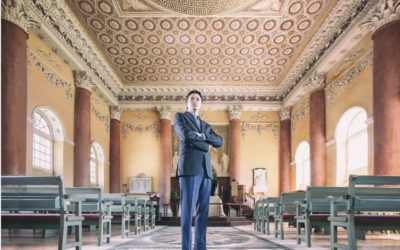
John McAllister is a talented and hard working photographer in High Wickham, Buckinghamshire. He specializes in product and people photography for commercial clients who expect exacting standards and high creativity. In order to serve his corporate and headshot...
THE MAMIYA RB 67; ONE OF MY FAVORITE CAMERAS
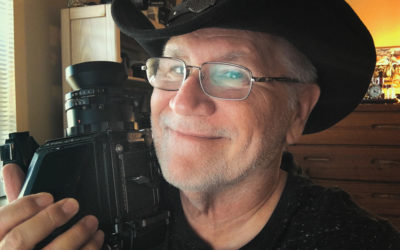
Looking to get and play with a film camera that has some weight to the images... well, this bad boy has some weight, and it makes exceptionally wonderful images as well. The Mamiya RB 67 is a medium format film camera that makes a 6x7CM image (2 1/4 x 2 3/4) on 120...

24 Frames In May; 2017
ANNOUNCING: 24 FRAMES IN MAY Our annual tip of the hat to Analog is underway next week. We will have some judges and some prizes may be awarded. We'll see. SUBMITTING IMAGES. CLOSES ON JUNE 15. Please attach one single image and the contact sheet from your roll of...
My Utah Trip With Maciej
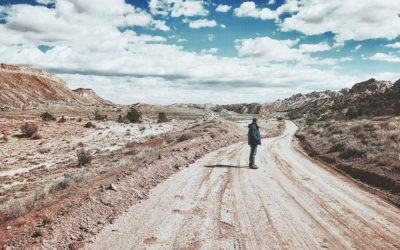
A few weeks ago, photographer Maciej Blaszczuk and I took a road-trip together. This was a consultation with him on how to grow his business, where to go with his new ideas, and how to implement them in order to be more manageable. I help photographers focus, and I...

Protected: FPCN AND P52PRO: OFFICE HOURS APRIL 22, 2017
Password Protected
To view this protected post, enter the password below:
Protected: FPCN: APRIL 15TH, 2017
Password Protected
To view this protected post, enter the password below:
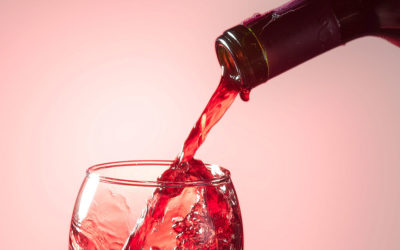
Protected: FPCN: April 8, 2017
Password Protected
To view this protected post, enter the password below:
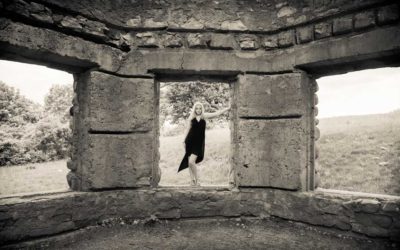
27 Images That Show the Diversity and Power of Black and White Portraiture
27 Images That Show the Diversity and Power of Black and White Portraiture Black and white portraiture is not simply the decision to desaturate the color from an image, it is a decision to remove color to create something powerful and artistic. Monochrome portraitists...
Behind the Image: Pour Shots
The assignment was to shoot a pour shot, and the P52 members really stepped up. These four shots caught my eye not only because they are really fun but because their approach and setups were quite well thought out. I hope you enjoy the little critique and BTS shots by...
“Understanding Photography in a Social Media World”
I was asked to speak at CapturePhotoCon in Phoenix a few weeks ago. This is the slide deck for that presentation. If you have any questions, let me know in the comments. UNDERSTANDING PHOTOGRAPHY IN A SOCIAL MEDIA WORLD: KEYNOTE

Protected: FPCN WEBINAR: APRIL 1, 2017
Password Protected
To view this protected post, enter the password below:
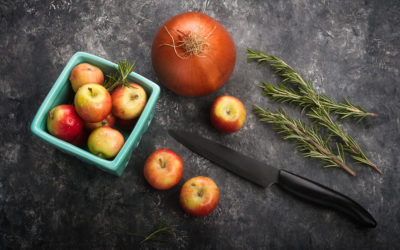
Protected: FPCN: Webinar, March 11
Password Protected
To view this protected post, enter the password below:
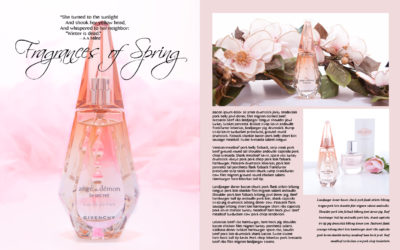
Behind The Image: Selections 3-12-17
I chose nine images to look at today. These were all gathered from recent Project 52 assignments, and I think you will find them very intriguing. Project 52 introduces photographers to the real world working environment of assignment photography. The challenge of...
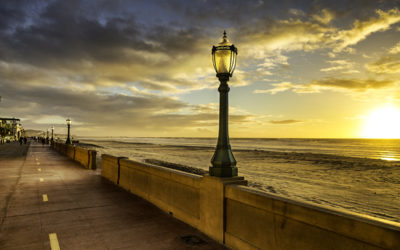
“Are We Entering Photography’s Golden Age”
Always nice to be published on DIY. Are we entering the "Golden Age of Photography"? Actually, I think we are. In many, many situations, the visual is the main thing driving the brand. From red soles on women's shoes to the shape of a vodka bottle, visual stimulus...
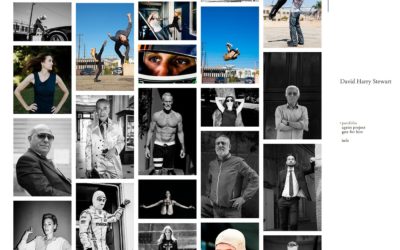
INTERVIEW: DAVID HARRY STEWART
David Harry Stewart is a photographer that I have been following for many years. His work touches every point in my aesthetic list, and it was a super treat to speak to him last Tuesday. David Harry Stewart Website Instagram Behance Ageist...
Protected: FPCN: Webinar, March 4, 2017
Password Protected
To view this protected post, enter the password below:
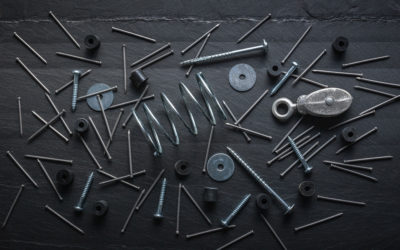
Behind The Image: Still Life
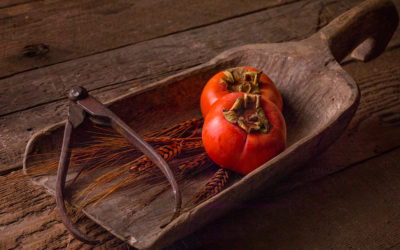
The assignment was to focus on textures and patterns for backgrounds or surfaces. These photographers created images that blended texture / subjects together to make images that are compelling and draw the viewer in. Let's take a look at the images. Barbara...