
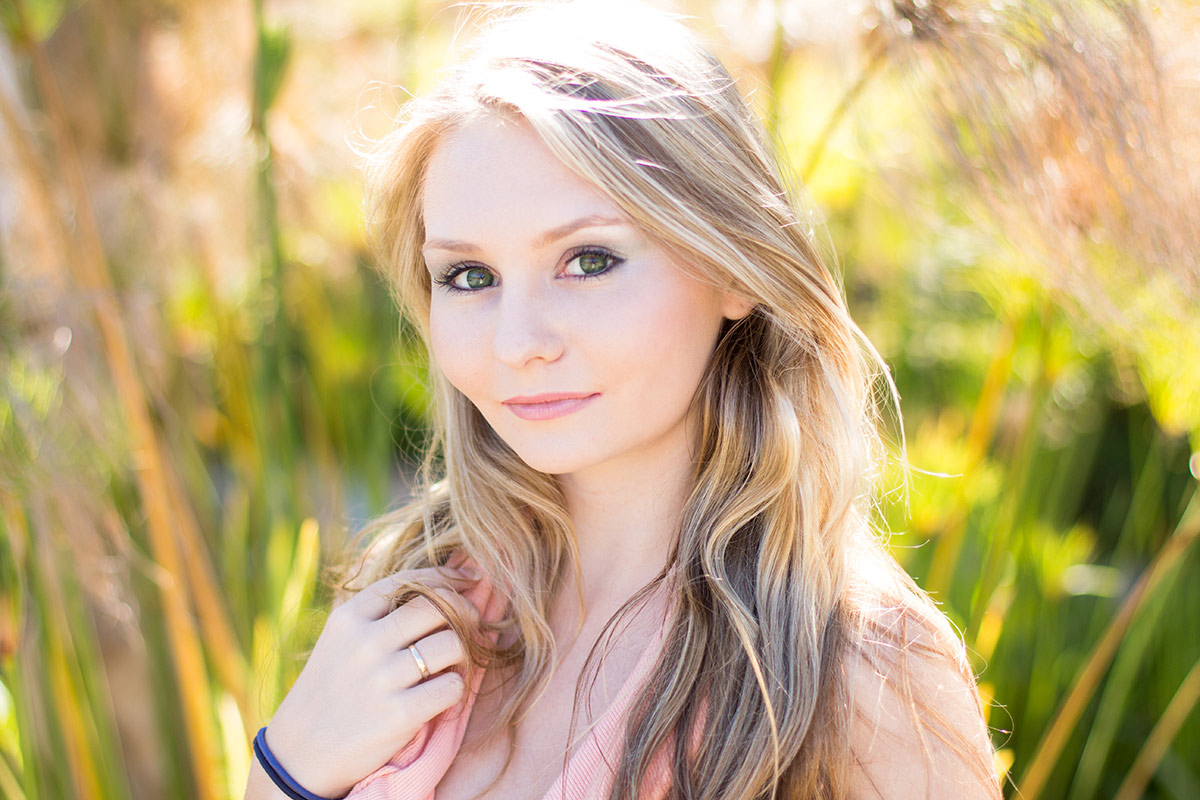
Matte Surfaces
These are surfaces that are not as rough as texture, but not smooth either. Skin, cloth, natural leather, finished woods and many food items are examples. Most of what we deal with in our daily lives would fall under the Matte surface example.
Matte surfaces have a softer way of showing us the reflection of the light source. Where texture showed us mini sources next to mini shadows, the matte surfaces have less of a drastic presentation. The surface doesn’t have that much difference between the size of the components of the texture. A cloth book cover has texture, but it is much more tightly confined than say old barn wood.
And the reflection of the source is shown as a larger area rather than many tiny reflections. This gives the texture a smooth and not altogether recognizable shape. There is an angle where the incidence will match the reflection, and be seen by the camera, but it will be a muted reflection, not a harsh one.
EXAMPLE of Matte Surface reflection of the light source. You can clearly see the reflection of the source, but the transition to the non-reflective areas is gradual and not defined.
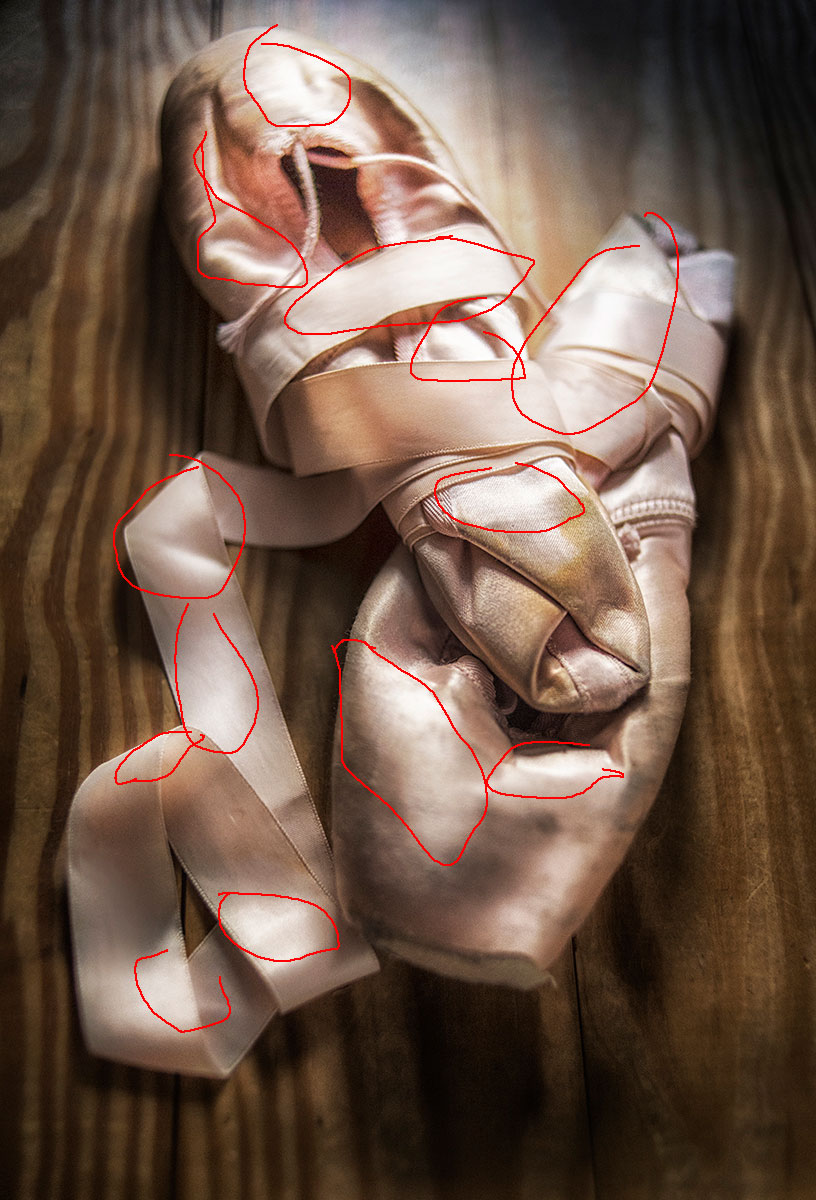
The ballet shoes are most defintely NOT a highly textured object, nor are they glossy.
Skin is one area of great interest. Portrait, beauty and fashion photographers have to be able to control the way skin looks for their imagery. And skin can present some widely diverse efficiency. Dry skin has a very matte look, wet skin becomes more efficient due to the water, and then the reflection is nearly absolute, and skin color can become an issue with the wrong kind of light presentation.
A good makeup artist helps to smooth out skin blemishes, we know. But the MUA also helps to matte the skin evenly so that the reflections of the light sources do not create very bright reflections on the face.
A model begins to sweat…err, sorry, perspire with the heat, and the skin becomes a bit more efficient due to the moisture. Liquid is much more efficient than skin, so the perspiration on the face becomes shinier. The remedy is a little bit of powder, which of course renders the skin more matte and less efficient.
Faces are full of contours and angles that can reflect the light source back to us. Tips of noses, eyebrows, cheeks, chins and foreheads are all areas of concern when we are shooting with light that has a small source. The small source can become a direct reflection on even matted skin, so keeping it within our tolerances is very important.
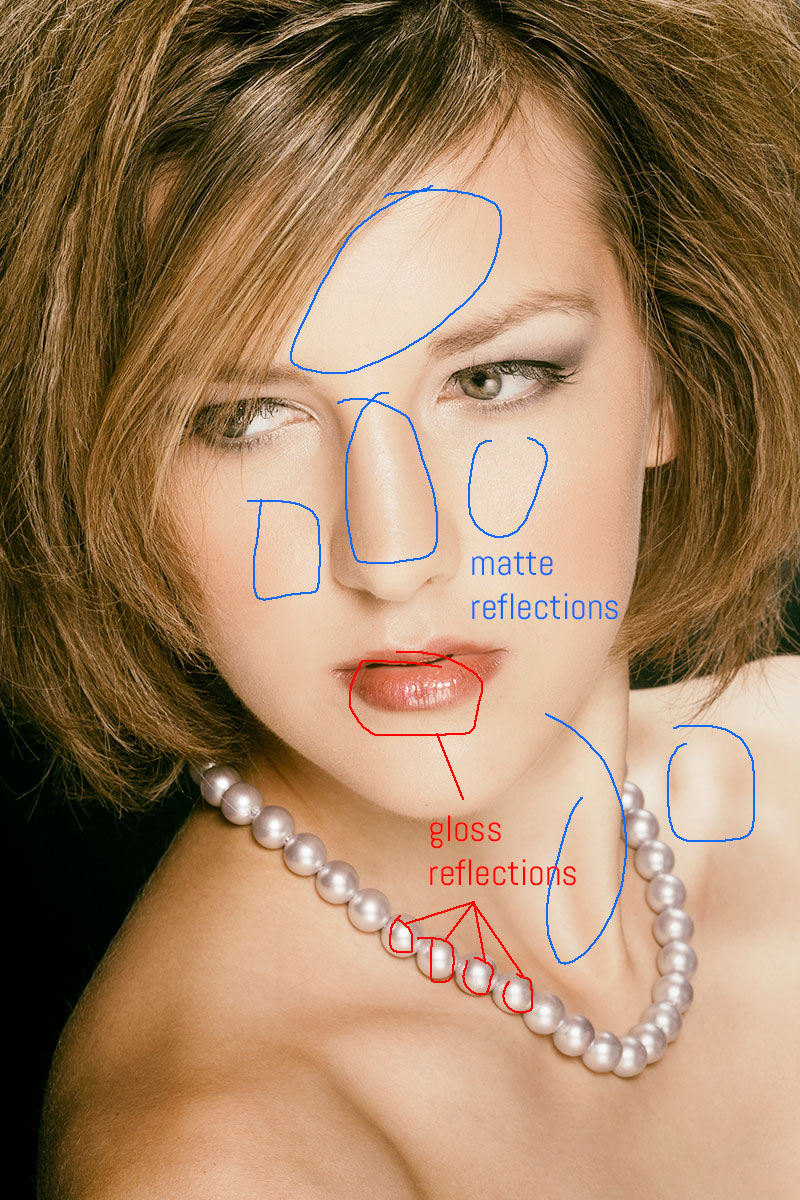
Again, you can see the very soft transition from the highlight to the non-highlight matte surface, where as the gloss lipstick provides a sharp, immediate transition to the non-reflective area.
Photoshop Note:
Trying to fix a small highlight on the tip of the nose, or one that is across the whole front of the forehead is painstaking and difficult. It can be done, of course, but working with the subject to make sure he/she is not rendering the light back to you in such a way as to need the Photoshop is much more preferable.
There may be times when we may want to enhance the matte texture, to make it more discernible, and bring out the texture instead of mitigating it.
Angle of incidence again comes to the fore. Angled to present even the smallest texture, the photographer can decide between broad light, like a softbox, or sharper light, like a direct, unmodified head, or a snoot.
Example of enhanced texture: Portrait of Tomas.
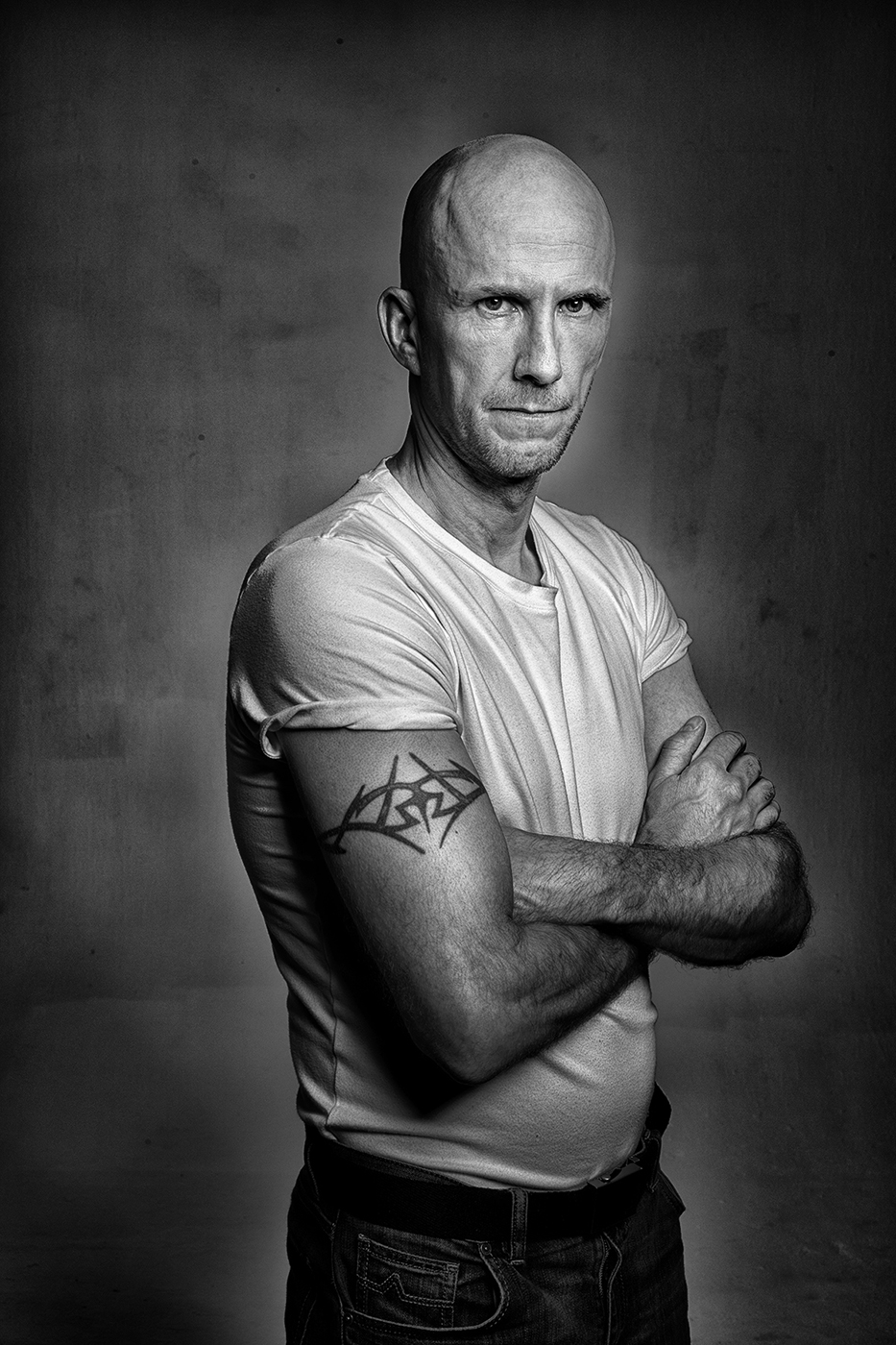
Even with the matte surface of the skin, by using a small lightsource (beauty dish at a distance) we can create more texture in this portrait by putting the light at more of a wide distance from the camera. This adds some texture from the sidelit properties of the subject. Enhancement in Photoshop is then easy, and keeps the matte surface for a cleaner presentation of skin.
Matte surfaces are where we can experiment and work with light to play down or enhance, or simply show it as it really is.
And most matte surfaces can be altered to create something more efficient or less. As we have seen, powder for skin can take away the ‘shine’ that we know is really the reflection of the light. Water or liquid can add sheen to the subject when we want the reflection. And we can use materials to create shine, like wax on a wood floor to enhance the matte to be more shiny by showing the reflection of the light as it renders back to us.
Remember that we all KNOW what shiny looks like, what matte feels like and how rough something is. It is part of what we learn from the beginnings of our lives. We touched, we saw, we felt… and we learned. Photographers aren’t creating anything new, we just learn to present it to others the way we want them to see it.
To recap:
Textured surfaces present small highlights and shadows because of the rough surface and how it reflects light. From a stone to a mountain, the texture can be enhanced by playing up the highlight and darkening the shadow.
Matte surfaces will show the highlight softly, allowing it to transition to the non-reflective part of the surface in a more gradual effect. This may be the most prevalent surface we have around us.
ASSIGNMENT:
- Look around at the matte surfaces. they will most likely be more numerous than very texturized things, or very shiny things. Take some time to quietly study what light does when it is refracted from them.
- Note how different light (direct / indirect) reflects from the surface. Make images showing the difference.
- Examine the ways that matte surfaces can become textured (heavy side/top light), or shiny (wetting the surface down changes its ability to render the highlight and now it becomes more efficient).
Bret Doss’s “Fallen Leaf” Series
Bret Doss is a photographer and an engineer in Seattle, Washington. He and I have traveled the PNW together on occasion and he was my assistant on the Creative LIVE workshops. He is a talented photographer with a wide range of interests. From fashionable portraiture...
Gear List / Links for the UDEMY Portrait Class
Class: Portrait Photography with Simple Gear Link to the Class Page. Stand (even better a stand and a boom) Umbrella Holder Umbrella (shoot through and bounce) Flash (the kind that goes on the camera, but also has the ability to set the power manually) A trigger set...
Facebook Slams the Door on Photographers
As photographers, Social Media takes a hit on all of our time. We do it for various reasons. Because it is fun. Because it is a good way to reach people who are otherwise not reachable. Because it is certainly a powerful part of the lives of all of us in business....
It Costs What It Costs
I purchased a car yesterday. I haven't bought a car for a while, always getting the wife's hand me down... heh. But with the new business, a new ride is imperative. It was pretty painless. I told them straight up that I had no time or energy for haggling (and they...
Project 52 PRO – Works
At the Project 52 PRO group, there are an astounding group of photographers all helping to boost each other into professionalism. Most of them have gotten a paying gig this year, and we are well on the way to making that happen for all of them. The point of Project 52...
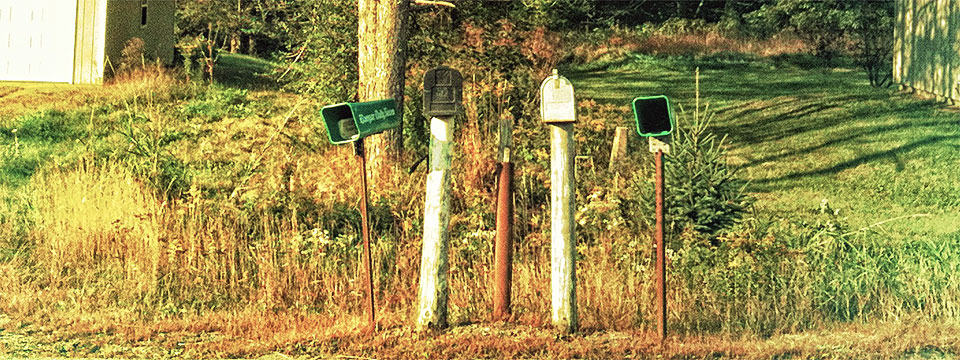
On Style: Personal Take
This morning I followed a link on Twitter to a website devoted (supposedly) to helping photographers learn to be better photographers. The name of the post was something along the lines of "12 Super Awesome Ways to Make Epic Images" or something similar - and no, I am...
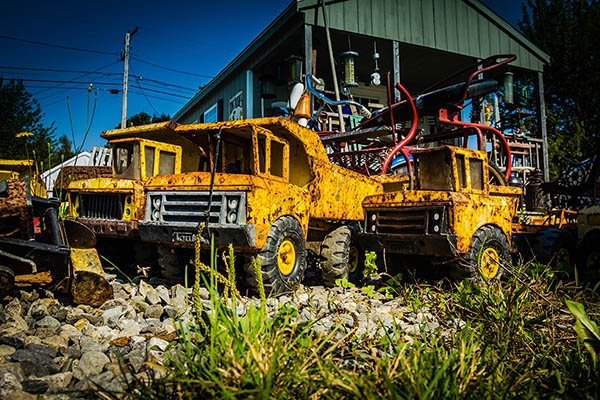
Instagram… it is Not the Devil (or is it?)
Instagram was a tiny app that grew at an amazing rate. Hipstagram is another app that has grown faster than most, and Snapseed was just purchased by Google. What does that mean? Is it, as one of the articles below suggests, the end of photography? Or is it a new, and...
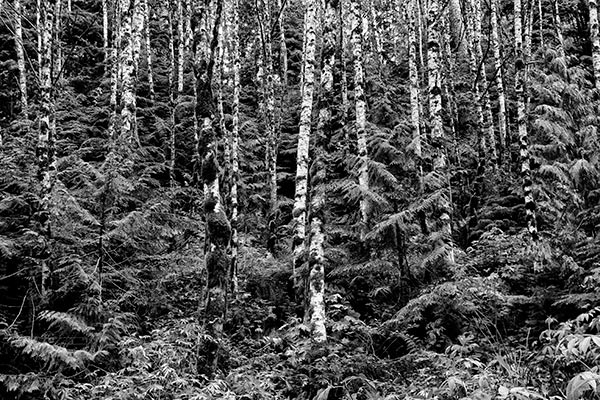
The Secret Is…
... that the secret doesn't exist. There is no secret. Has never been a secret. Lately I have been noticing a lot more "Secrets to Successful Whateverthehellitis-ness". Secrets that are so secret that you can buy them in a book or an ebook or get them for a buck on...
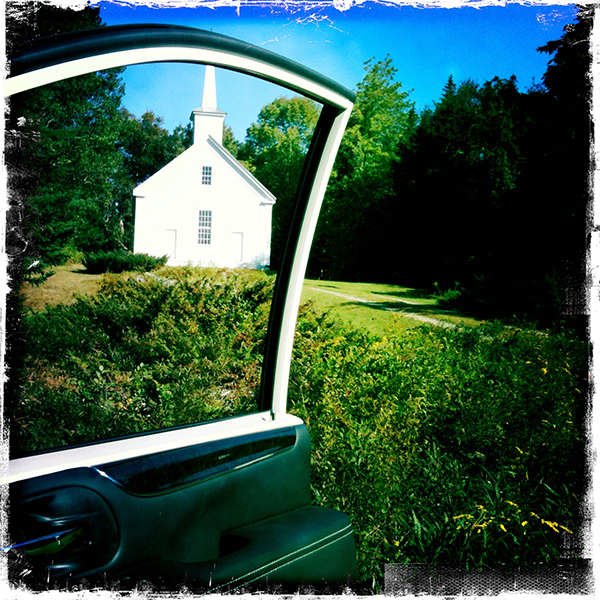
Cameras Are Tools. Vision is Photography.
I love this article on communication, photography and the distractions of gear and platforms. Photographer Jon Stanmeyer hits the nail smack on the head with this post on the distraction of the medium over the substance of the image itself. "Now here is what’s key...
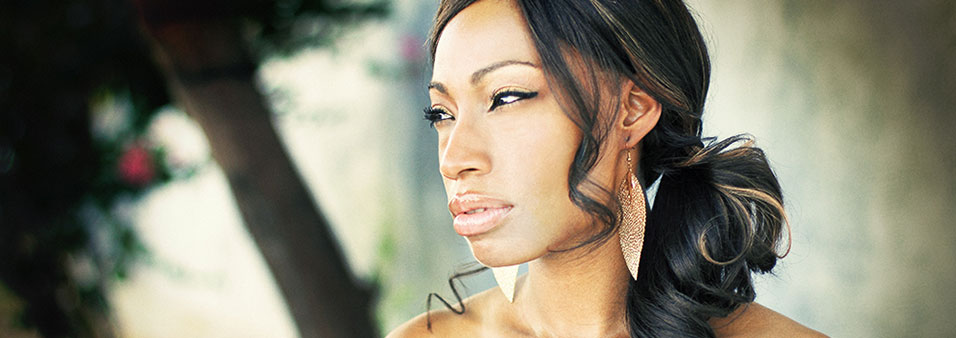
My UDEMY Class on Portraiture is Live
The good folks at UDEMY.com asked me to create a course for them. Portrait Photography with Simple Gear I chose doing a sort of overview for portraiture. Not your typical headshot stuff, although we do look at traditional beauty. In this course we look at using...
Yes, You Can Trust Your Professional Photographer (Essay Nine)
I don't have a photograph to run with this article. I wouldn't want to even think about what photograph I would run here. And, by the way, this is me being pissed off again. So if that sort of thing makes you uneasy, and you are all fine with an industry leader...
Does Vison Trump Gear? (Essay Eight)
Recently an article caught my attention over at TIME. "Last Launch: Dan Winters and the Shuttle Program. TIME had commissioned Winters to photograph the final launch of the Space Shuttle and they showed a few of the images that will soon be in the book. The images are...
Trees, Roots and the Artist (Essay Seven)
Photography at its best can be a reflection of the world in ways that we have never been seen before. It is the photographer's vision that makes the image become more than it could have been. But at the heart of the photographer's vision, there is a deep foundation of...
Keith and the Kudzu (Essay Six)
Keith was a photographer in Atlanta, Georgia. A dedicated artist and all around fun guy, he nonetheless harbored a deep and unrelenting anger toward the Kudzu that grew all around his studio. (For those unenlightened souls, Kudzu is an Asian plant brought to Georgia...
The Big Camera (Essay Five)
My Deardorff is still one my favorite cameras. Starting to shoot Tintype with it, but it is a bit slow going. I don't have the time I need to devote to the learning curve of tintype exposure. I shoot some black and white with it as well, and will be taking a box of...
Pop’s Wallet. (Essay Four)
My dad passed in 2000. He lingered on in a kind of a funk for so long, and got a little... well... uncharitable toward the end. When we finally talked him into hospice, he was so thankful for their kindness and really enjoyed his time there. After he passed I was...
Roots. (Essay Three)
When I was in my early teens I happened upon some photographs by Weston, Cunningham and Adams. I had been making photographs for a few years. Just casually, no real intent in the work other than to have a keepsake of the place. Many of us start out taking images that...
My First (Real) Camera – Essay 2
I am not a camera geek. I don't get into all the machinations of new this and new that. Not a part of my DNA it seems. I tend to find something I like and stick to it as long as it works for me. I watch other cameras with shiny this and awesome that and think "wow,...
“Coming Home” – Essay 1
Today is August 8. An interesting day for me. It's some sort of milestone that people celebrate, but I usually spend some time to look over the next 12 months and make some plans. Recently someone told me about an '30 essays in thirty days' project. I have no idea if...
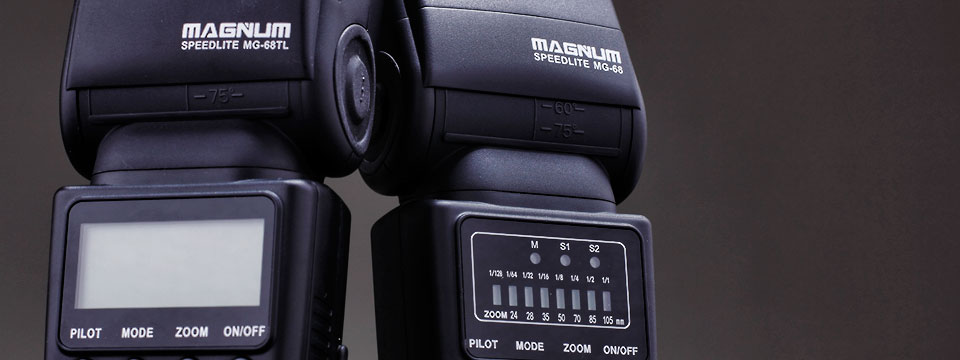
New “Magnum” Strobes from Aputure… and They Rock!
Remember Dirty Harry... he had a Magnum too. And when he pulled it out and asked the punk if he felt lucky, he created a legendary phrase that lives on and on. And now it is your turn to get lucky... with these pretty damn cool strobes from Aputure. Full disclosure:...
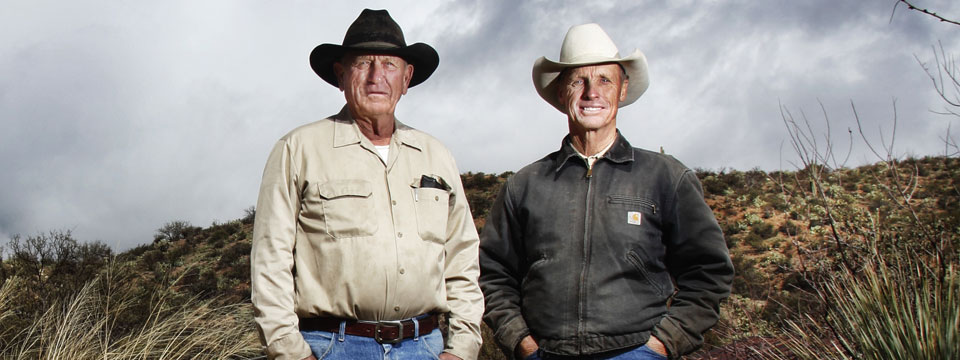
Anatomy of a Shoot in the Middle of Nowhere…
"Well, ya'll could ride with me if you want..." He was walking toward us from his pickup truck in the cold, early morning light of Florence, Arizona. Wide brimmed cowboy hat and real cowboy boots. And he was all smiles. Florence is a very small town southeast of...
In Tall Trees
I spent a couple of days in the forests and mountains around Seattle a few weeks ago. I hope to go again. I am a desert guy. Lived in the deserts most of my life, and I find them fascinating - maybe due to my design predilection for minimalism. Not sure really, but...
Increased Client Interaction is Better Than The Alternative…
Think about it... the more you interact with your clients, the more your clients see you as a part of their business. No, I am not talking about stalking, or going overboard with emails, mailers, phone calls, texts, tweets and facebook status thingies... I am talking...
On Workshops, Scams, Manners and Foolish Ideas
My friend Seshu, a photographer and owner of the Tiffinbox.org website, recently posted this article: "Gary Fong Wonders If Photo Workshop Instructors Can Handle The Truth" (link) (An admonition to the gentle reader - this is a very long post. There are some points...