
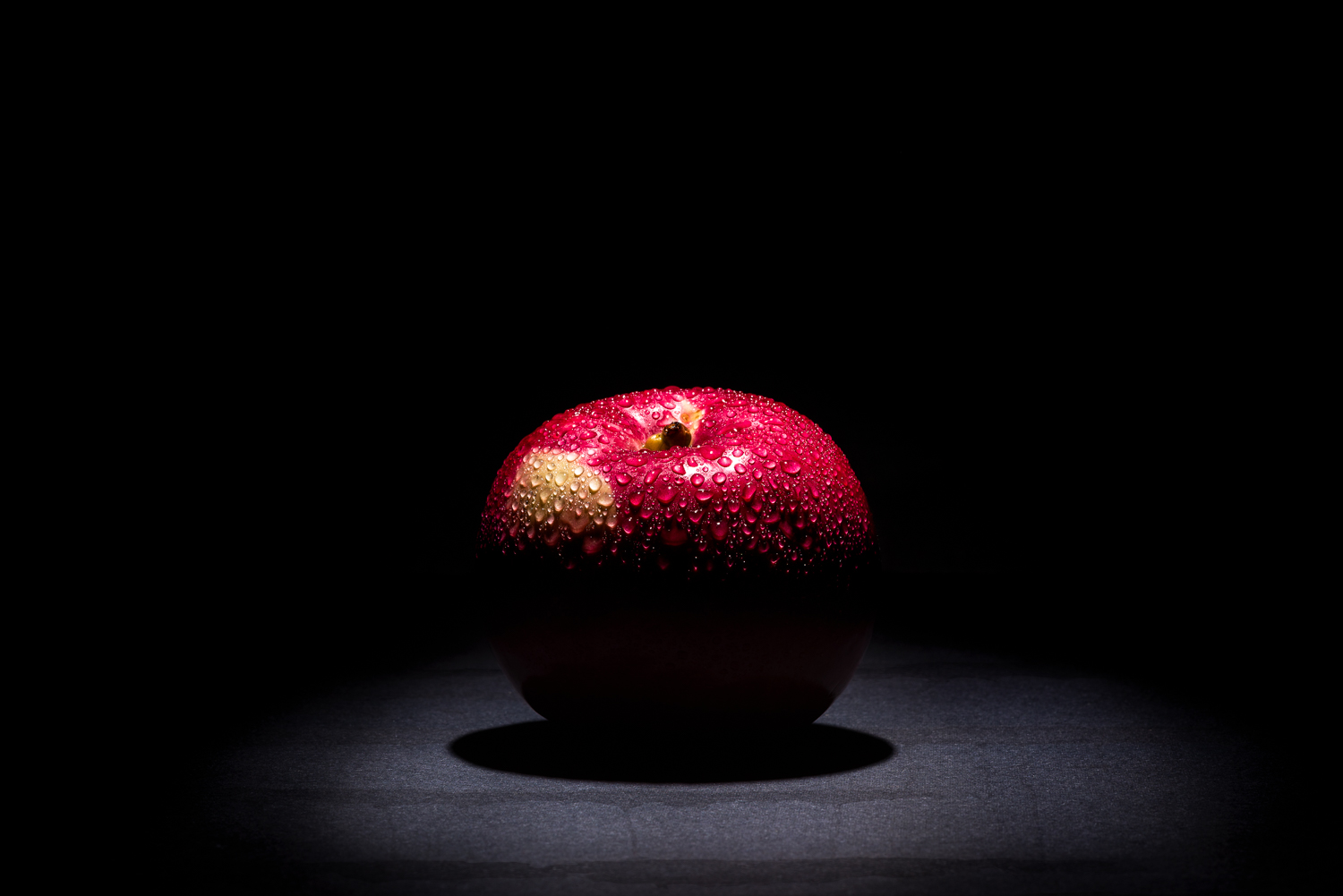
Subject Centric Lighting: The Five Areas of Light Presentation
Cover image by Project 52 student, Gabriel Alvarez.
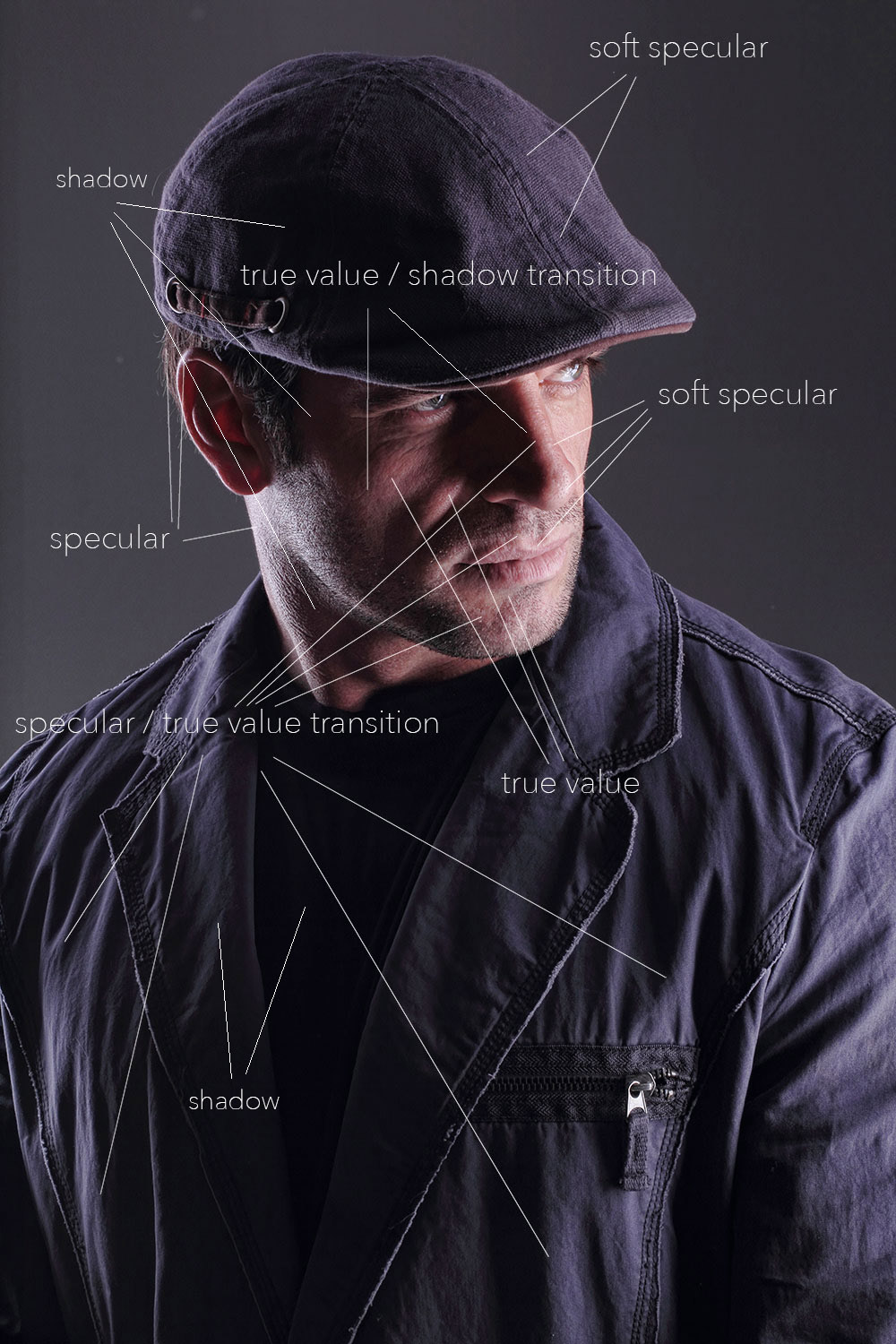
When the lighting choices we have made are used, the light is ‘presented’ back to the camera in expected, and controlled ways. There are five parts of the light presentation, and we use them in every image we make.
True Subject Value:
What the subject looks like when not in specular or shadow, this is the area that shows us the color of the subject as well.
Specular:
The exact or absolute reflection of the light source.
Specular Transition:
The point where the specular reflection transitions to the true subject value
Shadow Transition:
The transition between True Subject Value and Shadow
Shadow:
The places on the image that are not lit, the opposite side of the light source.
These areas of light are found in nearly every subject. By understanding what they do, and how they are controlled, we can understand much more about the light that is used to present these areas in the ways we want to show them.
In other words, knowing what causes a shadow transition, how to present true value, and how to control a specular highlight means we have control over our lighting and we can create the looks we want. Whenever we want.
Photographers and artists use these representations of light to show texture, shape, dimension, color, clarity and mood. Illustrators use highlight and shadow in their work to create their own light. And they use the same tools to light their drawings, although quite imaginary, as photographers do.
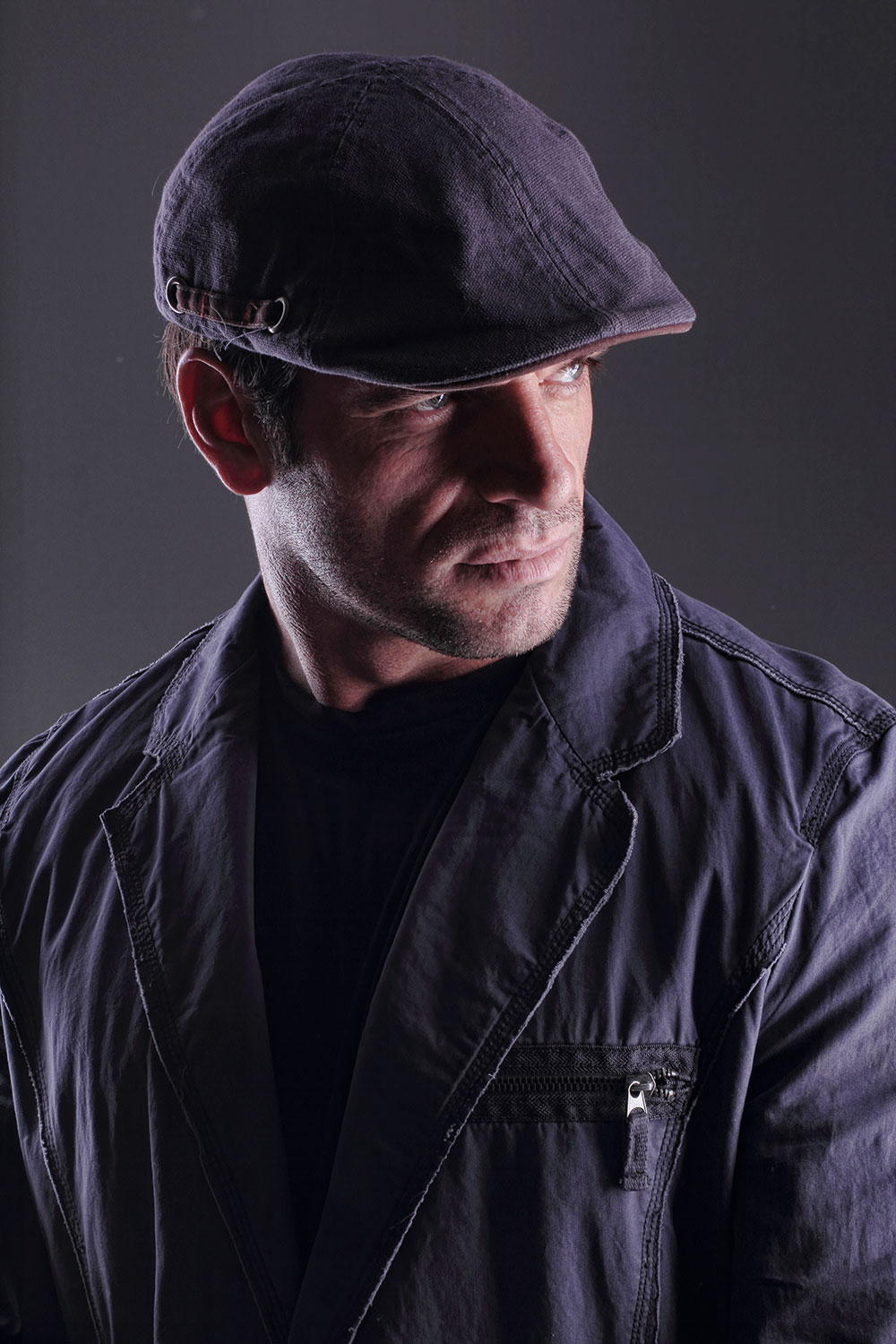
We can see all the presentations of light in this image of Inaudia.
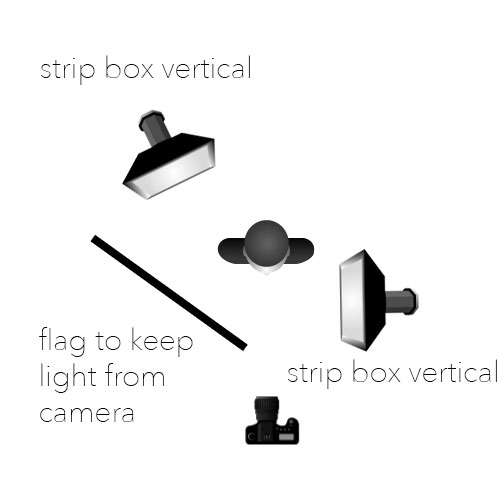
Lit with two strip lights (one on each side), the one on camera left is behind Inaudia and aimed forward just bit. The one on the right is slightly in front of him, and angled at an oblique angle.
This renders two different kinds of specular presentations, the absolute one on his neck and left side, and the softer one on the right side.
All of the transitions are there, and these transitions are what we see when we are determining soft light from hard light. A fast transition is a hard light, where a softer transition – as in the picture below – is a softer light. We would call this image a hard light image because of the fast fall off in the transitions between highlight and true value, and true value and shadow.
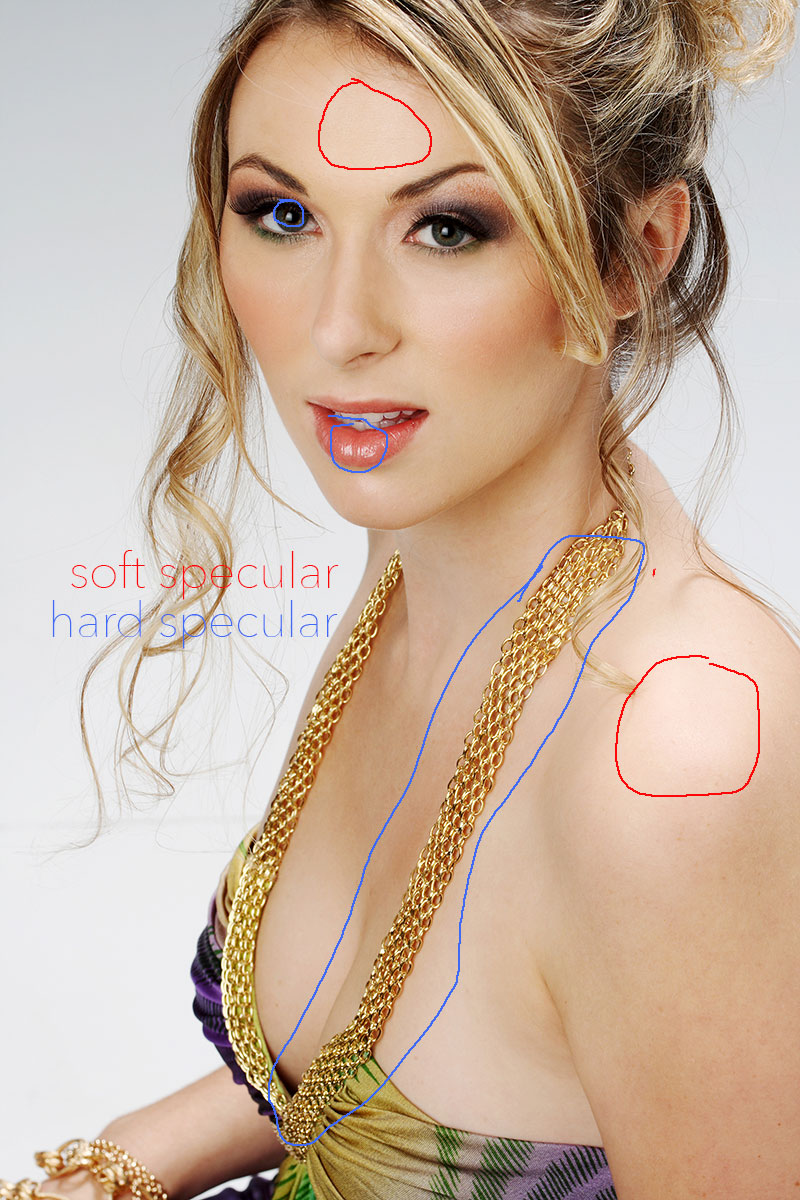
This image shows a lot of true value skin tone. One of the reasons is that the model is not shiny (wet) or perspiring to cause a shinier surface. Powder is used to intensify the diffuse skin (true value) so the speculars (in red) are presented softly. The blue speculars, however, are presented with very sharp transitions. Note that the specular on the shiny lips is absolute, with no soft transition. The gold jewelry on the dress shows as highlight/black because the reflection of the light source from the shiny metal is absolute.
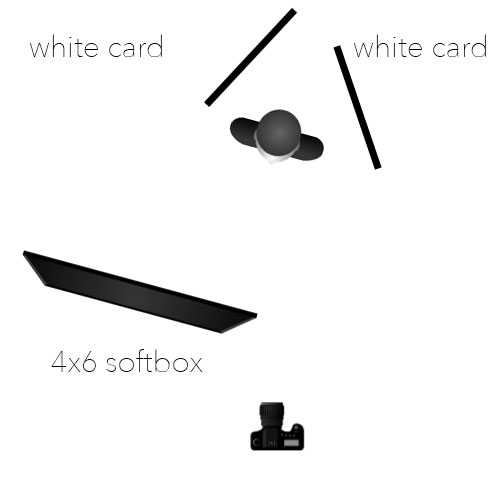
Lighting: Very large softbox directly in front of the model, and back 5 feet. White cards are positioned on either side of her, but pulled back to a point where they will not reflect in her eyes.


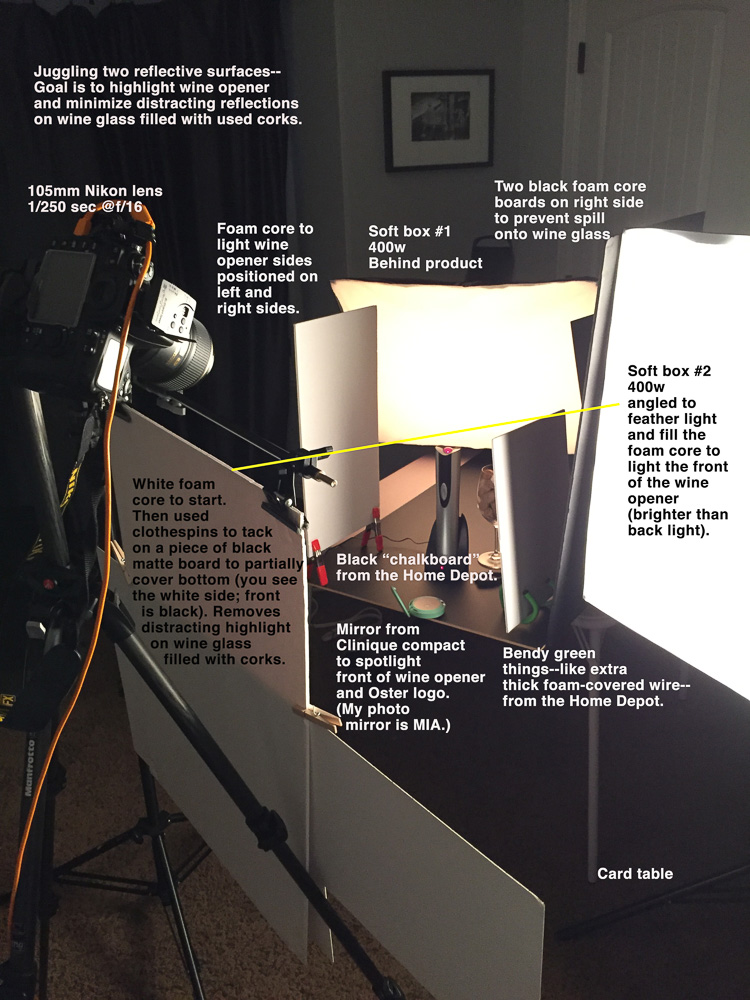
Photographer Anne Stephenson shows how to control the specular, true value, shadow and transitions in this seemingly simple table top product shot. As you can see, nothing done well is simple. Every kind of surface is in this shot.
Let’s start to put all of this together now.
Peter Lindbergh: Images of Women II
PETER LINDBERGH: IMAGES OF WOMEN II Lindbergh is one of the most popular photographers we study in the 8 Week Portrait Class. His work is simply brilliant and so many of the students have an immediate affinity to his authentic, intimate way of shooting. His new book,...
In Commercial Photography Some Things Change and Some Things Don’t
Some Things Change, and Some Things Stay the Same The constant, and rapidly changing landscape of photography continues unabated. Some may think of this as a very scary time to be in this business. They may be right… for them. For me it is nearly a miraculous time to...
Shooting Ice Cream with Photographer Rick Gayle
PHOTO BY RICK GAYLE, PHOENIX I will simply link to Rick's article here. Rick is a Phoenix photographer specializing in still life and food. This is a nicely done article documenting a shoot for Coldstone Creamery. BTS shots as well as some finished examples. You can...
Read more“I think that its a society that has totally lost its bearings on the terms of what its values are, and so its put all its value into celebrity. There is such a lack of spiritual self confidence perhaps that the achievers seem to have to be the kind of holy cows that people worship.”
— Editor, Vanity Fair, ca 1993
Annie Leibovitz Documentary
"I think that its a society that has totally lost its bearings on the terms of what its values are, and so its put all its value into celebrity. There is such a lack of spiritual self confidence perhaps that the achievers seem to have to be the kind of holy cows that...
Read more“The great thing about the job was that in the evenings when we weren’t doing these ads, we photographed Anjelica Huston and Julie Driscoll. Polly Mellon, the fashion editor was there – it must have been for Vogue. Julie Driscoll was a pop singer with Brian Auger and Trinity. Musically they were a very hot band at the time. At the end of the shoot, Dick (Avedon) gave her a kiss and she, being very, very English, said in her slightly Cockney accent, “Oh, I bet they’ll be awful,” which is a totally English way to say “Thank you.” He just froze. He sort of straightened, and said, “When I take pictures, they’re good.””
— Neil Selkirk on Richard Avedon
Neil Selkirk with Elizabeth Avedon
"The great thing about the job was that in the evenings when we weren’t doing these ads, we photographed Anjelica Huston and Julie Driscoll. Polly Mellon, the fashion editor was there - it must have been for Vogue. Julie Driscoll was a pop singer with Brian Auger and...
Two Articles on Printing at Nearly the Same Time
Awesome coincidence? Or a convergence of some unknown force? I do not know, but it is interesting nonetheless. Last week Petapixel ran an article I had written titled "Prints. Remember Prints?" (Article Here) Almost immediately afterwards they ran Lynne Cartia's...
Moodboard: Edgy Portraits
Here are a few portraits that caught my eye last week. I hope you enjoy the picks. Ryan McGehee delivered this exceptional portrait. Brave crop, lighting that engages and mystifies and an absolutely charming face. Kine Meijer showed this unique portrait and knocked me...
Marilyn Monroe by Nahum Baron
I just love this image. I don't really know why. Photograph by Ted (Nahum) Baron. --- My friend and mentor, Selina Maitreya is sharing a lot of great stuff on video. There is an upcoming course, but you can grab a lot of great info from these videos. Check them out...
Join Selina Maitreya in a Free Video Course to Help Move You Forward.
I have known Selina for many years. I have all of her books, and have trained with her. I consider her a mentor, coach and friend. Selina has joined us here on Lighting Essentials many times, and each time is a delightful experience for me. Selina was perhaps the...
Read more“Be daring, be different, be impractical, be anything that will assert integrity of purpose and imaginative vision against the play-it-safers, the creatures of the commonplace, the slaves of the ordinary.”
–Peter Lindbergh
Never play it safe
"Be daring, be different, be impractical, be anything that will assert integrity of purpose and imaginative vision against the play-it-safers, the creatures of the commonplace, the slaves of the ordinary." --Peter Lindbergh
The Proof Is In The Pudding… Make Sure You Have a Killer Recipe
“The proof is in the pudding.” Always wondered about that term, so I looked it up. According to the Urban Dictionary; “The original phrase is "The proof of the pudding is in the eating!" Which means you have to eat the pudding to know what's inside of it. The modern...
Ten Beliefs That Suck the Life out of Photographers
What if I told you it was not the industry, the bad economy, where you live, what camera you shoot with, how many lights you have or how small your Facebook following is that is holding you back. None of those are truly capable of stopping you, they are only...
How Can A Single Photograph Tell a Story?
Recently Stefan Sagmeister posted a video in which he excoriates designers for using the word “story” in their descriptions of what they do. Whether you agree or disagree, it is a compelling video. Personally, I am not 100% on board with his statements. There are some...
P52 Member Alicia Bonterre wins Two ADDY’s… WOW
CONGRATULATIONS, ALICA!!! Alicia Bonterre started with P52 about two years ago. She wanted to up her game, create images outside of her comfort zone, and become better at commercial photography. She just won two ADDY's - A GOLD and a SILVER ... so, we can safely agree...
From the Portrait Workshop: Inspired by Dan Winters
Imitate. Assimilate. Innovate. -- Clark Terry, jazz trumpet legend. It is still the best way to learn art. And it drives the style of teaching I do. I don't want anyone to copy anyone else, but rather to be inspired by the work of others. In the portrait class, we...
8 Week Workshop: Portraits Inspired by Herb Ritts.
The goal is not to copy, but be inspired by... Learning about a photographer like the remarkable Herb Ritts helps us to evaluate our own work, see it with new eyes and blend what we learn into our own mix. The photographers who study the past forge new paths into the...
A Few Words on that “Unphotoshopped Cindy Crawford Photo” Crap
A few days ago, this was making big news online... wow. Imagine Cindy Crawford having the guts to go public in a photograph that was un-retouched in Photoshop. Yeah... wow. Big F'n Deal. Of course she did that for two decades and more. You know that, right? Of this I...
New Camera Announcements from Canon
Some amazing new cameras from Canon. I don't get involved in new gear releases, but this stuff is starting to get exciting now. Canon D5 PRODUCT HIGHLIGHTS 50.6MP Full-Frame CMOS Sensor Dual DIGIC 6 Image Processors 3.2" 1,040K-Dot ClearView II LCD Monitor Full HD...
Going North – Taking a Photo Trek
Every year I host a meet-up of Project 52 members. Part workshop, part social, full on fun. There is no fee for this, we share all expenses, so it is a very comfortable and relaxing time with the tribe. This year we will also be doing a road trip to the north country....
A Simple Photo of a Red Balloon
The recent assignment in Project 52 was to shoot a single red balloon and make it the focal point. The students made some amazing images. And shooting a red balloon is not the easiest thing to do. Give it a try - all you need is a camera and a red balloon. Here...
Portraits Inspired by Peter Lindbergh
This week we looked at the work of Peter Lindbergh. These are the images that the students in the 8 Week Portrait Class did after studying Lindbergh. The workshop is designed for inspiration, not copying. "Imitate. Assimilate. Innovate." - Clark Terry, jazz trumpet...
New Photography Books
New Photography books on Amazon.
“What Do You Charge For? EBook
Last summer I wrote four articles based on the five scariest words a beginning photographer can hear... "What do you charge for..." It ended up being nearly 20 pages, and it can definitely help you work through some of the myriad questions that haunt us when we don't...
Peta Pixel Article on “Professional Photography”
PetaPixel printed my article on changing the brand for photographers. I titled it "What If Clients Don't Need Professional Photography" as a way of saying that the picture centric medium has changed to brand centric. Photographers must engage with the clients at a...