
DISTANCE OF THE LIGHT SOURCE FROM THE SUBJECT
The second principle of light is the distance of the light source from the subject.
One thing for sure, if it is artificial light, the distance of the light source from the subject can change the size relationship, but there are other things that happen as well.
With artificial lights, one of the most important rules is The Inverse Square Law.
And it can be kinda scary that one. First, it’s a law. That seems pretty definite. And of course it has something to do with math – ‘squared[. But the word INVERSE? What the heck is that?
Let’s not sweat that right at the moment.
Let’s just acknowledge it for what it means to us.
Essentially, the Inverse Square Law (ISL) means that the farther the light is from the subject, the less bright it will appear. We know that, right. The closer we get to a light source, the brighter the reflectance of that source from whatever we are bringing close to the light.
Say you are in a very dark room, and there is only one small light in the corner. You are desperately trying to read the calory count on your small bag of Cheetos but it is way too dark where you are. Well – simple, we take the Cheetos bag over to the light and as we get close to the light, we can instantly read that we are never allowed to eat Cheetos again.
Now that is way too simple for any rule, or LAW, especially one that concerns math and something called Inverse.
The ISL is a way of measuring that light fall off and it shows us that there is actually a formula to how much that light falls off. Formulas are great. They are like systems. We can use them over and over to achieve the results we need.
This formula is way simpler than the name implies:
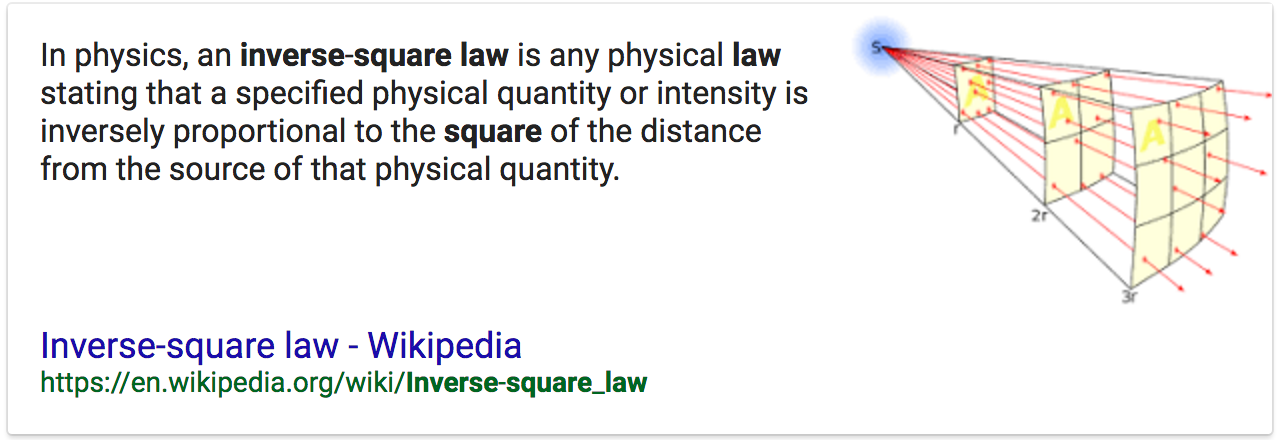
As you can see in the illustration above, at twice the distance the light has to cover four times as much space making it four times less powerful.
Four times less = 2 stops less in f-stops.
So if the light was f-8 on your subject at 4 feet, and you moved the light back to 8 feet, the amount of light on the subject would now equal f-4. If you started at f-4 at 8 ft and moved the light in to 4 ft it would be f-8.
What if instead of moving the light from 8 ft to 4 ft you decided to move it in 6 ft? Well, that would be half way between f-8 and f-4… f-5.6.
Now look at what happens when we apply the rule to a set of distances.
THE IMPORTANCE OF KNOWING RECIPROCALS
A reciprocal is simply understanding the relationships between all the numbers we throw around in photography.
F-stops, shutter speeds, ISO – all work hand in hand with each other to make the image with correct (for you) exposure. Changing any one of these three will necessitate a change in one of the others to compensate.
Let’s look at ISO:
f-4 / 1/125 @ ISO 100
If we change that to ISO 200 one of those above will have to change. Either the f-stop or the shutter speed. Since the ISO is now one stop more powerful, we either have to change to f-5.6 or change the shutter speed to 1/250. Both of these changes have the affect of decreasing the exposure setting one stop due to increasing the ISO by one stop.
Simply knowing the basics of one set will make it easy for you to re-configure for a new set.
I use ISO as my constant. In this case, I will use the settings of Sunny 16 (f-16 at 1/ISO).
ISO is 100 for these reciprocals.
f-16 @ 1/100
f-11 @ 1/200
f-8 @ 1/400
f-5.6 @ 1/800
f-4 @ 1/1600
f-2.8 @ 1/3200
These are committed to rote memory.
Changing the ISO compels me to make associated changes in these figures. If the ISO goes faster, I simply change the f-stop OR shutter speed to correlate to the amount of change in ISO. If the changes go out of the range of my camera, I will change one first, then catch up the other.
Example:
The light is getting a bit low, and I want to shoot with a shutter speed that allows me to hold the camera still. I take a meter reading and find that at ISO 100, my exposure for that shot is f-4 @ 1/15. Well, that aint’a gonna work for me handheld.
So first I decide that f-4 should be f-5.6 because of some Depth of Field issues (which moves the shutter speed down to 1/8), so that means I will have to move the ISO one stop for that aperture change to:
f-4 / ISO 100 @ 1/15 to f5.6 / ISO 100 @ 1/8 (reciprocal, one less stop in shutter speed to correlate with additional stop in aperture.
f-5.6 / ISO 200 @ 1/15
f-5.6 / ISO 400 @ 1/30
f-5.6 / ISO 800 @ 1/60
Learn your reciprocals for faster and more accurate decisions in the field.
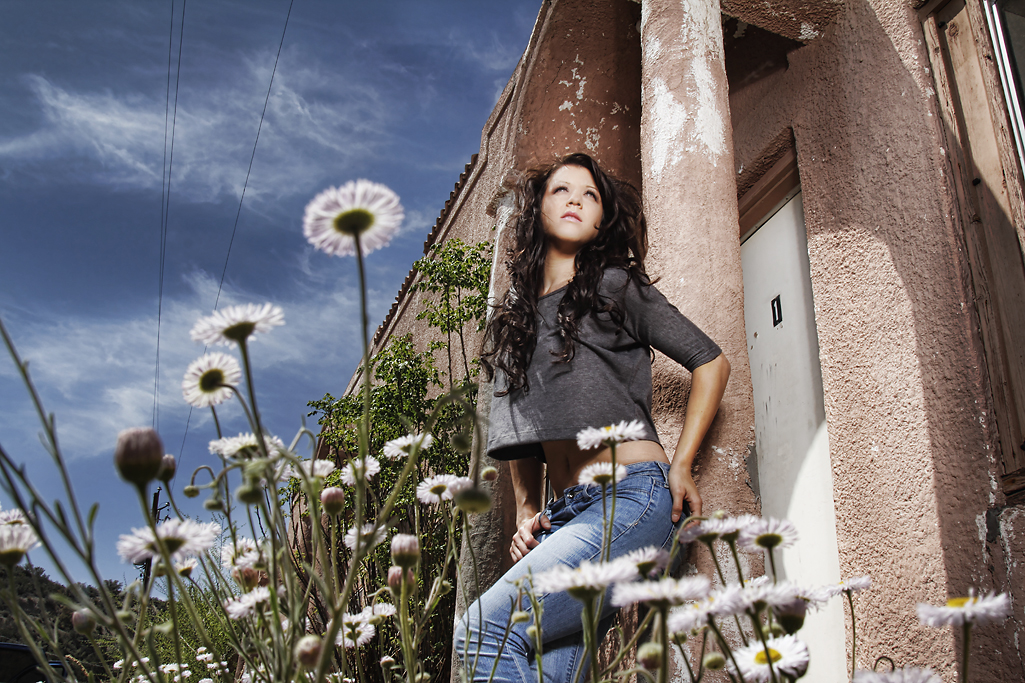
Bri in Miami.
I didn’t want the old building to go too dark behind her so I moved her next to the column. This gave me the ability to move the light in close to her, and let the background fall off fast – but retain the light and the texture right around her so she didn’t ‘pop’ out and look too overly lit.
This is a 4ft softbox with a Profoto 300 WS head and a single diffusion panel in the softbox. It is just above camera viewpoint in this shot – very close to her. You can see the light falling off as it reaches her knees.
I wanted the shot to appear somewhat realistic and not “strobed” so a careful blend of one stop over the ambient was chosen.
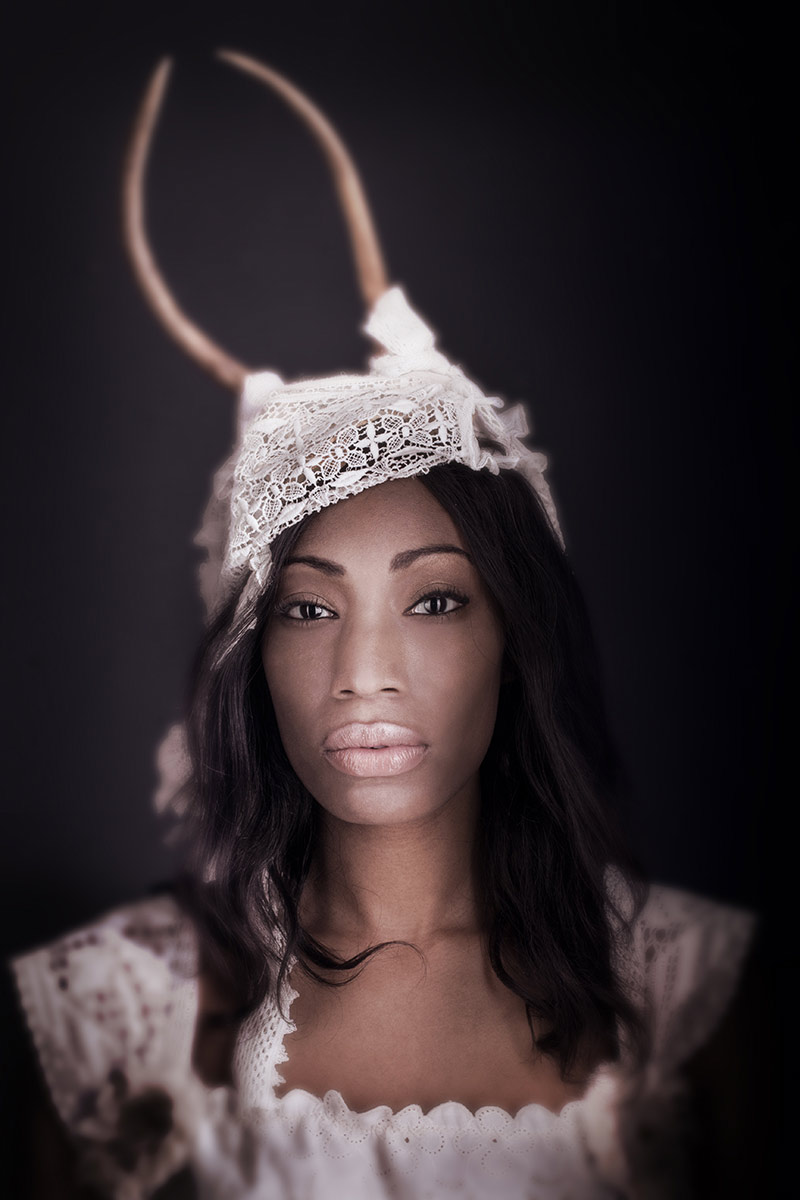
Ivy in the Studio.
My studio had bright white walls in a cove. I didn’t want this image to be on a white background so I moved Ivy far enough away that the light on her had no effect at all on the white wall behind her. It was simply way too underexposed to render at all.
Controlling the exposure through the Inverse Square Law is one of the more important tools you will have at your disposal.
And get this – it doesn’t cost a penny.
ASSIGNMENTS FOR THIS CLASS:
- Using a light source of your own: (studio strobe, speedlight, continuous light) place the light close to the subject and then move the subject AND light source closer to and farther back from a single background. Notice how the image presents itself as you go closer to the background with your subject and light, and what happens when you take subject and light farther away.
- Place camera and background at a fixed point. Then move your subject into the f-16 and make an exposure. Move back to f-11, then f-8, f-5.6, f-4 and if you can f2.8. What happens to the background as you move the subject closer to it and adjust exposure.
- Build your string meter. See below.
Find a piece of good, smallish rope. Clothesline will do nicely.
Put your light on a stand, and run the string straight out from the flash. The flash should be set at 1/8 power if possible. Not full. It should be on “normal” zoom setting neither on telephoto or wide angle.
- Using a meter and a remote flash trigger, find the exposure point for f-4 by going down the rope and aiming the ambient light meter dome directly at the strobe. Keep going until you find the point where f-4 is noted on your meter.
- Using a knot or marker, note that point as f-4.
- Now find the middle of the rope and note it with knot or marker.
- Between the end of the rope and the middle (left side) put a knot or mark in the middle of that area.
- Between the middle of the rope and the end to the right put a knot or marker
- On the right side, now find the middle between the end and the first mark, and knot it or marker
You now have simple rope meter that will be incredibly accurate in all situations.
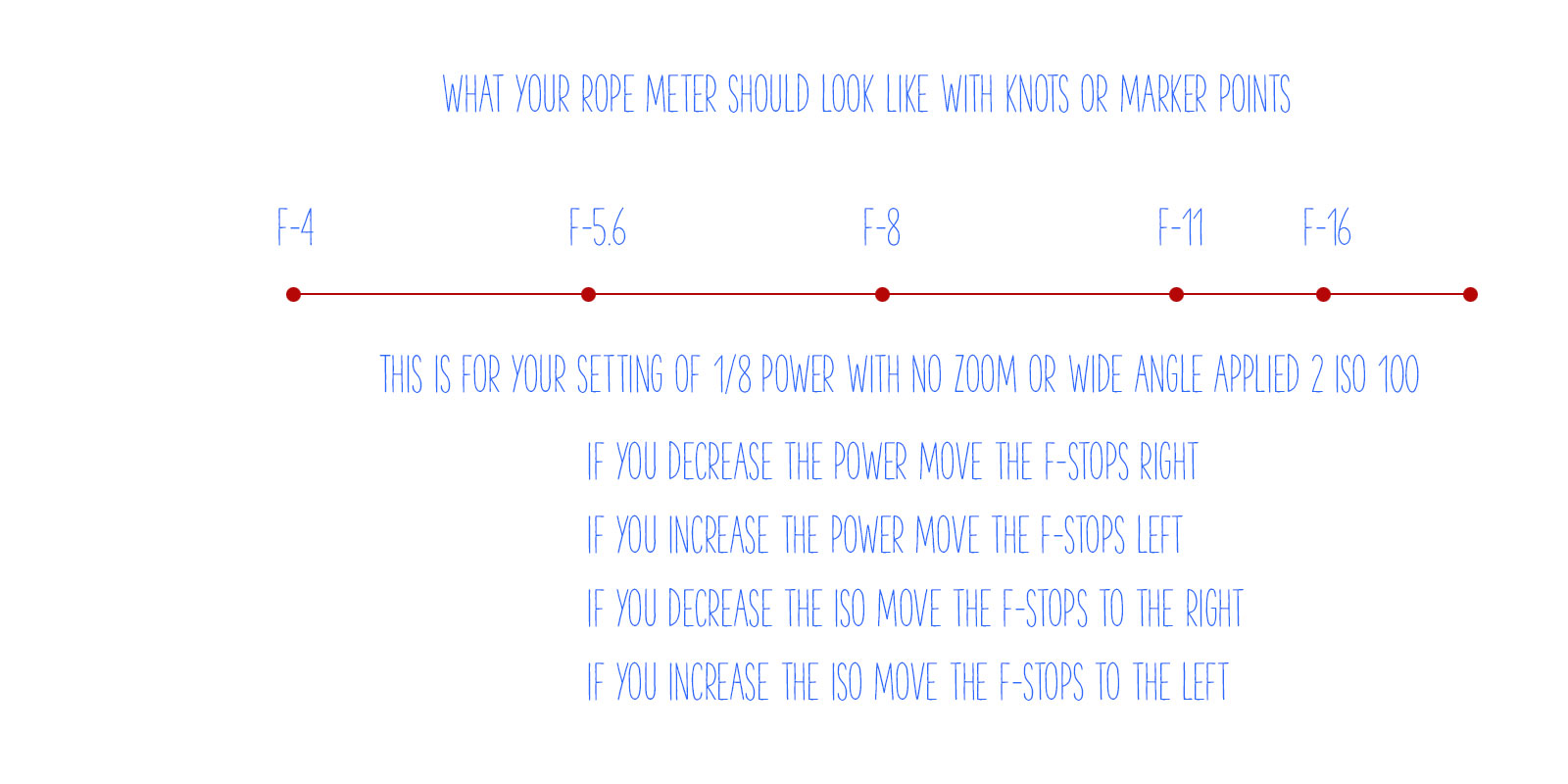
Finding f-4 is the most important part. Use a lightmeter for best results.
If you want to use a gray card, make sure it is at a very slight angle to the light source so it will not have a specular for the camera to see (the reflection of the light source). Shoot at f-4 until you find the distance that will render a single line of pixels in your histogram dead center. That is perfect exposure of a gray card.
Of course, you must fill the lens with the gray card, no extraneous stuff in the viewfinder – just the gray card.
PLEASE Make This Guy Famous
Ramona, California. https://www.youtube.com/watch?v=97hfxth3aas This guy needs to be sued into oblivion. Full on sued into poverty. UPDATE: "Police were quick to take action and have now identified and arrested 52 year old Mark Gordon as the driver of the vehicle. As...
Sam Breach’s Extemely Cool, Very Fine Fashion Photography Promo
Meet Sam Breach, a Bay Area photographer poised to break into the San Francisco, East Bay fashion scene. Sam is a long time Project 52 member and we are all totally excited about her new promo piece. If you are a fashion designer, editor, or art director, I recommend...
Project 52 2016 Edition is OPEN for Students
PROJECT 52 PRO 2016 EDITION I am so happy and proud to announce this new workshop for 2016. You can find out all of the information here. We have only 25 slots left, and they will fill really fast. We had the class 2/3 filled by early registration from previous...
Meet John Covington, Photographer – Musician
MEET JOHN COVINGTON I had interviewed and had lunch with John early in June of 2016. We met at his studio which is built in his backyard in a wonderful little neighborhood full of trees and greenery. I have been aware of John for a few years, but this was the first...
Let’s Uncheck Boxes That Kill Our Creativity
Let's Uncheck Boxes That Kill Our Creativity I recently listened to a speaker talk about unchecking the boxes he had that put an artificial hold on his career, and how that had helped him in his pursuit of sports excellence. I realized how many boxes we photographers...
2016 P52 Roadtrip Book: FREE PDF
Every year we go on a roadtrip and all of the Project 52 members can come along. It is not a workshop, although we do photography nearly all the time. There is no charge for it, members simply pay their own way and their portion of van rentals. We spend a week in...

The Art of Still Life: June 2016 Edition
Examples from the Still Life Class here at Lighting Essentials. Finished photos and the BTS shots of the lighting used. (cover image by Carla McMahon) A big shout out to the students for such wonderful work. And the BTS shots. Photographer: Doris Rudd...
The Porto Photography Experience
From Anna at the Porto Photography Experience: "As photographers living in Porto, Portugal, we feel privileged: the UNESCO World Heritage area backdrops to shoot in, the kind of sights all photographers dream of; amazing food; great weather for most of the year;...
“A Disturbing Trend” – by Neal Rantoul
PHOTO BY NEAL RANTOUL FROM THE PORTFOLIO "WAVES" "Look, the practice of making pictures used to be hugely craft based. You needed to study photography and the making of pictures hard to be good at it. It used to be difficult to do well. As a professor I seldom saw any...
Digital. Film. Images.
“I don't think using film per se makes someone stand out in a digital world,” he says. “That's never been a motivation to me. It's essentially a photographer’s understanding of his craft and sensibility and way of seeing that makes him stand out... And that certainly...
Is Snapchat a New Story Telling Medium?
“Snapchat brings the reader into the story. Each viewer becomes a part of the assignment. They are my travel companions,” Stanmeyer tells TIME. “When millions of readers pick up the magazine each month, they only see 12 to 15 photographs. But so much more takes place...
Overheard: Keith Taylor, Photographer, Atlanta
Keith Taylor, Photographer, Atlanta: "You must learn to be content with where you are & what you have, yet still push yourself. Otherwise, you will destroy yourself - mentally - by comparing yourself to where somebody else is at. What somebody else is doing...
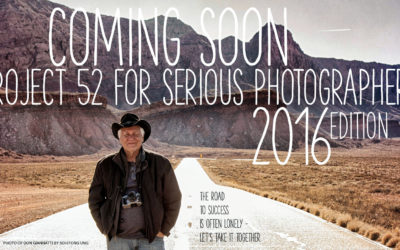
Project 52 Professionals – 2016 Edition: “Let’s Get Serious”
NEW CLASS STARTS APRIL 2017... More information coming soon. Watch this space for more news coming February, 2017.
Phoenix to Fairbanks on a Motorcycle… coming soon!
https://www.youtube.com/watch?v=TMyLaR0_mV8&feature=youtu.be You can follow along at www.phoenixtofairbanks.com Special thanks to Jerry O'Connor, joconnor.co
TAINTED LOVE: Why Photographers Fail
TAINTED LOVE: Why Photographers Fail Recently there has been a spate of very sad, and ultimately defeatist articles decrying the “death of photography”. We have no shortage of examples. Seriously. In all their pain and detailed examples of how the art and business of...
Meet David Giral: Architectural Photographer, Montreal
https://www.youtube.com/watch?v=mWByphn0dwU
Jay B Sauceda: Ya’ll Need To Meet This Texas Photographer
Jay B Sauceda is an Austin based photographer with a Texas-sized appetite for making killer images. Whether it be piloting a plane through a mountain canyon, or hiking the Utah plateaus, Jay looks for images that spark the imagination. Jay is also behind the zaniness...
A Few Spots Are Open in the Upcoming Workshops
8 WEEK PORTRAIT WORKSHOP ONE One of the most popular workshops we do. This is an intense, shooting workshop where we study the work of 8 top level photographers to learn what they do, how they do it and why. MORE INFORMATION HERE Be sure to watch the video on the...
“Body and Soul” a New Book by Boudoir Sensation, Susan Eckert
Meet Susan Eckert, a photographer in Long Island, NY specializing in intimate portraiture of women. (Blog) Her new book, "Body and Soul" is one of the best photo books I have had the privilege to read. It is a wonderful mixture of artful images, and real down to earth...
An Interview with Photographer LaRae Lobdell, Florida
MEET LARAE LOBDELL For those who may not know, LaRae started her career in the Seattle area, and is now living in the Miami area. She has been a host on CreativeLIVE, shot many musicians and artists, and is now working with Polaroid University on a project to teach...
Webinar Replay: Find Photo Clients Now with Special Guests.
The Webinar last Thursday was really fun. Big shout out to Steve Collins and James Eisele for joining in and letting people know how the system works for them. Here is the replay. Enjoy. https://www.youtube.com/watch?v=k5qro3NZXWU
PHOTOGRAPHY WORKSHOP INFORMATION
TWO WORKSHOPS AND A WEBINAR COMING UP 8 WEEK PORTRAIT WORKSHOP ONE One of the most popular workshops we do. This is an intense, shooting workshop where we study the work of 8 top level photographers to learn what they do, how they do it and why. MORE INFO HERE. 8 WEEK...

Find Photo Clients NOW Webinar This Thursday
THE WEBINAR! I want to share a few things about the Find Photo Clients Now System, and why I know it will help emerging photographers in smaller markets develop a real and meaningful approach to business. I will discuss how it came about, how I used it successfully in...
Why I Changed the Approach to Find Photo Clients Now
AUTHENTIC TRAINING STARTS WITH AUTHENTIC PRESENTATION I have wanted to teach this system for quite a while now. It works. I know it works because I have helped dozens of photographers to use it and make it work for them. There is a wave of teaching going on out there,...